The Big Picture
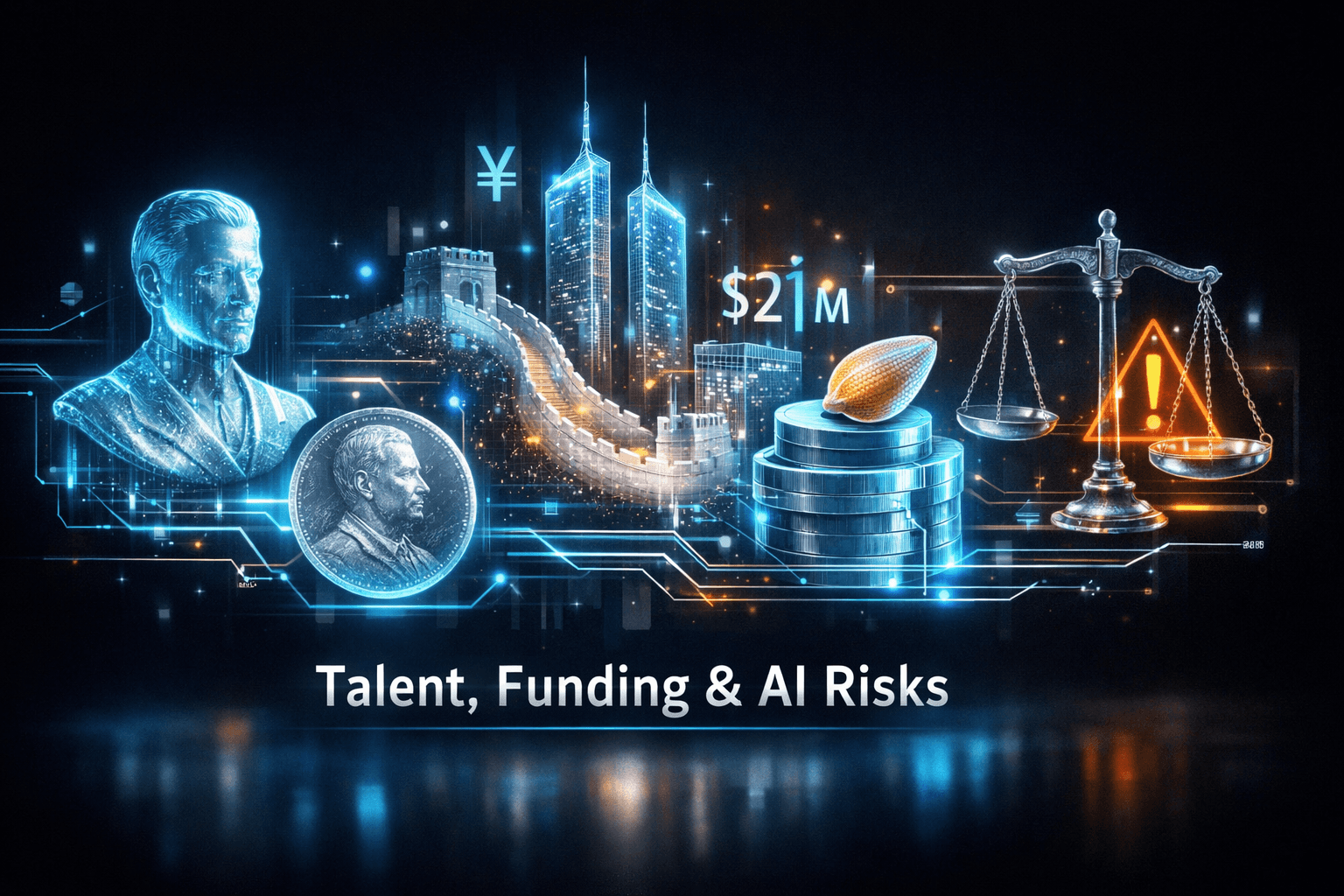
Talent, capital, and controversy are shaping the tech narrative this weekend. A Fields Medal winner joining OpenAI and fresh venture capital flows into China and private-markets software signal renewed momentum for R&D and funding, even as legal and ethical pushback against AI tools is increasing.
Why does this matter for you? These developments affect where engineering talent concentrates, which startups attract capital, and how regulators and courts will influence AI product risk, all of which can filter into company road maps and investor sentiment heading into the next trading session.
Market Highlights
Markets were closed on Sunday; the last trading session was Friday, July 31. Below are compact facts to orient you before Monday.
- OpenAI talent hiring: Jacob Tsimerman, a recent Fields Medalist, is taking leave from the University of Toronto to join OpenAI to work on AI safety, a major credibility boost for the group focused on reliability and alignment.
- Venture activity ramps: Chinese VC firms are rushing to raise new funds after three years of record-low fundraising, fueling capital for AI, robotics, and other tech sectors.
- Startup funding: LemonEdge raised $21 million in a Series A round led by Blackstone Innovations Investments, underlining investor interest in private-markets operations software, Blackstone trades as $BX.
- Hardware leaks and reviews: Pixel 11 leaks indicate a possible $100 price increase to a $899 starting price, while Framework’s new Laptop 13 Pro review praises build and battery but flags pricing and availability issues.
- Legal and ethical tensions: A judge denied xAI’s request to block Minnesota’s ban on “nudify” apps, and debates around AI-generated music and creators’ well-being are drawing public scrutiny.
Key Developments
OpenAI adds top mathematical talent
Jacob Tsimerman, who won the Fields Medal last week, will take a leave from the University of Toronto to work at OpenAI on AI safety. That kind of hire signals a continued emphasis on provable safety and theoretical work inside major AI labs.
For you, the implication is plain: companies emphasizing rigorous safety research may gain credibility with researchers, partners, and regulators, which could shape partnerships and procurement decisions over time.
Venture funding rebounds, including private-markets software
After several years of weak fundraising, Chinese venture capital firms are accelerating new fundraises as investors look to diversify and tap China’s renewed AI and robotics enthusiasm. At the same time, LemonEdge secured a $21M Series A led by $BX’s innovations arm for fund accounting software focused on private markets.
That tells you that capital is returning to both geographic and niche software plays. More funding usually means more product development and M&A activity, but it can also increase competition and valuation pressure for later-stage rounds.
AI ethics, legal rulings, and cultural backlash
Legal rulings and public debates are creating more friction for AI product rollouts. A judge denied xAI’s attempt to block Minnesota’s ban on “nudify” apps, allowing state-level restrictions to stand for now. Meanwhile, questions about AI use in music and creators admitting to problematic AI dependence are reigniting ethical conversations.
How will this affect companies? You should expect more cautious deployment, more compliance costs, and potentially slower rollouts in regulated states or industries. Public trust is a double-edged sword, and firms will need to manage both innovation and optics.
What to Watch
Look for developments that connect talent, capital, and regulation into concrete business outcomes. Here are practical catalysts and risks to follow this week.
- OpenAI announcements: Any follow-up on Tsimerman’s role or published safety work could influence perception of lab leadership in alignment research.
- China VC fundraising updates: Watch which managers close new funds and the sectors they target, since fund flows often precede deal activity and hiring in startups.
- Product launches and pricing: Google’s August 12 event for the Pixel 11 is next week, so leaks around specs and price can sway consumer hardware comps, margins, and handset upgrade cycles—keep an eye on $GOOGL commentary.
- Legal/regulatory moves: State-level or federal actions on AI-generated content, image-manipulation apps, or data use rules could create compliance requirements and litigation risk for firms large and small.
- Startup funding signals: Follow which software and fintech startups attract follow-on rounds, because that often points to where enterprise budgets will flow next.
Bottom Line
- Major talent hires and renewed fundraises point to growing investment in AI and enterprise software, a constructive sign for long-term innovation.
- Legal rulings and ethical debates are increasing operational risk for AI products, so expect slower rollouts and more compliance-related spending.
- Consumer hardware news is mixed, with premium reviews counterbalanced by price and availability concerns; watch $GOOGL’s Pixel event for clarity.
- You should track funding flows and regulatory updates, since they will shape where startups focus and how incumbents allocate resources.
- Analysis and data here are for informational purposes only, analysts note that sentiment could shift quickly as new filings, demos, or announcements appear; the piece is not personalized investment advice.
FAQ Section
Q: What does Jacob Tsimerman joining OpenAI mean for AI safety research? A: It signals increased investment in rigorous, mathematical approaches to alignment and safety, which may produce more formal methods and publications over time.
Q: Will renewed VC fundraising in China directly affect US-listed tech companies? A: It can, indirectly, through increased competition, faster product development in certain sectors, and potential cross-border partnerships, but effects will vary by company and industry.
Q: How should you think about legal and ethical risks around AI tools? A: Treat them as material operational risks; monitor state and federal actions, company compliance programs, and consumer sentiment when assessing exposure.