The Big Picture
Anthropic's latest $20 million political push and TSMC's blunt warning about margin dilution set the tone for today's Tech sector action, and they pull the spotlight in different directions. You should know that political spending, industrial capex and regulatory scrutiny are now as close to market movers as product launches and venture deals.
On one hand you have fresh AI product momentum and fundraising that underline continued demand for compute and enterprise AI tools. On the other hand, rising onshore fab costs and crypto regulatory traces highlight near-term margin and policy risks.
Market Highlights
Quick facts to orient your morning.
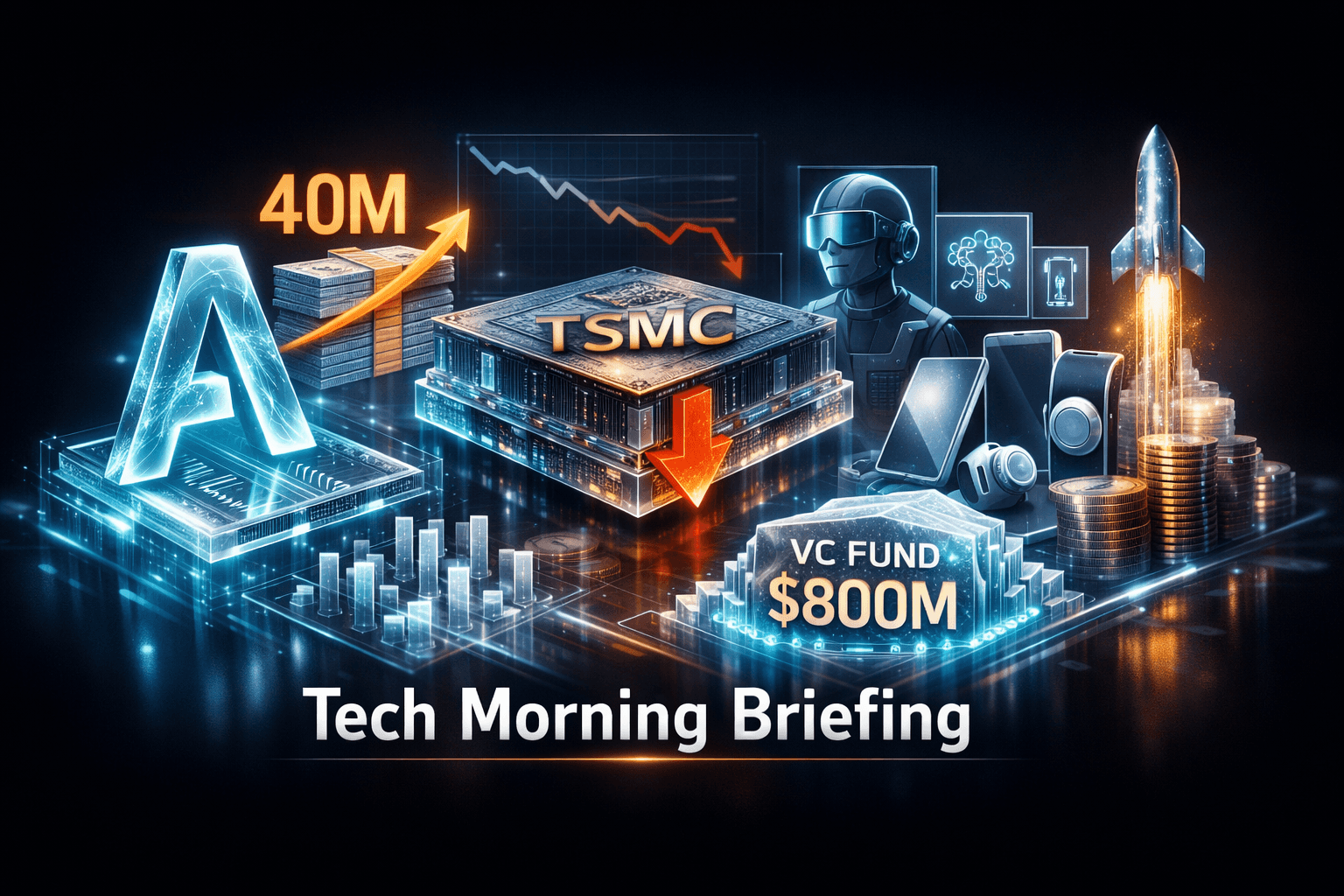
- Anthropic increases its midterms-directed funding to $40 million after a second $20M commitment, according to the Wall Street Journal and Techmeme.
- TSMC says overseas and U.S. fab projects will cause "several years" of margin dilution as it executes roughly $200 billion in announced U.S. investment, CNBC reports.
- Venture and AI activity remains strong: Dimension Capital closed an $800 million third fund, 60% larger than its prior vehicle, signaling investor appetite for science plus compute startups.
- Product and UX news: Synthesia launched AI Roleplay Sessions for live coaching, Samsung's Galaxy Unpacked event is imminent, and multiple ZDNet reviews highlight shifts in browser and desktop preferences for Linux users.
- Blockchain oversight: Dune analysis shows about 50% of traceable trading on Polymarket's global platform since 2021 came from wallets funded via U.S.-regulated exchanges, a Bloomberg-reported concern for regulators and platforms.
Key Developments
Anthropic doubles political spend as AI influence intensifies
Anthropic committed another $20 million to Public First Action, bringing its 2026 total tied to midterm activity to $40 million. The WSJ frames PFA as a counterweight to an a16z-backed group, highlighting how big AI firms are increasingly funding public affairs and policy influence.
That trend matters for investors because policy outcomes can shape regulatory costs, procurement, and competitive dynamics in AI. Who's spending on policy is becoming part of the competitive landscape.
TSMC flags margin pressure amid massive U.S. buildout
TSMC reiterated that investments tied to overseas and U.S. fabs will compress margins for several years while it puts roughly $200 billion into U.S. manufacturing projects. Higher capital intensity and localized supply chains are creating short-term margin headwinds for the world’s largest contract chipmaker.
For you, that means monitor capital spending cadence and gross-margin trends at $TSM and at related suppliers. Data suggests the industry will trade higher capital intensity for long-term resilience in supply chains.
AI product momentum and funding signal continued demand
Synthesia expanded from video-first training to interactive AI Roleplay Sessions for enterprises, a move that shifts AI tools from content production to live coaching and measurable training analytics. Dimension Capital's $800 million fund, 60% larger than its previous vehicle, shows the venture market is still backing compute-heavy, science-focused startups.
These developments point to sustained enterprise interest in applied AI. Who benefits may include software platforms, compute providers and analytics vendors, but competition and execution risk remain.
What to Watch
Short-term catalysts and risk points to put on your radar.
- Samsung Galaxy Unpacked, expected to highlight new foldables and hardware, could shift handset supplier orders and component demand. Will the devices move upgrade cycles?
- TSMC's execution on its U.S. fabs and quarter-to-quarter margin updates are critical. Watch capital-expenditure cadence and guidance for signs the company is stabilizing gross margins.
- Regulatory and policy moves ahead of the midterms are important, because Anthropic and others are spending on advocacy. Expect heightened tech-policy noise and potential regulatory proposals that could affect operations or procurement.
- Crypto enforcement attention, signaled by the Dune/Polymarket findings, could spur action from SEC or other regulators, which may affect crypto-focused companies and trading platforms.
- Venture funding flows, measured via fund closes like Dimension Capital's $800M vehicle, will help you gauge startup hiring, capex demand and later-stage M&A activity for compute and life-science startups.
Bottom Line
- Balanced picture today: product and funding momentum coexist with industrial capex strain and regulatory risk, so expect mixed near-term headlines.
- TSMC's $200 billion U.S. push implies years of higher capital intensity and margin pressure, making supplier margins and capex guidance key metrics to monitor for $TSM.
- Anthropic's $40 million political outlay underscores that policy engagement is now a strategic lever for major AI firms, which may influence regulatory outcomes that affect the whole sector.
- Watch Samsung's Unpacked event and AI product launches for demand signals you can use to adjust your research focus and watchlist priorities.
- Private-market movements, like Dimension Capital's larger fund and Synthesia's product expansion, indicate startups are still drawing capital and enterprise customers for AI tools, but execution risk remains.
FAQ Section
Q: How will TSMC's U.S. investments affect chip prices? A: TSMC says higher onshore buildout costs will squeeze margins for several years. That suggests upward pricing pressure could emerge for some advanced nodes, but final pricing will depend on demand and competitive responses.
Q: Should I be worried about Anthropic funding political groups? A: Large tech firms are increasingly engaging in policy advocacy. Analysts note this raises regulatory risk exposure and could shape procurement and compliance outcomes, so it’s a factor to watch rather than a direct market trigger.
Q: Do Synthesia and new AI tools change enterprise budgets for training? A: AI-driven training products add measurable analytics and may reallocate parts of learning and development budgets. Data suggests companies testing these tools value scalable, measurable training, but adoption speed will vary by industry.