The Big Picture
Real estate enters 2027 with a split message: demand and scarce ready-to-use space can support development, but financing and site preparation remain costly hurdles. New reporting on Long Island and Omaha shows why strong market fundamentals don’t automatically translate into projects getting built.
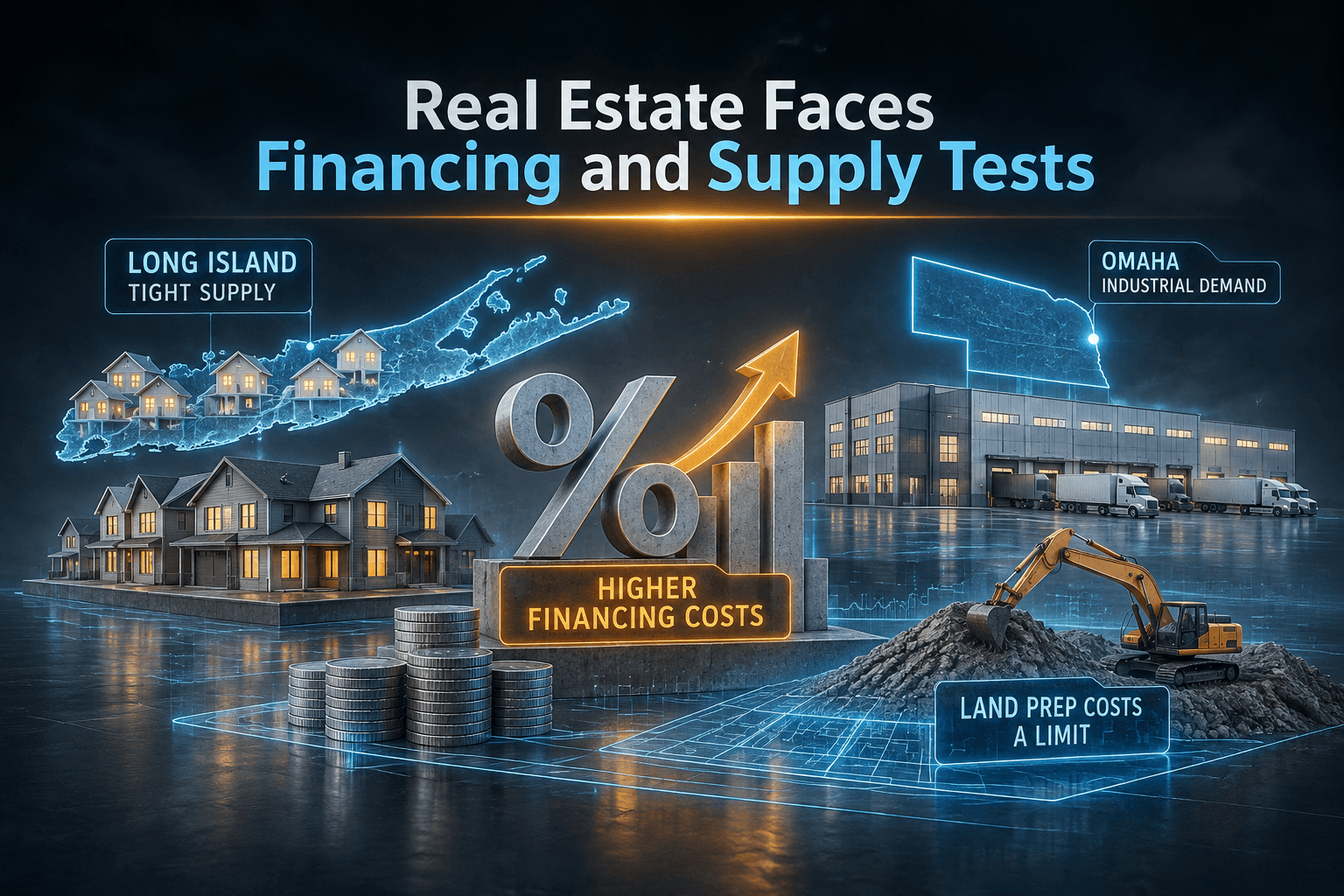
The Long Island outlook points to tight supply and resilient fundamentals, even as higher interest rates and tighter lending pressure project financing. In Omaha, industrial vacancy is described as tight, but turning available land into a development-ready site can require substantial time and capital. What does that mean for you? The central question is whether demand can justify those costs.
Market Highlights
Both stories are forward-looking market reports, not company earnings announcements or trading updates. US stock markets were closed Thursday for Thanksgiving, so there was no US equity trading today. The last trading session was Wednesday, November 25, and neither report provides a related stock-price move or percentage change.
The coverage centers on local market conditions rather than publicly traded companies. Opus Omaha is identified in the Omaha article, but the report does not provide a stock ticker or a public-company share-price reaction.
- Long Island: Tight supply is expected to be a key real estate driver in 2027.
- Financing: Interest rates moved higher in 2026, while lending standards tightened; the Long Island outlook expects financing costs to stay at or above current levels through 2027.
- Omaha: Industrial vacancy is described as tight, and the metro continues to attract businesses looking for modern space.
- Site readiness: Preparing land with needed infrastructure can take nine months to a year, according to the Omaha report.
These details offer useful context heading into the long weekend, but they don’t establish a broad, measurable change in public real estate stocks. For your research, the key distinction is between demand for space and the cost, timing and financing required to deliver it.
Key Developments
Long Island’s supply shortage meets a tougher financing climate
The Long Island report identifies tight supply as a potential driver of real estate development in 2027. Its assessment also describes the area’s underlying fundamentals as strong, giving developers a demand-side reason to keep evaluating projects. However, that support comes alongside higher rates in 2026 and tighter lending standards, both of which add pressure to project financing.
The report expects financing costs to remain at or above current levels through 2027. That outlook matters because a project’s economics depend not just on the availability of tenants or buyers, but also on whether expected returns can absorb borrowing costs. If you’re tracking the regional market, watch whether supply constraints translate into viable development activity rather than assuming that scarcity alone guarantees new construction.
Omaha industrial demand depends on land readiness
Omaha may appear to offer plentiful land, but the report cautions that the amount actually ready for development is considerably smaller. Sanitary and improvement districts, or SIDs, help extend roads, water, sewer and other infrastructure into developing areas. Yet infrastructure planning and delivery add steps before a parcel can support a project.
Preparing a site can take nine months to a year, and the commitment can grow when a developer considers a large tract for phased construction over several years. The report notes that development-ready land may carry a premium over nearby undeveloped property, reflecting time, expense and uncertainty. That can benefit owners who have already made the investment, while raising the entry cost for developers assessing new projects.
The two markets share a common theme: limited supply can support the case for development, but the path from demand to completed space is neither immediate nor cost-free. Long Island’s challenge is framed largely around financing, while Omaha’s includes infrastructure and site preparation. Together, the stories argue for a selective view of real estate conditions rather than treating strong demand as a guarantee of near-term growth.
What to Watch
In the coming weeks and months, monitor interest-rate and lending conditions for evidence that financing is becoming more or less accessible. The Long Island outlook specifically expects costs to stay at or above current levels in 2027, so any change in that assessment could affect project feasibility. No specific policy decision or financing catalyst is identified in the reports.
For Omaha, pay attention to whether infrastructure work and site preparation keep pace with demand for modern industrial space. The nine-to-twelve-month preparation window can affect project timing, while phased development of larger tracts may require developers to commit capital well before all stages are built. You can also look for future reporting on vacancy, new supply and leasing activity, since this coverage doesn’t provide numerical forecasts for those measures.
Public-market investors should distinguish these regional signals from company-specific results. The stories do not name publicly traded developers or provide financial guidance, earnings data, or share-price movements. With markets closed today, the next US trading session is Friday, November 27; these articles alone don’t indicate how any particular real estate security will respond.
Bottom Line
- Long Island’s tight supply and strong fundamentals support development interest, but financing remains a central constraint.
- The outlook expects financing costs to remain at or above current levels through 2027, a key assumption to track.
- Omaha’s tight industrial vacancy and business interest are constructive, but development-ready land is more limited than raw land availability suggests.
- Infrastructure can add nine months to a year of preparation, plus significant capital commitments, before development can proceed.
- Both reports describe local conditions, not stock performance. Treat them as context for research, not a security-specific signal or investment recommendation.
FAQ
Q: Why is Long Island real estate supply important for 2027? A: The report identifies tight supply as a key potential development driver, while noting that financing costs and lending standards may limit projects.
Q: What makes Omaha industrial development challenging? A: Land that appears available may not be development-ready. Infrastructure work can take nine months to a year and require meaningful time and capital.
Q: Did real estate stocks move on these stories today? A: US stock markets were closed for Thanksgiving on November 26, so there was no US equity trading today. The reports also do not provide stock-price changes.