The Big Picture
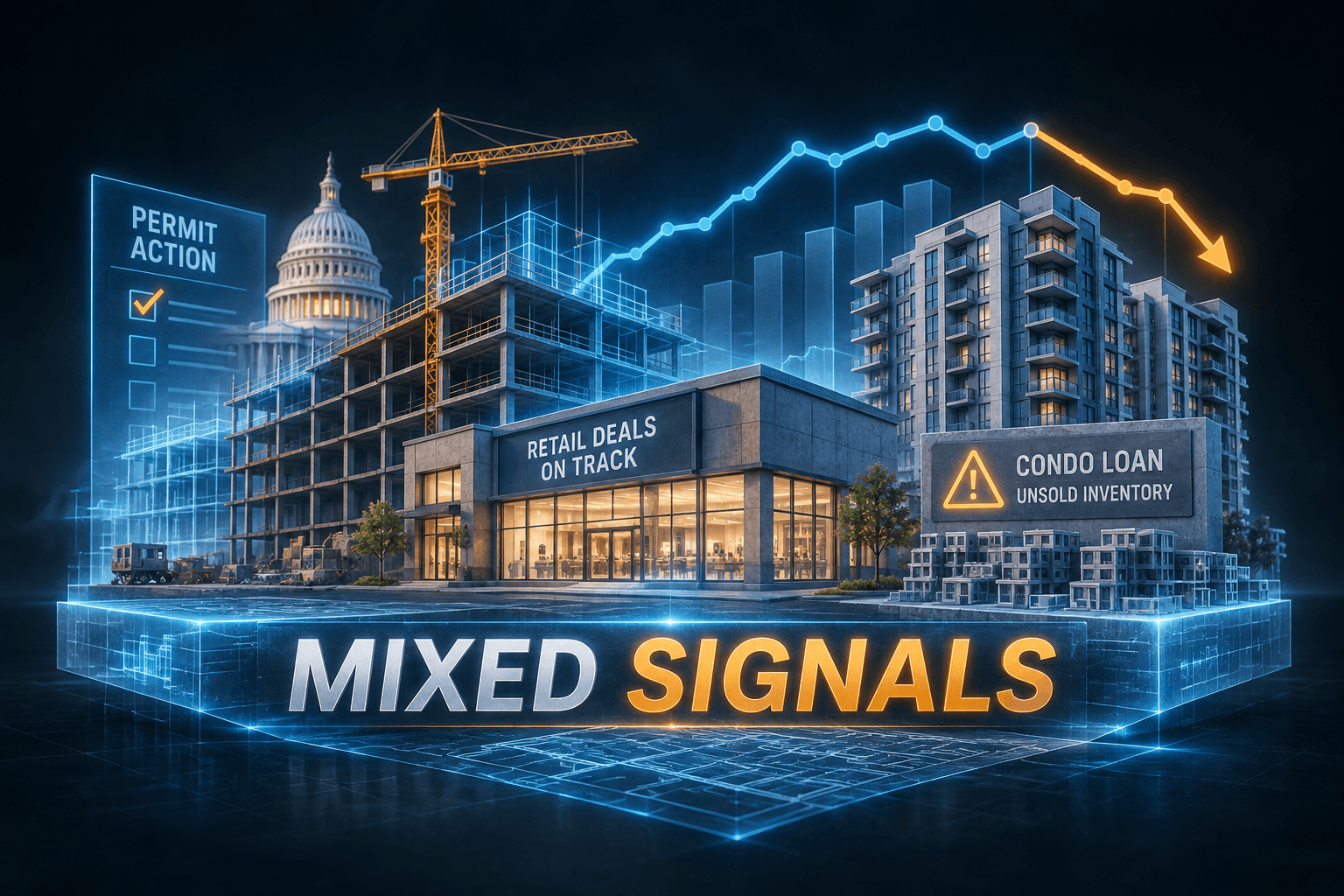
Real estate activity showed both momentum and caution on Friday, with new retail projects advancing even as a West Palm Beach condo development secured financing for nearly half of its unsold units. For investors, the contrast matters: commercial projects are attracting capital and tenants, but financing alone doesn't prove that end-user demand is strong.
A Senate permitting bill and new funding for permitting technology added a potential boost for project timelines, while a lawsuit over loan officer pay models and questions about Downtown Los Angeles' recovery kept risks in view. What should you take from a day with no clear sector-wide direction? Selectivity matters, and the details of each property, market and financing structure remain important.
Market Highlights
Today's reports covered property sales, development, housing policy, lending and affordability. They did not provide broad real estate stock index performance or individual public-company share moves, so the figures below reflect reported transactions and project details, not stock-market returns.
- A fully occupied, 14,170-square-foot retail center in Hercules, California, sold for $7.9 million, or $557 per square foot. Its 10 suites are leased under triple-net structures.
- DJM Capital and Sage Investco are advancing a planned 346,000-square-foot Bakersfield shopping center after the city council unanimously approved a rezoning for its 46-acre site.
- In Sanford, North Carolina, a $50.7 million construction loan will support a 223,153-square-foot center that is more than 95% preleased. Its two main buildings are expected to be complete by October 2027.
- A newly completed West Palm Beach condo development received a $56.5 million inventory loan backed by 22 unsold units, nearly half of the total.
- The Senate passed the BAAJA permitting measure 62-33. The bill would streamline environmental review and permitting for federally backed projects.
Other reports included a Santa Fe Springs industrial property sale for $7.99 million, or $673 per square foot, and a $64 million raise by permitting company Pulley. These figures signal deal and technology activity, but they don't establish a uniform trend across property types or regions.
Key Developments
Retail projects draw capital, tenants and approvals
The Bakersfield rezoning clears a major local hurdle for Riverview Marketplace, a planned center anchored by the city's first Whole Foods. The project is being developed by DJM Capital with Sage Investco. In Sanford, Sagemark Development's Adams Crossing is already under construction, with BJ's Wholesale Club, Academy Sports + Outdoors and Burlington among its anchors. Ulta Beauty, Five Below and Aspen Dental are also slated to occupy space.
Preleasing above 95% offers a concrete indication of tenant commitments at Adams Crossing, while the fully occupied Hercules center shows a completed, income-producing asset changing hands. For you, the useful distinction is between an operating property's demonstrated occupancy and a development's future leasing and construction execution. The Bakersfield approval is progress, not a guarantee of completion or performance.
Permitting may get attention, but implementation is key
Housing groups welcomed the Senate's 62-33 passage of the BAAJA measure, which would streamline reviews and permitting for federally backed projects. The measure could ease one source of delay if it becomes law and is implemented as intended. Senate passage alone doesn't establish its final legislative path or how quickly projects would feel any impact.
Pulley raised $64 million to expand permitting services and develop site-selection and AI-driven drawing-review tools. The funding points to investor interest in software aimed at development bottlenecks, but the report doesn't specify adoption, revenue or customer results. You can track whether policy changes and technology tools translate into shorter timelines rather than treating announced plans as immediate construction gains.
Unsold condos, urban recovery and lending scrutiny remain watch points
In West Palm Beach, BGI Companies and Blue Road obtained a $56.5 million loan from Kriss Capital for 22 units at a newly completed waterfront condominium project. Nearly half the development remains unsold, a sign that inventory absorption deserves attention even where lenders are willing to provide financing. The loan supports the unsold units, but the report doesn't say when they may sell or on what terms.
Los Angeles Mayor-elect Nithya Raman is set to take office Dec. 13, inheriting a Downtown still searching for a recovery strategy. Her stated focus on downtown attention and care puts local policy and execution in view for owners and developers, though the reports provide no specific plan or timetable. Separately, a lawsuit against West Capital Lending over the use of 1099 independent contractors renews scrutiny of mortgage loan officer hiring and pay models. Legal outcomes and potential operational effects are not yet established.
A New York study for NYC Health + Hospitals' Housing for Health initiative and MetroPlusHealth reported improved outcomes after formerly homeless people were permanently housed. The summary offered no specific measurements, but the finding reinforces the connection between affordable housing and health services, a relevant consideration for housing providers and policymakers.
What to Watch
First, watch the BAAJA bill's path after Senate passage and whether any eventual changes affect federally backed projects. For developers, the relevant test will be whether review and approval timelines actually shorten. Pulley's expansion is another item to follow, particularly for evidence that its permitting and drawing-review tools are being adopted.
For retail, monitor construction progress, tenant commitments and scheduled openings at Bakersfield's Riverview Marketplace and Sanford's Adams Crossing. The Sanford center's more than 95% prelease rate is encouraging project-specific evidence, but delivery milestones and occupancy after opening will matter too. You should also distinguish development announcements from completed, operating assets such as the Hercules center.
Condo inventory in West Palm Beach remains a demand signal to track, especially whether the 22 financed units sell and how quickly. In Los Angeles, the incoming mayor's downtown strategy could influence the local development outlook, while the West Capital Lending case may bring further scrutiny to contractor arrangements. Across these stories, financing availability, realized demand and execution are separate measures, not interchangeable signs of strength.
Bottom Line
- Commercial real estate activity was visible in retail sales, development financing and local project approvals, but the reports don't establish a broad sector rally.
- More than 95% preleasing at Sanford's Adams Crossing contrasts with nearly half of the West Palm Beach condo units remaining unsold.
- Senate passage of BAAJA and Pulley's $64 million raise put permitting reform and technology on the watch list; neither guarantees faster project delivery.
- Track project-level leasing, construction and inventory absorption, along with the Los Angeles policy outlook and the contractor classification lawsuit.
- These developments are informational, not a recommendation to buy, sell or hold any security.
FAQ Section
Q: What was the most notable retail development news today? A: Bakersfield approved a rezoning for a planned 346,000-square-foot center anchored by the city's first Whole Foods, while a Sanford center under construction is more than 95% preleased.
Q: Does the West Palm Beach loan mean condo demand is strong? A: Not on its own. The $56.5 million loan is backed by 22 unsold units, nearly half the project's total, so sales and absorption remain important to watch.
Q: What could the Senate permitting bill mean for real estate? A: BAAJA would streamline environmental reviews and permitting for federally backed projects, but its legislative path and practical impact remain uncertain.