The Big Picture
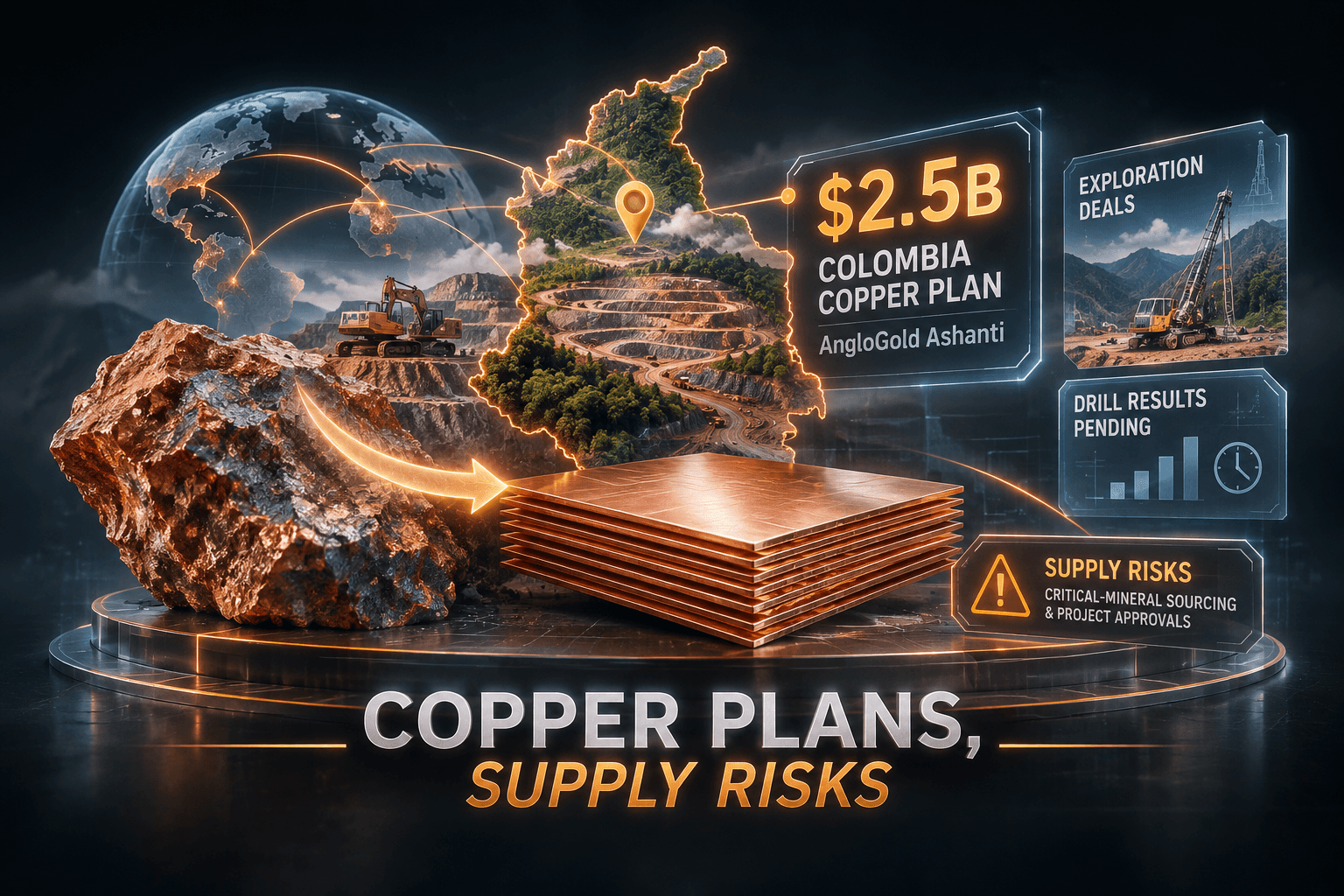
A proposed $2.5 billion copper investment in Colombia put project development and permitting at the center of Wednesday’s Materials & Mining news. AngloGold Ashanti’s plans for Quebradona signal substantial development ambitions, but the project depends on environmental permits, a reminder that a large investment announcement is not the same as an approved mine.
Elsewhere, companies pursued exploration and acquisitions, while stories about holmium and phosphate drew attention to the materials behind medical devices and batteries. The signals are mixed: you can see potential growth avenues, but timelines, permits, supply-chain visibility and future assay results will determine how much progress becomes tangible.
Market Highlights
The day’s coverage leaned toward project plans and strategic positioning rather than financial results. The supplied stories did not report share-price movements or percentage changes, so there’s no verified basis here to describe a market reaction. For you, that makes operating milestones and deal conditions more useful than any assumed trading signal.
- AngloGold Ashanti announced plans for approximately $2.5 billion of investment in the Quebradona copper project in Colombia, subject to environmental permits.
- Helix Resources signed a binding agreement to acquire a 100% stake in five gold exploration tenements and applications in Western Australia’s Pilbara region.
- Oreterra Metals completed just over 4,600 metres of drilling across 13 holes at Trek South in British Columbia. Laboratory assays are pending.
- Atlas Metals signed heads of terms providing binding exclusivity for a potential acquisition of B1 Metals, which holds an effective 80% interest in a project in Namibia’s Erongo region.
- First Phosphate CEO John Passalacqua highlighted phosphate’s role in lithium iron phosphate batteries, noting nearly 14 kilograms of phosphate for every kilogram of lithium in active cathode material.
The day also brought updates from the recycling sector. Circulose said it has resumed recycling discarded cotton textiles and plans to continue supplying recycled raw material at commercial scale. Can’d Aid’s grants will support more than 48 community events across 14 states, while the Recycling Education and Research Foundation awarded stipends to two veterans for the first time since its program began in 2013.
Key Developments
Copper plans meet permitting realities
AngloGold Ashanti’s Quebradona proposal is the day’s largest stated capital commitment. If permitted and developed, the project would add to the company’s copper ambitions in Colombia. But the announcement remains conditional: environmental approval is a key hurdle, and the coverage provided no construction schedule or further project economics.
That distinction matters when assessing development stories. A proposed investment can show strategic intent, but it doesn’t remove regulatory, financing or execution risk. You’ll want to watch for formal permitting progress and clearer timelines before treating the plan as a near-term production change.
Exploration and acquisition activity broaden the pipeline
Helix’s binding agreement covers a 100% interest in five Pilbara gold tenements and applications. Atlas Metals’ terms, by contrast, establish binding exclusivity for a potential purchase of B1 Metals, not a completed acquisition. The target holds an effective 80% interest in a Namibian project, and the supplied report did not give a final transaction value or closing date.
Oreterra’s Trek South program adds an early-stage copper-gold exploration update. CEO Kevin Keough said drilling helped narrow the search for an intrusion thought to be associated with alteration and visible copper mineralization. The 13-hole program has been completed, but assays are still pending. What could change the picture? Results that confirm or challenge the geological interpretation will be more informative than drilling metres alone.
Supply chains and recycling remain part of the materials story
An InvestorNews commentary on holmium raised questions about tracing the rare earth used in a prostate surgery laser. It offered no new supply data, but highlighted a broader issue: without clear sourcing information for critical minerals, claims about supply security can be difficult to verify. For manufacturers and policymakers, traceability is part of the resilience question.
Another InvestorNews interview argued that phosphate deserves more attention in North American lithium iron phosphate battery supply chains. First Phosphate Corp. trades as $PHOS on Nasdaq and the Canadian Securities Exchange, as well as under other listed symbols; its CEO’s comments underscore the material’s role, but the interview itself doesn’t establish a supply contract or production outcome. Circulose’s restart offers a separate example of materials recovery, with the company saying it expects to supply recycled cotton feedstock at commercial scale. Together, the stories point to opportunities in sourcing and recycling, alongside questions about execution and commercial demand.
What to Watch
For Thursday and the coming weeks, track developments that can turn announcements into measurable progress. In Colombia, environmental permitting is central to Quebradona’s path. For Oreterra, pending assays are the next concrete catalyst in the reported exploration program. The Helix and Atlas agreements also merit follow-up for transaction completion details, conditions and any disclosed financing requirements.
On the broader materials front, watch for evidence of North American phosphate supply-chain development and clearer information about critical-mineral sourcing. Circulose’s stated return to commercial-scale supply is another execution point to monitor. These stories contain no earnings calendar, policy decision or reported share-price reaction; avoid reading them as evidence of a sector-wide move. Selectivity and attention to conditions remain important as you assess each company’s progress.
Bottom Line
- AngloGold Ashanti’s $2.5 billion Quebradona plan is significant, but environmental permits remain a prerequisite.
- Helix and Atlas announced different stages of deal activity; Atlas’s potential acquisition is not yet complete.
- Oreterra’s 4,600-plus metres of drilling are finished, but assays will provide the next key evidence.
- Holmium traceability and phosphate’s battery role highlight supply-chain issues, not confirmed new production.
- Recycling updates are constructive, but reported market-price data was not available in today’s supplied coverage.
FAQ Section
Q: What was the biggest investment announcement today? A: AngloGold Ashanti said it plans to invest approximately $2.5 billion in Colombia’s Quebradona copper project, subject to environmental permits.
Q: Did Oreterra report successful drill results? A: No assay results were reported. The company completed just over 4,600 metres across 13 holes, and laboratory assays are pending.
Q: Were Materials & Mining stocks up or down today? A: The supplied stories did not include share-price changes, so they don’t establish how the sector or individual stocks traded.