The Big Picture
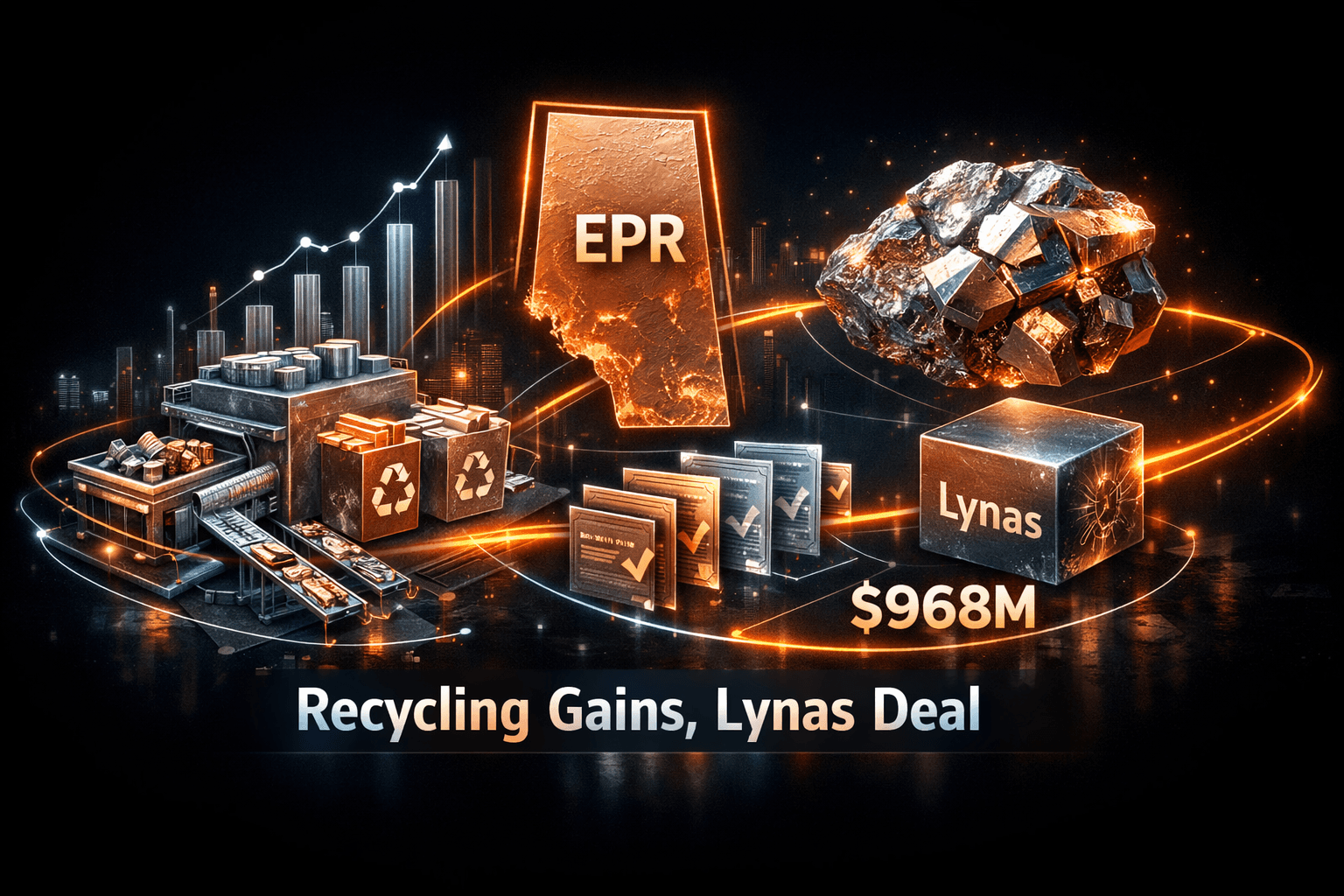
Markets woke to a string of expansionary headlines in materials and mining, led by Lynas Rare Earths moving to acquire Meteoric Resources in a A$968 million all-share deal. You should note this is part of a broader push to diversify critical-minerals supply chains away from China.
At the same time, recycling and circular-economy news dominated North America, with Alberta completing its transition to producer-led packaging and paper recycling and new collection or manufacturing facilities announced in the U.S. The combined developments matter because they show demand for raw and recycled materials increasing, while project permitting and mine plans are keeping the project pipeline active.
Market Highlights
Key facts and figures from today that you can act on as you follow the sector.
- Lynas and Meteoric: Lynas Rare Earths agreed to acquire Meteoric Resources via an all-share scheme valued at approximately A$968 million, about $674 million. The deal centers on the Caldeira rare-earths project in Minas Gerais, Brazil, and involves ASX-listed names $LYC and $MEI.
- Alberta EPR rollout: PRO Circular Materials reports 287 communities now have access to expanded, producer-managed packaging and paper recycling services after Alberta fully transitioned to Extended Producer Responsibility for packaging and paper.
- U.S. recycling expansions: Supersede opened a recycled polypropylene manufacturing facility in Elkhart County, Indiana, and a new residential electronics drop-off program launched in Cheatham County, Tennessee, serving more than 40,000 residents.
- Project pipeline activity: Riversgold filed a mine development and closure proposal for the Northern Zone at its Kalgoorlie Gold Project in Western Australia, while ACDC Metals secured BLM environmental permits for a maiden drill campaign at Mount Jackson in Nevada.
Key Developments
Lynas moves deeper into rare earths with Meteoric bid
Lynas Rare Earths announced a binding scheme implementation deed to buy Meteoric Resources in a deal valued at A$968 million, targeting Meteoric’s Caldeira deposit in Minas Gerais, Brazil. You may see this as a strategic play to give magnet manufacturers an alternative supply source outside China, and it likely accelerates near-term investment in processing and logistics for rare earths.
For your portfolio lens, the acquisition underscores industry consolidation among rare-earth producers, and analysts note the move could reshape regional supply chains. What does this mean for downstream magnet and EV supply security?
Recycling and circular-economy moves gain traction
Alberta’s full transition to Extended Producer Responsibility for packaging and paper now covers 287 communities with producer-managed recycling services, according to PRO Circular Materials. That’s a material shift for Canadian waste streams and should increase volumes of collected, sorted and processed materials going to recyclers and secondary suppliers.
In the U.S., Supersede opened a recycled polypropylene manufacturing plant in Elkhart County, Indiana, a hub of RV and recreational vehicle production, while Cheatham County in Tennessee launched residential electronics recycling in partnership with City eWaste for over 40,000 residents. Together, these items give recyclers and secondary-material processors more feedstock and a clearer commercial path. Could you see downstream suppliers getting a foot in the door for large OEM contracts?
Exploration, permitting and mine planning continue
Riversgold filed a mine development and closure proposal for the Northern Zone at Kalgoorlie as it advances toward development milestones, and ACDC Metals received BLM permits to start drilling and geophysical surveys at Mount Jackson in Nevada. These are the kind of regulatory and field progress points that keep project timelines moving from exploration to resource definition.
Data suggests that permitting wins and formal development filings can accelerate deal flow and farm-in interest, so you may want to watch which companies convert these steps into resource upgrades or JV liquidity events.
What to Watch
Here are the catalysts and risks that could move the sector next, and what you should monitor as the tape evolves.
- Lynas-Meteoric integration timeline and regulatory review. Watch for shareholder notices, court dates for the scheme of arrangement and any government scrutiny in Brazil or Australia. These will determine how quickly Caldeira can advance.
- Recycling policy rollouts and procurement. Track how quickly producer responsibility funding translates into operational contracts and tonnage flows, and whether new manufacturing capacity like Supersede’s plant signs supply agreements with OEMs.
- Permitting and drill results. Riversgold’s MDCP decisions and ACDC Metals’ maiden drill program outcomes could trigger resource updates or new M&A interest in gold and silver targets.
- Critical-minerals pricing and demand. Rare-earth oxide and tungsten market signals matter for project economics, so follow pricing trends and export policies that affect upstream margins.
- Execution risks. Construction delays, logistics bottlenecks and commodity price swings could slow projects. How will companies manage capital and timelines? That’s a key question you should be asking.
Bottom Line
- Major M&A in rare earths, led by $LYC’s A$968 million bid for $MEI, is pushing supply-chain diversification efforts forward.
- Policy-driven recycling gains in Alberta and new U.S. recycling infrastructure are expanding feedstock volumes and secondary-material processing opportunities.
- Permitting and mine-planning activity in Australia and Nevada indicates the project pipeline remains active, which can support midterm supply growth for critical and precious metals.
- Near-term risks include integration timelines, permitting hurdles and commodity price volatility, so keep monitoring updates on deals and drill results.
- Analysts note the combination of policy support and project progress points to growing momentum across both primary mining and recycled-materials segments.
FAQ Section
Q: How will Lynas’ Meteoric deal affect rare-earth supply? A: The deal aims to add a Brazilian supply option for magnet materials, which may reduce reliance on single-source supply and attract downstream investment in processing.
Q: Does Alberta’s EPR transition mean more business for recyclers? A: Yes, producer-led programs expand collection and processing volumes, which can increase contracted work for recyclers and secondary-material manufacturers.
Q: What are the main near-term risks for materials and mining investors? A: Execution delays, regulatory reviews, commodity price swings and integration challenges after deals are the primary risks to watch.
Investment disclaimer: This article provides market commentary and factual reporting for informational purposes only. It does not constitute investment advice or a recommendation to buy, sell or hold any security. Analysts note trends and data but you should consult a licensed advisor before making any investment decisions.