The Big Picture
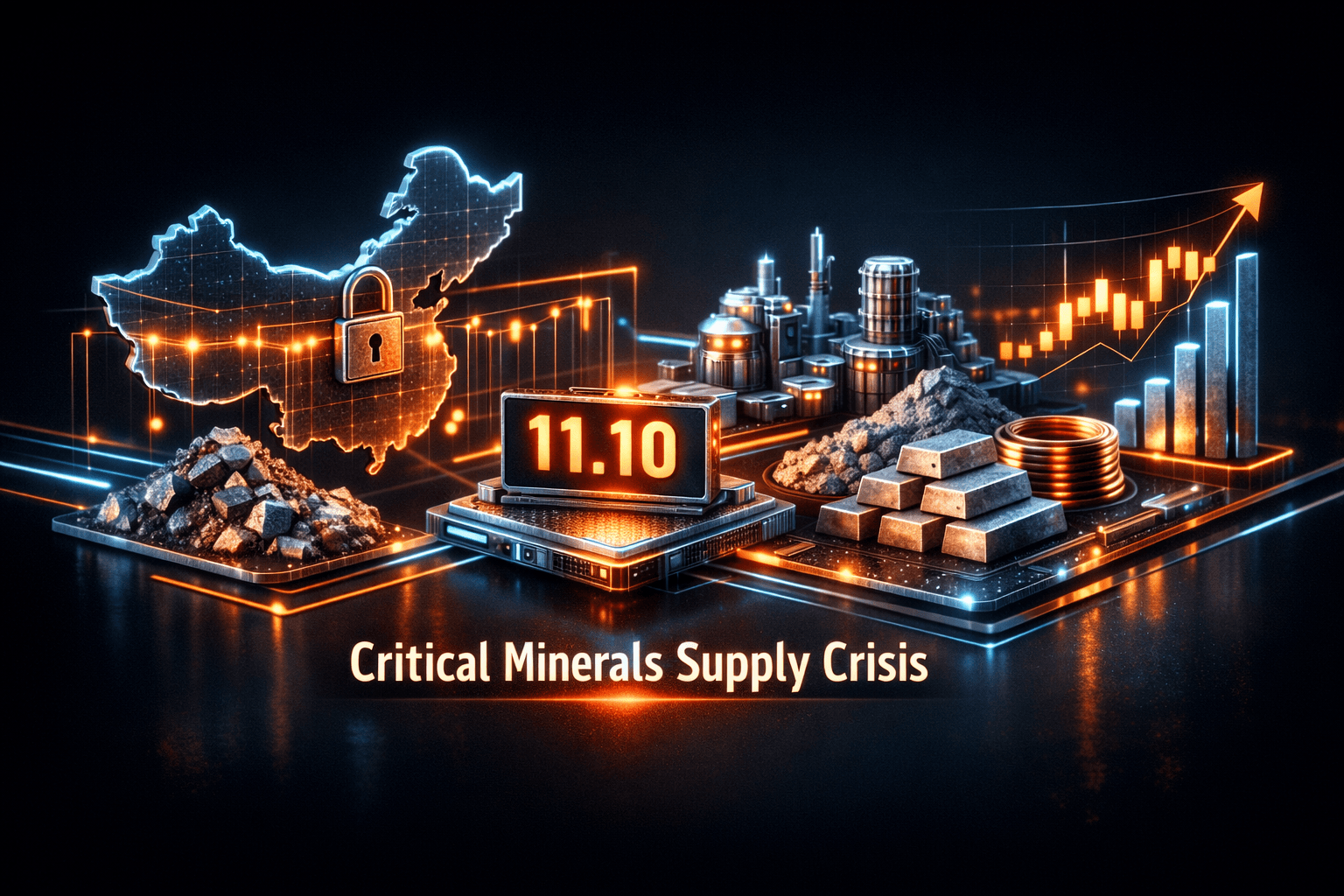
InvestorNews published a stark assessment on Aug 16 that could reshape how you think about metals markets: China has put its export-control arsenal back in play, and that move may be the catalyst for a critical-minerals bull market. The piece argues that the November 10 deadline is more than a date on the calendar, it is a stress test of whether Western supply chains can actually scale mining, separation, refining, and manufacturing at commercial levels.
That matters because policy-driven supply risk tends to translate into higher spot prices, faster permitting and investment cycles, and greater interest in companies that can supply, process, or refine battery and rare-earth elements. Keep in mind US markets were closed Sunday; any price reaction will be reflected when trading resumes on Monday, and the last trading reference point is as of Friday, August 14.
Market Highlights
InvestorNews' Aug 16 analysis has traders and policy makers watching November 10 closely. Here are the quick takeaways you should keep in mind as you follow developments over the long weekend.
- Policy trigger: November 10 is framed as a formal export-control deadline that could allow China to limit shipments of processed critical minerals to foreign manufacturers.
- Sector impact: Analysts note this dynamic favors miners, refiners, and domestic processing projects, including companies like $BHP, $RIO, $FCX, $MP, and lithium-focused names such as $LAC.
- Timing: With US markets closed Sunday, expect headlines and policy signals to drive early flows when trading reopens on Monday, August 17.
Key Developments
China's export control posture and the Nov 10 deadline
InvestorNews emphasizes that November 10 is not merely bureaucratic timing. Analysts quoted in the piece argue the date will expose whether Western economies have built resilient value chains that China cannot interrupt. For you, that means price volatility could increase as participants reprice risk premia for refined materials and downstream components.
From deposits to finished products, the bottleneck is processing
The report stresses one central point: deposits, subsidies, and press releases do not equal operational supply chains. Data suggests the real constraint today is commercial-scale separation, refining, and qualified manufacturing for end markets like EV batteries and permanent magnets. That favors companies that already own processing capacity or are closest to bringing it online.
Policy and capital are likely to follow
InvestorNews predicts that if China tightens exports or signals intent to do so, Western governments and capital markets may accelerate incentives and approvals for downstream projects. That would help firms focused on refining and recycling, as well as juniors with scalable projects that can clear permitting hurdles quickly.
What to Watch
Here are the catalysts and risk factors you should watch this week and into the fall. They'll affect pricing, flows, and which names attract attention.
- November 10, 2026: Track official details or clarifications from Chinese regulators and any immediate responses from Western trade or defense authorities. What does the published rule say, and how narrow or broad is the scope?
- Policy responses: Watch for new subsidies, loan programs, or fast-track permitting in the US, EU, Japan, and Australia aimed at scaling refining and processing capacity.
- Operational milestones: Monitor progress on first-of-a-kind refineries, separation plants, and recycling facilities. Company updates and permitting wins will matter to valuations.
- Metal prices and spot markets: Keep an eye on lithium, nickel, cobalt, copper, and rare-earth spot prices and inventories. Sudden inventory drawdowns will signal tightening supply.
- M&A and partnerships: Expect increased deal flow as majors and strategic investors seek downstream exposure. You'll want to watch announcements from large miners and specialist processors.
- Geopolitical risk: Any escalation in trade restrictions, sanctions, or diplomatic friction could amplify premium pricing. That is a timing and execution risk for projects outside China.
Bottom Line
- InvestorNews' Aug 16 analysis suggests a bullish backdrop for critical-minerals miners and processors if China follows through on tighter export controls.
- November 10 is a primary catalyst that could force a reallocation of capital and faster buildout of Western refining capacity.
- You should watch policy announcements, permitting milestones, spot price moves, and any government incentive programs that speed domestic processing.
- Short-term volatility is likely, but the narrative favors companies with operational refining or near-term commercial-scale projects.
FAQ Section
Q: What is the significance of November 10? A: InvestorNews describes it as an export-control deadline that will reveal whether Western supply chains can operate independently of Chinese processing, with implications for prices and investment flows.
Q: Which metals will be most affected if China tightens exports? A: Lithium, nickel, cobalt, copper, and rare-earth elements are likely to see the biggest impact because they are critical to batteries, permanent magnets, and downstream manufacturing, and because processing bottlenecks are concentrated in refining and separation.
Q: How should I monitor developments without taking specific positions? A: Follow official policy texts, company operational updates, spot inventory data, and government subsidy programs. Analysts note that early movers in processing and recycling could draw capital and strategic partnerships, so stay informed about project milestones and deal activity.