The Big Picture
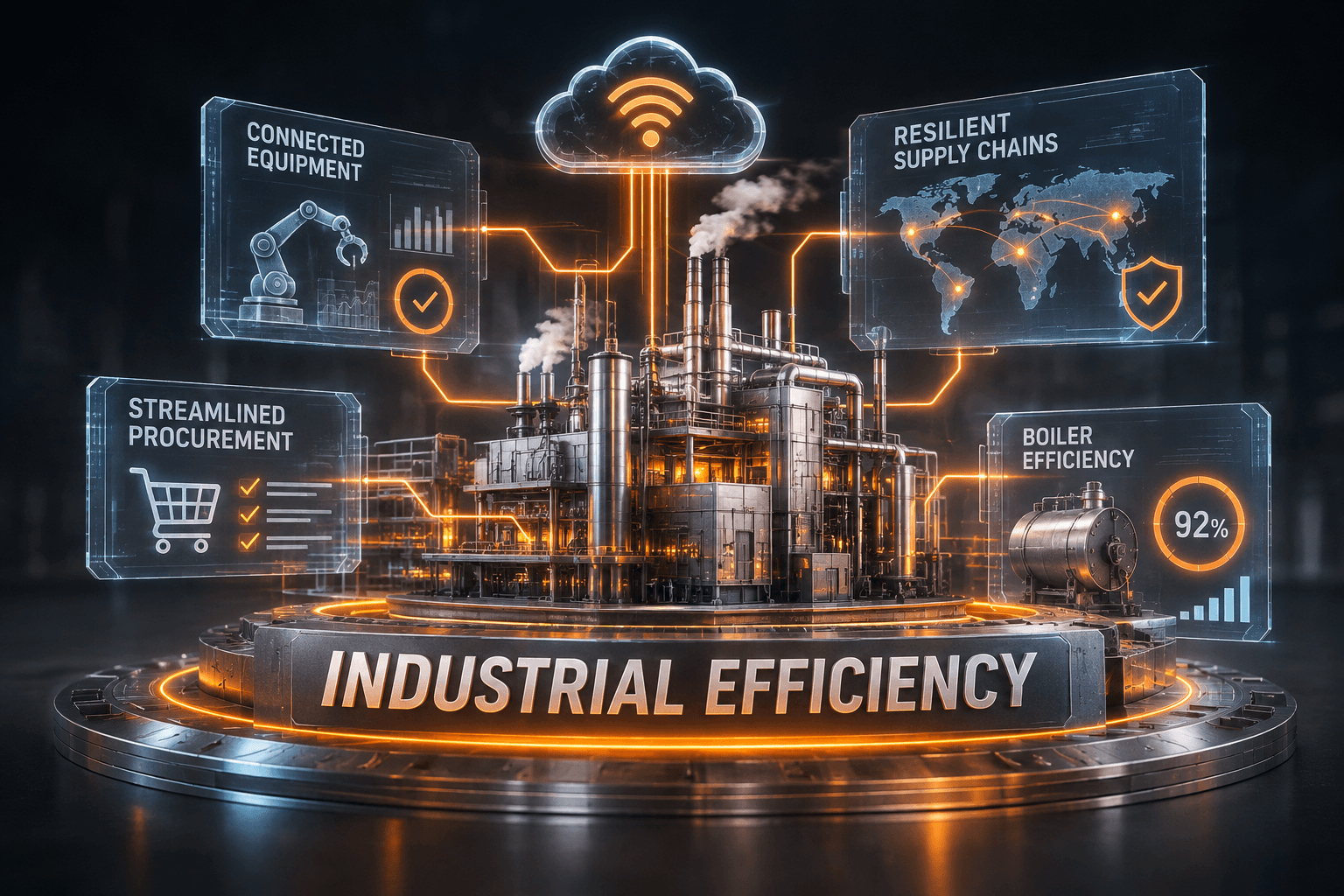
Operational efficiency is the common thread in Monday’s industrial and manufacturing news, from connected equipment solutions to boiler tuning and more flexible supply chains. The stories suggest that manufacturers and their customers are looking for ways to improve consistency, respond to disruptions and reduce time spent on routine purchasing.
That focus is relevant to investors because execution and operating costs can affect margins, but the reports don’t quantify savings or show a sector-wide change in demand. Three of the items are presented as sponsored content, so you’ll want to distinguish their operational claims from independently reported financial results.
Market Highlights
The coverage is about processes rather than public-company performance. No share-price changes, percentage moves, earnings figures, forecasts or newly announced contracts were provided, so there’s no reported basis here to describe a sector rally or selloff.
- Manufacturing Dive discussed how integrated solutions could help equipment makers improve agility, quality and repeatability.
- Supply Chain Dive highlighted year-round supply-chain flexibility and Amazon Business tools for joining inventory and procurement systems.
- Plant Engineering reported that boiler tuning and control-system upgrades can support production consistency and energy efficiency.
Amazon Business is part of Amazon.com, Inc. (Amazon.com (AMZN)), but the story doesn’t report a new financial commitment, revenue contribution or stock-price reaction. The broader themes could be relevant across manufacturers and industrial suppliers, though no additional company-specific developments were identified in the supplied coverage.
Key Developments
Connected equipment solutions put execution in focus
Manufacturing Dive’s sponsored article argues that integrated solutions can help equipment manufacturers adapt, innovate and grow while delivering faster. It frames connection across systems as a way to support quality and repeatability, two priorities when producers need to scale output without losing consistency.
For investors, the potential significance is operational, not yet financial. Better coordination could help manufacturers manage complexity, but the story doesn’t give adoption rates, quantified productivity gains or evidence of higher sales. What would make this theme more concrete? Company disclosures showing measurable changes in delivery times, defects, throughput or costs.
Supply-chain resilience shifts beyond the holiday peak
A sponsored Supply Chain Dive article says optimization is moving from a narrow focus on peak season toward year-round flexibility. Its central point is that retailers with supply chains able to absorb unexpected disruptions may be better positioned during busy periods. That emphasis also matters to manufacturers serving retail customers, since abrupt changes in orders or delivery schedules can complicate production planning.
The item provides no disruption data, cost comparisons or named retailer performance, so it doesn’t establish which companies are gaining an advantage. Still, it raises a useful question for you to follow in future company updates: are businesses building flexibility into everyday operations, or relying on seasonal preparations that may not address problems throughout the year?
Procurement automation and boiler tuning target costs
The other sponsored Supply Chain Dive story describes Amazon Business tools that bring inventory and procurement systems together to make business buying faster and more efficient. For organizations with many purchasing needs, reducing manual steps may simplify administration. The report doesn’t quantify time saved, adoption or the effect on $AMZN’s financial results.
Separately, Plant Engineering reports that boiler tuning and control-system upgrades can improve efficiency and production consistency. Poor boiler performance, by contrast, can raise costs and emissions while increasing equipment wear. The article doesn’t provide a project cost or a measured return, leaving the economics dependent on each facility’s starting condition and upgrade requirements.
What to Watch
As the market trades today, the supplied stories contain no fresh market data or announced catalysts tied to specific industrial stocks. Watch for company earnings, outlook updates and investor presentations that connect operational initiatives to reported measures such as margins, capital spending, order trends and cash flow. Those disclosures can help you assess whether efficiency projects are translating into financial performance.
For equipment makers and suppliers, monitor commentary on customer demand, production schedules, delivery reliability and quality costs. For companies with energy-intensive facilities, look for details on fuel and power expenses, maintenance needs, emissions obligations and the cost of control-system upgrades. Improvements may take time and require upfront spending, so claimed efficiency gains shouldn’t automatically be treated as near-term profit growth.
Supply-chain resilience is another area to track as companies discuss inventory levels and unexpected disruptions. The sponsored articles describe possible approaches, not proof that any named business has achieved better results. Because three stories are promotional in nature, independent company filings and reported operating data will be important context before drawing conclusions.
Bottom Line
- Efficiency, flexibility and process integration are the day’s shared industrial and manufacturing themes.
- The reports describe possible operational benefits but provide no quantified savings or financial results.
- Amazon Business is associated with $AMZN, but no company-specific performance update or stock move was reported.
- Boiler upgrades may support energy efficiency and consistency, while installation costs and facility conditions remain important considerations.
- Treat the sponsored items as descriptions of potential solutions, and look for independent company disclosures to assess execution.
FAQ
Q: What is the main industrial and manufacturing theme today? A: The coverage centers on operational efficiency through connected equipment, flexible supply chains, streamlined procurement and boiler improvements.
Q: Did the stories report stock-price moves or earnings results? A: No. The supplied reports contain no stock-price changes, earnings figures or company financial guidance.
Q: What should investors look for next? A: Monitor company disclosures for measurable effects on costs, productivity, margins, demand and capital spending. This summary is for informational purposes only and isn’t personalized investment advice.