The Big Picture
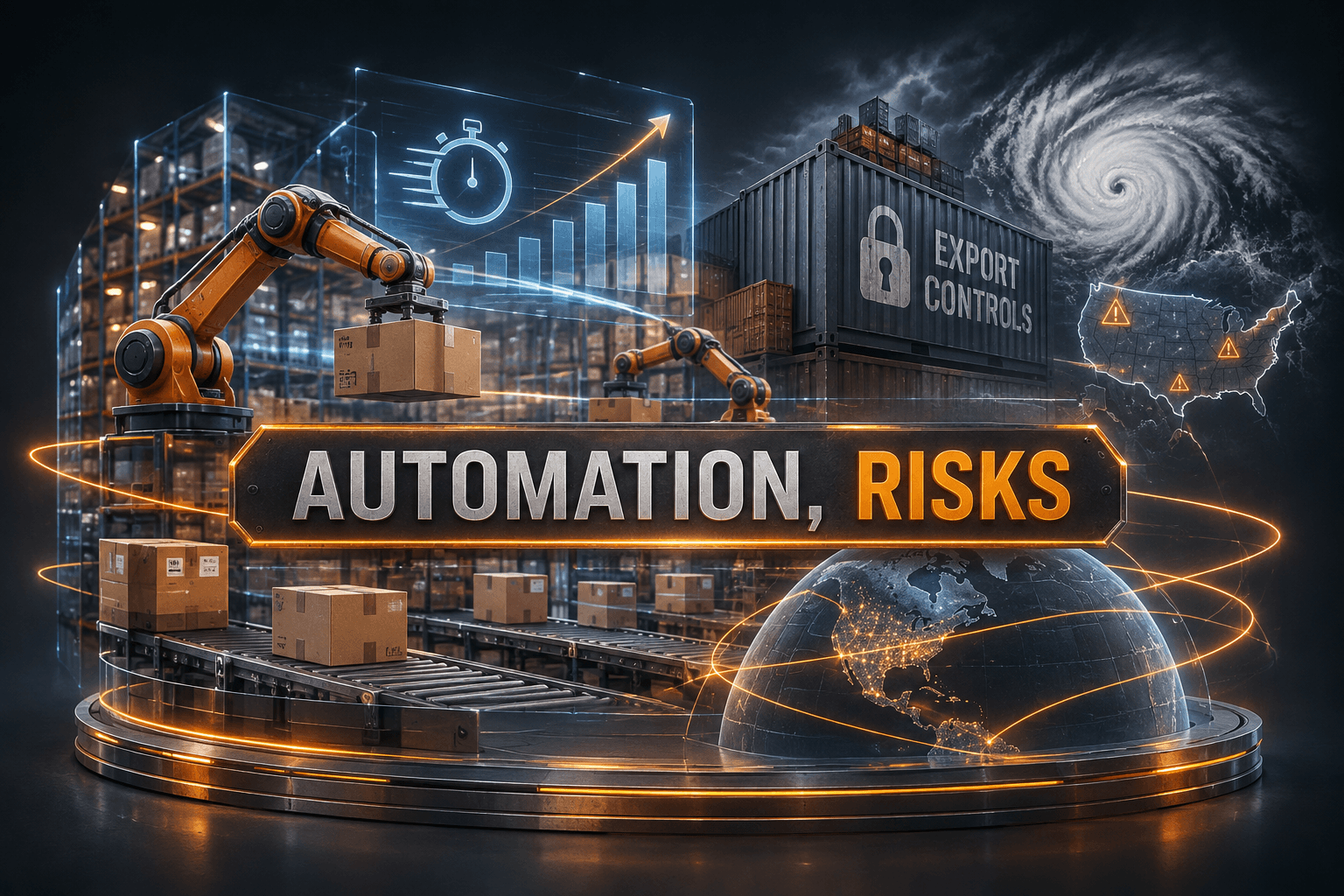
Industrial and manufacturing companies are weighing productivity gains against supply chain and regulatory risks this morning. US Foods plans to expand tests of inventory-scanning robots, while manufacturing coverage also points to robotic assembly, connected operational data and changes to fulfillment as ways companies are trying to improve performance.
That efficiency push comes alongside new U.S. controls on advanced semiconductor exports and warnings for manufacturers to prepare for severe weather. What does this mean for you as a retail investor? The headlines offer useful clues about investment priorities, but they don't establish a broad change in earnings or demand. With U.S. markets open today, the focus is on how companies put these plans into practice.
Market Highlights
The reports are operational and policy developments, not earnings releases or trading updates. None of the supplied stories reported percentage changes or share-price moves, so they don't provide a basis for claims about premarket performance.
- US Foods ($USFD) plans to begin piloting inventory-scanning robots at six additional warehouses by year-end, CEO David Flitman told investors.
- The U.S. Department of Commerce issued a rule intended to prevent circumvention of existing advanced-semiconductor export restrictions through remote computing arrangements involving data centers in third countries.
- Burns & McDonnell is contracted by the Army Corps of Engineers, Kansas City District, to support planning, programming and design for the Lake City facility in Missouri.
- For Love & Lemons moved order fulfillment to a Cart.com facility in Texas, a change the report says is helping reduce storage costs and speed deliveries.
In combination, the news highlights several levers for improving operations, from automation inside facilities to changing where inventory is stored. The policy and weather stories, however, are reminders that manufacturers also need to account for risks outside the production line.
Key Developments
Robotics and data are central to efficiency efforts
US Foods plans to test inventory-scanning robots in six more warehouses, with pilots set to start by year-end. The expansion could help the distributor assess whether automated scanning can support inventory visibility across more locations. The report does not provide projected savings, productivity targets or a companywide rollout decision, so the pilot remains an early signal rather than a quantified financial catalyst.
A separate Plant Engineering report describes robotics, machine vision and pneumatics being used in high-volume home-appliance assembly to raise line productivity while reducing physical strain and ergonomic injury risks for workers. Another industry article makes the case for an operational technology data fabric, a connected and contextualized data foundation intended to bring systems together and support AI and broader digital transformation. For your analysis, these stories point to potential benefits, but outcomes will depend on implementation, integration costs and whether productivity improvements can be measured.
Export controls and defense work add policy dimensions
The Commerce Department's final rule targets a specific potential route around existing restrictions on advanced semiconductors: remote computing arrangements involving data centers in third countries. For semiconductor and data-center businesses, the rule makes compliance across service arrangements an issue to watch, not just the physical movement of chips. The supplied report does not detail the rule's full scope, implementation timeline or expected financial impact on individual companies.
Separately, Burns & McDonnell is advising the Army Corps of Engineers' Kansas City District on planning, programming and design for the Lake City energetics facility in Missouri. The contract connects engineering services to defense-related facility planning, but the report provides no contract value or schedule. Taken together, the stories show how government policy and defense projects can shape parts of the industrial landscape, while leaving company-level revenue implications unclear.
Supply chain choices meet weather and workforce challenges
For Love & Lemons has shifted from a dedicated fulfillment model to shipping orders from a Cart.com facility in Texas. The reported benefits are lower storage costs and faster delivery, illustrating how a logistics redesign can address both cost and customer service. The story does not quantify the savings or indicate whether the model will be expanded.
Manufacturers are also being urged to audit systems for points of failure ahead of severe El Niño-related weather. The guidance is preventive, but it puts resilience, facility exposure and continuity planning on the agenda. Meanwhile, New American Manufacturing Renaissance founder Drew Crowe challenged the idea that manufacturers face only a skills gap, arguing for more open-minded hiring and discussing AI and a U.S. Navy partnership. Those themes matter because automation and workforce planning often need to advance together, rather than compete for attention.
What to Watch
The most immediate timeline in the reports is US Foods' plan to start six additional warehouse robotics pilots by year-end. Watch for updates on the sites, deployment progress and any disclosed measures of scanning accuracy, labor needs or inventory performance. The current report gives a start window, but no operating targets or financial estimates.
For semiconductor-related businesses, monitor implementation details and company responses to the Commerce Department rule, particularly where remote computing and third-country data centers are involved. You can also track whether severe-weather preparation becomes a larger operational priority as the season approaches. Disruptions to facilities or logistics are a risk highlighted by the coverage, but no specific impact is reported today.
On the manufacturing floor, evidence of measurable productivity or safety improvements will matter more than broad claims about robotics or AI. Fulfillment changes such as the For Love & Lemons move may offer useful examples, though investors will need company disclosures to judge the scale and durability of any cost or delivery gains. Today's stories don't identify upcoming earnings dates or scheduled policy events.
Bottom Line
- Sector sentiment is neutral: operational improvements are promising, while regulatory and weather risks remain relevant.
- US Foods' six additional warehouse pilots are a concrete automation milestone, but no savings or rollout decision has been reported.
- Track the Commerce Department rule's practical scope for advanced-semiconductor and remote-computing arrangements.
- Manufacturers are being urged to assess weather-related vulnerabilities before disruptions occur.
- Look for measurable results on cost, productivity, delivery speed and worker safety before drawing conclusions from these initiatives.
FAQ
Q: What is the main industrial sector theme this morning? A: Companies are exploring automation and operational changes to improve efficiency, while also confronting regulatory and weather-related risks.
Q: What is US Foods planning? A: US Foods plans to begin testing inventory-scanning robots at six more warehouses by year-end.
Q: What should investors monitor around semiconductor exports? A: Watch for details on how the Commerce Department rule applies to remote computing arrangements involving data centers in third countries.