The Big Picture
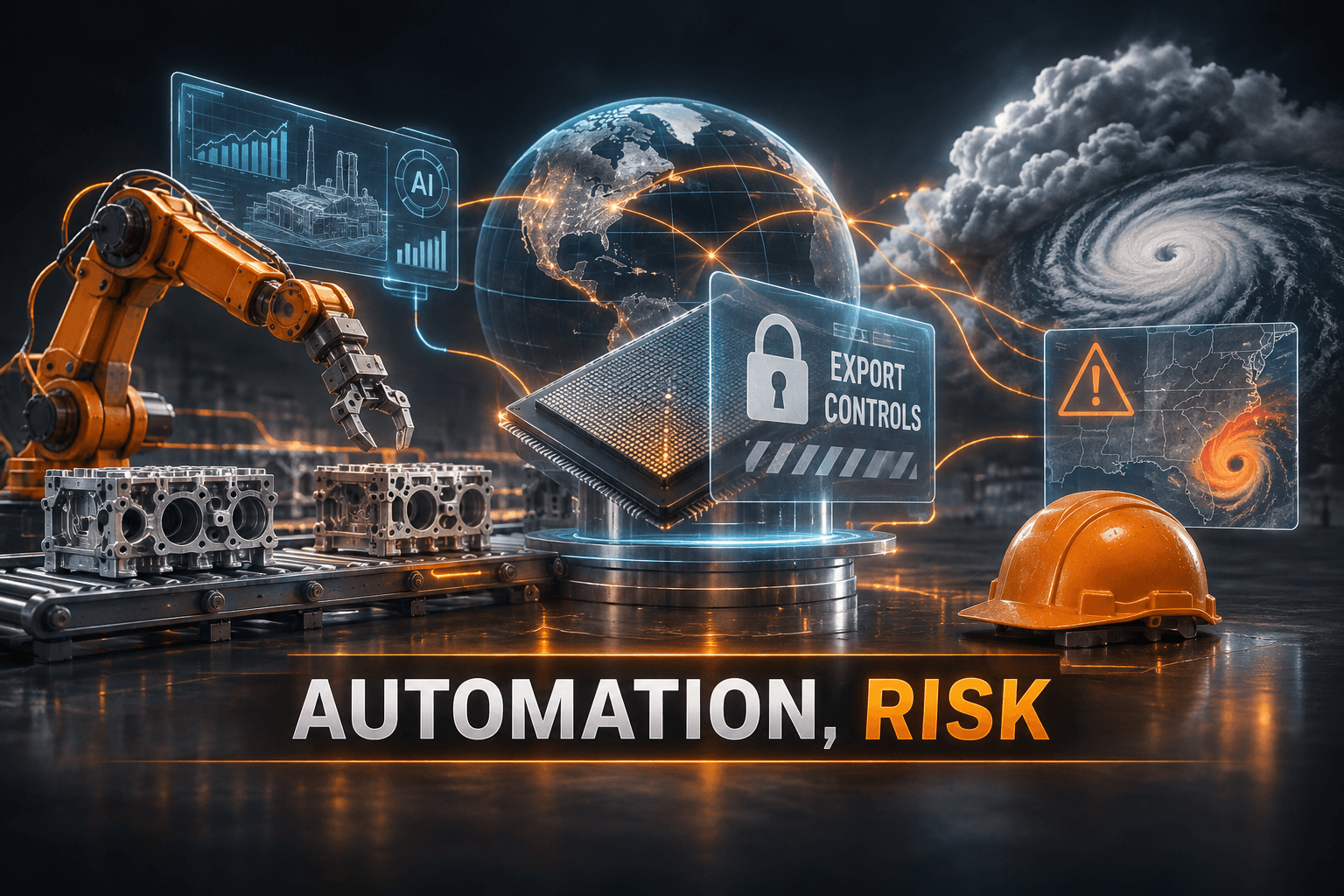
Industrial companies are weighing automation gains against a more demanding risk environment, from semiconductor export controls to severe-weather preparation. US Foods plans to pilot inventory-scanning robots at six additional warehouses by year-end, while industry guidance points to robotics, connected operational data and better facility planning as tools for improving performance.
Those efficiency opportunities come with caveats: the Commerce Department’s rule targets ways to circumvent chip restrictions, and experts are urging manufacturers to check their systems ahead of severe El Niño conditions. For you, the day’s news is less about a single sector-wide catalyst and more about companies making practical decisions on productivity, compliance and resilience.
Market Highlights
The reports cover operating plans, policy and supply-chain practices, rather than earnings or trading updates. The supplied stories don’t include share-price changes or percentage moves, so there’s no reported stock reaction to quantify in this wrap-up.
- US Foods ($USFD) plans to start piloting inventory-scanning robots at six more warehouses by year-end, CEO David Flitman told investors.
- The U.S. Department of Commerce issued a final rule targeting arrangements that could use remote computing in third-country data centers to get around existing advanced-semiconductor export restrictions.
- Burns & McDonnell is working under contract with the Army Corps of Engineers’ Kansas City District on planning, programming and design for the Lake City facility in Missouri.
- Separate industry coverage highlights severe-weather readiness, operational technology data systems and robotics as issues for manufacturers to assess. No measurable cost savings, productivity figures or company financial forecasts were provided.
Two supply-chain stories also show how companies are adjusting fulfillment. Fashion brand For Love & Lemons is shipping orders from a Cart.com facility in Texas, a change the report says helps lower storage costs and speed deliveries. The story doesn’t disclose savings or delivery-time figures, so the scale of the benefit remains unclear.
Key Developments
Automation moves from factory lines to warehouses
US Foods’ planned pilots extend inventory-scanning robots to six additional facilities. The company’s stated timing, starting by year-end, makes implementation and results the next key milestones. The report doesn’t give a budget, expected return or deployment schedule beyond that start window, so investors will need more information to assess the financial effect.
Other industry coverage describes robotics, machine vision and pneumatics as ways to increase throughput and reduce physical strain on workers in high-volume appliance production. That is a broader technology example, not a disclosed project at US Foods. Still, together the stories illustrate why companies are testing automation across different parts of operations. Will pilots translate into repeatable gains? Adoption costs, integration and safety outcomes will matter alongside productivity.
Export rules put compliance on the agenda
The Commerce Department’s final rule is intended to prevent companies from circumventing existing restrictions on advanced semiconductors through remote-computing arrangements involving data centers in third countries. The development adds a compliance consideration for businesses that use or provide access to advanced computing resources. The supplied report doesn’t specify which firms will be affected, detail penalties or describe an immediate impact on revenue.
For industrial companies with semiconductor exposure or complex technology supply chains, the practical task is understanding whether their operations, customers or service arrangements fall within the rule. The rule’s effects could vary by business, making legal guidance and further implementation details important. This is a policy development to monitor, not evidence that all manufacturers face the same level of exposure.
Resilience and data quality shape operations
Experts cited in the severe El Niño preparedness report advise manufacturers to audit systems for failure risks and take protective measures as severe weather approaches. The article doesn’t quantify expected losses or identify specific disruptions, but the message is operational: facilities and supply networks can be vulnerable when weather interrupts equipment, transport or access to inputs. A readiness review may help companies identify weak points before they become urgent.
Plant Engineering’s discussion of an operational technology data fabric makes a related case for connecting and contextualizing manufacturing data to harmonize systems and support AI. That is an industry argument rather than a reported company implementation or measured performance result. The workforce discussion published Monday also challenges the idea that skills shortages are simply a matter of worker availability, urging manufacturers to reconsider hiring and training approaches. Taken together, these themes point to people, data and physical infrastructure as parts of the same operating challenge.
What to Watch
In the near term, watch for further detail on the Commerce rule, including how companies interpret its scope and whether affected businesses disclose changes to their computing or supply-chain arrangements. Policy clarification could help investors distinguish broad sector exposure from risks concentrated in particular companies.
For US Foods, the next concrete milestone is the start of its six warehouse pilots by year-end. Subsequent updates on rollout, operating costs, inventory accuracy or labor needs would help show whether the program is delivering measurable value. For the wider sector, you can track severe-weather preparations and any reported interruptions as conditions develop, while recognizing that the supplied coverage gives no specific forecast of company losses.
Also watch whether manufacturers turn data-fabric and robotics concepts into documented deployments, with clear productivity or safety measures. Technology projects can require integration and investment before benefits appear. Fulfillment changes such as For Love & Lemons’ move to a Texas facility offer another example to follow, but the report provides no quantified comparison of transit times or storage expense.
Bottom Line
- Automation remains a practical efficiency theme, but US Foods’ additional robot pilots are plans, not yet reported financial results.
- Commerce’s semiconductor rule raises a compliance issue for some technology and manufacturing supply chains; the scope of company exposure needs further detail.
- Severe-weather preparation, operational data quality and workforce practices are operational risks and capabilities worth monitoring.
- The supplied reports contain no stock-price data, percentage moves or earnings results, so they don’t establish a clear trading reaction or sector direction.
- This summary is for informational purposes only and isn’t personalized investment advice.
FAQ
Q: What is the main automation development today? A: US Foods plans to begin testing inventory-scanning robots at six more warehouses by year-end.
Q: What does the Commerce Department rule address? A: It aims to prevent circumvention of existing advanced-semiconductor export restrictions through remote-computing arrangements involving data centers in third countries.
Q: Were industrial stocks up or down today based on these reports? A: The supplied stories don’t provide share-price data or percentage changes, so they don’t establish a market move.