The Big Picture
Today brought a string of developments that reinforce a constructive backdrop for the industrial and manufacturing complex. BMW's new battery supply agreements and Mars' $1.4 billion U.S. manufacturing pledge stand out as demand-driven moves to secure capacity and shorten supply chains.
At the same time, freight rates showed signs of relief and companies are retooling distribution to cut costs, which could support margins if trends persist. You should watch how policy and M&A headlines influence investor sentiment tomorrow and beyond.
Market Highlights
Key market moves were driven by corporate actions and supply-chain shifts. Here are the quick facts you need:
- BMW announced new battery supply deals with Samsung SDI and LG Energy Solution to support U.S. and European EV production, highlighting localization strategies.
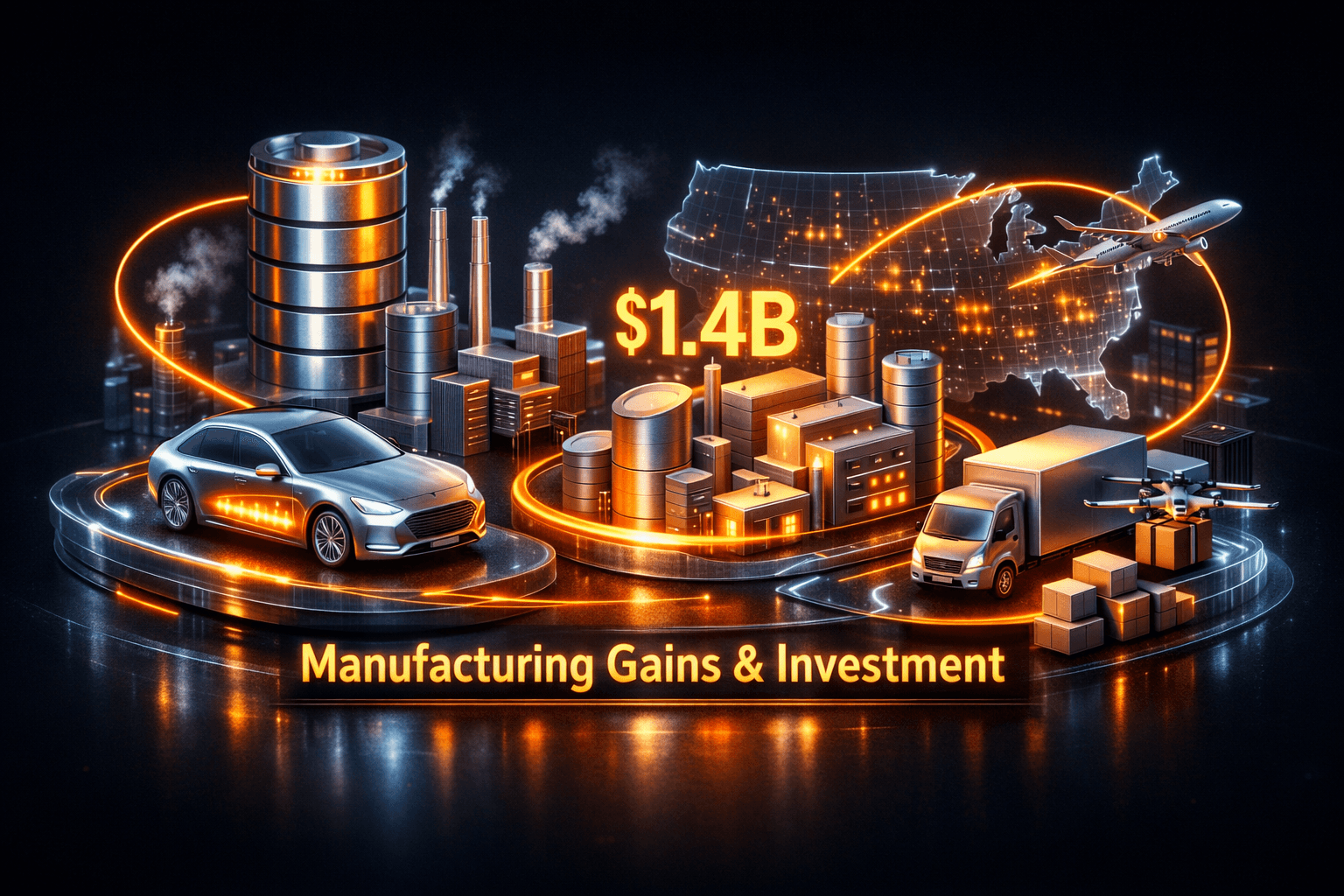
- Mars committed $1.4 billion to U.S. manufacturing and operations in 2027 following its $36 billion Kellanova acquisition, signaling expanded capacity for snacking products.
- Transpacific ocean rates eased slightly as peak season winds down, though rates remain elevated year over year, easing pressure on landed costs.
- CarParts.com is building an in-house last-mile network to handle roughly 300,000 packages annually, a move $PRTS says will yield substantial cost and speed benefits.
- SoftBank and $ABB have reopened talks after China blocked a $5.4 billion robotics acquisition, leaving the deal's future in flux.
Key Developments
BMW inks battery deals to localize EV supply
BMW's agreements with Samsung SDI and LG Energy Solution aim to secure cell supply for new EVs in both the U.S. and Europe. The contracts underscore a wider industry push to shorten and diversify supply chains, which can reduce geopolitical risk and lead times.
For you, that means automakers are investing in supply certainty, which may translate into steadier production and more predictable capital spending across suppliers.
Mars doubles down on U.S. capacity after major acquisition
Mars said it will invest $1.4 billion in U.S. manufacturing and operations in 2027, its largest single-year outlay and a follow-on to the $36 billion acquisition of Kellanova. The spend is targeted at scaling snacking production and integrating the new portfolio.
This kind of capex boost typically flows to plant operators, equipment makers, and contract manufacturers, and you should expect related vendors to see increased order visibility as Mars executes integration plans.
Logistics and last-mile shifts ease near-term cost pressure
Freight markets showed modest relief as the peak shipping season cools, with transpacific ocean rates easing slightly though staying higher than last year. Slower volumes at U.S. ports are cited as a key factor.
Meanwhile, CarParts.com is moving 300,000 parcels a year to an internal network to gain speed and cut delivery costs. That strategy highlights a trend where retailers and parts sellers take more control of fulfillment to protect margins.
What to Watch
Expect headlines to stay busy and your focus should be selective. Monitor these catalysts and risks:
- Trade policy and tariff rhetoric: A new push from manufacturing advocates for stronger trade enforcement could prompt congressional hearings or proposals. Will lawmakers act after the midterms?
- Supply-chain deals and localization: Watch for follow-on supplier contracts from other automakers and component makers, plus updates on battery cell capacity ramp timing.
- M&A developments in automation and robotics: The SoftBank and ABB situation remains fluid after China's intervention; any carve-outs, new bidders, or spin-off plans could alter competitive dynamics and valuations for robotics suppliers.
- Logistics seasonality into year-end: Even with easing rates, port throughput and holiday demand will affect freight costs. Keep an eye on weekly rate and volume data.
- Earnings and guidance from key suppliers: Upcoming reports from equipment makers, logistics providers, and industrial distributors could confirm whether margins are stabilizing.
Bottom Line
- Corporate investment and supply deals are the dominant theme today, with BMW and Mars leading the charge on capacity and localization.
- Logistics costs are easing, and companies like $PRTS are reshaping delivery networks to control expenses and service, which could support operating leverage.
- Policy developments on tariffs and the revived SoftBank/$ABB talks add variables that could influence trade flows and M&A sentiment.
- Analysts note these moves point to momentum in selective industrial segments, but execution timelines and policy outcomes will determine how broad the impact becomes.
- This article is for informational purposes only, data suggests shifting opportunities and risks, and it does not constitute investment advice.
FAQ Section
Q: How will BMW's battery deals affect suppliers and EV production? A: The deals are meant to secure localized cell supply for U.S. and European EV builds, which should reduce lead times and supply risk for BMW and create clearer order flow for cell manufacturers and pack integrators.
Q: Could tariffs return after the midterms and what would that mean? A: Manufacturing advocates are pressing for continued or stronger enforcement of import taxes; if policymakers act, tariff changes could favor domestic producers but raise input costs for firms reliant on global sourcing.
Q: What should you watch on logistics heading into year-end? A: Track weekly ocean rates, port dwell times, and carrier capacity; those metrics will show whether the slight easing in rates continues or if seasonal surges push costs back up.