The Big Picture
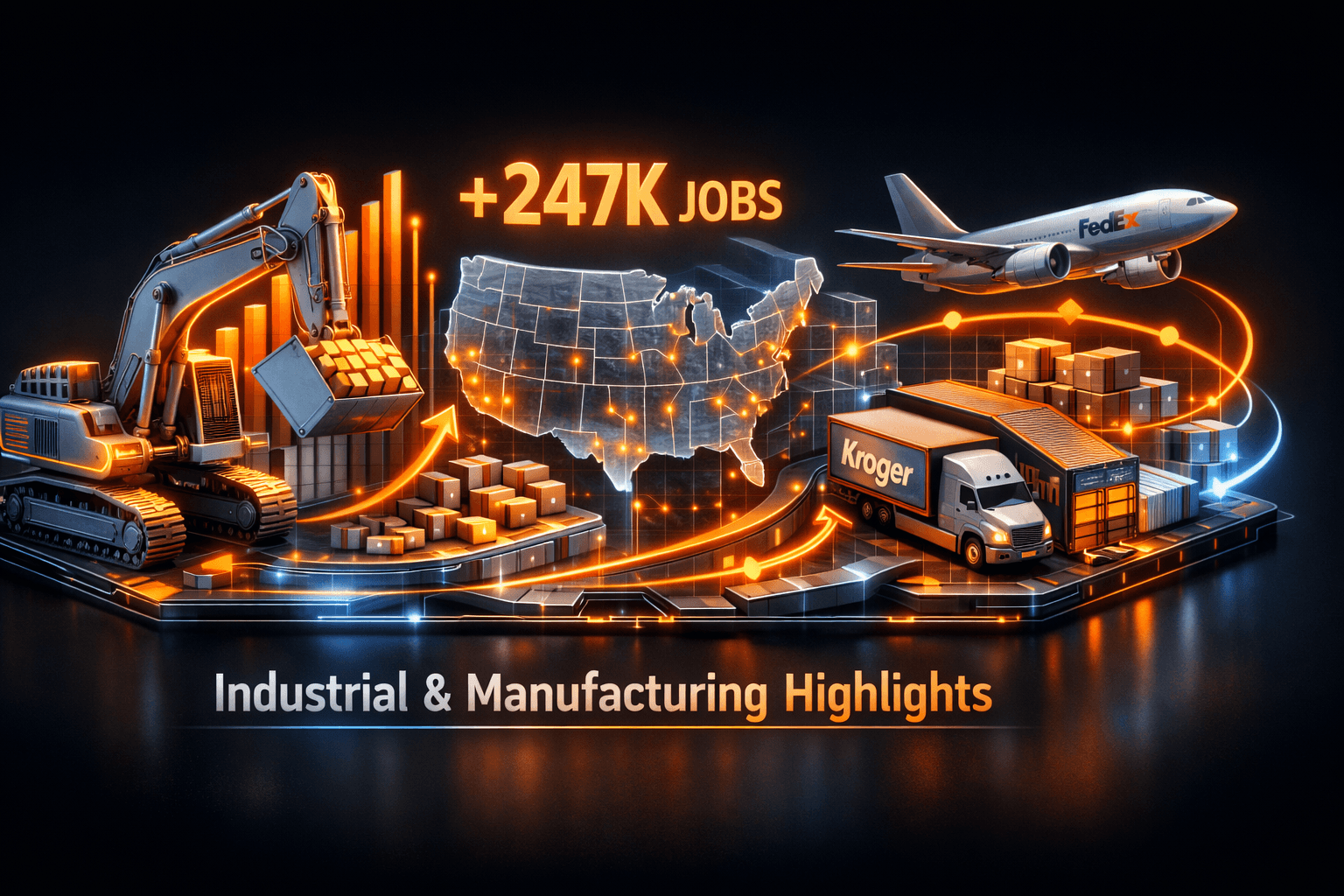
Caterpillar posted its highest sales quarter ever and pushed its order backlog to $78 billion, nearly double the year ago level, signaling robust demand across heavy equipment and power for data center builds. That result, together with a reshoring report showing 247,000 jobs added in 2025 and rising air freight demand at FedEx, suggests momentum in industrial activity you can’t ignore.
These developments matter because they point to stronger capital spending and tighter supply chains, which could move the needle for suppliers, logistics providers, and manufacturers. At the same time, the administration is choosing trade talks over immediate tariffs for robotics and industrial machinery, lowering the near-term risk of disruptive import duties.
Market Highlights
Quick facts and what moved headlines overnight and in pre-market news.
- Caterpillar Caterpillar (CAT): Highest sales quarter on record, order backlog rose to $78 billion, about a 100 percent increase versus a year ago.
- Reshoring Initiative: 247,000 jobs added in 2025, roughly in line with 2024, with the group forecasting 25 percent growth in 2026.
- Kroger The Kroger (KR): Accelerating direct sourcing, targeting first-party procurement above 10 percent and moving toward owned import and distribution functions.
- FedEx FedEx (FDX): Reporting rising air freight demand from parcel-centric shippers as carriers push into high-value segments like AI and data centers.
- Trade policy: Administration directed cabinet officials to negotiate on robotics and industrial machinery in a Section 232 probe, opting for talks rather than immediate tariffs.
- The Wella Company: Appointed Javier Huerta as chief supply chain officer effective Dec 1, strengthening sourcing and logistics oversight.
Key Developments
Caterpillar Posts Record Quarter
Caterpillar reported its strongest sales quarter to date and flagged a backlog that reached $78 billion, almost double last year. The company cited data center demand among drivers for equipment and power solutions, which suggests sustained capital investment in infrastructure.
For you, that means suppliers of components, aftermarket parts, and power systems could see stronger order flow if backlog converts to production. Analysts note backlog strength often precedes higher factory utilization and pricing power.
Reshoring Momentum and Labor Impacts
The Reshoring Initiative said reshoring and foreign direct investment added 247,000 jobs in 2025, roughly matching 2024, and it expects a 25 percent increase in 2026. Transportation and logistics led the reshored job announcements.
Why should you care? Reshoring can lift domestic-capex and boost demand for U.S. manufacturing services, which helps margins and reduces exposure to long international supply chains. Which names stand to benefit from reshoring momentum will depend on exposure to transportation and local manufacturing services.
Supply Chain Shifts: Kroger, FedEx, and Trade Talks
Kroger $KR said it will accelerate direct sourcing, aiming to get first-party procurement above 10 percent and move toward owning imports and distribution. That will reshape supplier relationships and could give Kroger firmer cost control and visibility.
At the same time FedEx $FDX is seeing parcel-focused shippers shift to its air freight services as carriers push into high-value segments like AI and data center logistics. Taken together these moves point to providers and vendors adapting to faster, higher-value demand patterns.
On trade policy the administration has opted for negotiations over immediate tariffs for robotics and industrial machinery under a Section 232 probe. That lowers the chance of abrupt duty increases that could disrupt capital goods imports, but outcomes remain uncertain.
What to Watch
Look ahead to catalysts and risks that could change the landscape for manufacturers and suppliers.
- Backlog conversion at $CAT, quarterly revenue and margin trends, and whether order momentum sustains into 2027.
- Reshoring Initiative updates and announced new projects for 2026, which could expand domestic capex and hiring.
- Outcomes of Section 232 negotiations on robotics and industrial machinery, which will influence import costs for equipment makers and their customers.
- Kroger’s rollout timeline for direct sourcing and owned imports, and how suppliers adjust pricing or capacity.
- Air freight capacity and pricing at $FDX as carriers pursue high-value shippers tied to AI and data centers.
- Talent and supply chain leadership moves, such as The Wella Company’s appointment of a chief supply chain officer, which can improve supplier coordination and resilience.
Have questions about how these trends affect your portfolio exposure? Consider focusing on companies with clear order visibility and diversified logistics strategies. You’ll want to monitor earnings and trade developments closely this quarter.
Bottom Line
- Caterpillar’s record sales and a $78 billion backlog point to strong demand in heavy equipment and power, especially for data center builds.
- Reshoring added 247,000 jobs in 2025 and could accelerate in 2026, supporting domestic manufacturing and transport demand.
- Kroger’s move to greater direct sourcing and FedEx’s push into air freight for high-value shippers highlight a shift toward tighter supply chain control and premium logistics.
- Trade talks on robotics and industrial machinery reduce immediate tariff risk but leave policy uncertainty over the medium term.
- Watch order-backlog conversion, reshoring project announcements, and trade negotiation outcomes for clues on industrial revenue and margins.
FAQ Section
Q: What does Caterpillar’s backlog mean for suppliers and investors? A: A large backlog suggests strong near-term demand and potential higher utilization for suppliers, which can support revenue and margin improvements for parts and service providers.
Q: How significant is reshoring for U.S. manufacturing jobs and investment? A: Reshoring added 247,000 jobs in 2025 and the initiative expects 25 percent growth in 2026, indicating continued investment that could lift capex and logistics demand domestically.
Q: Will trade talks eliminate the risk of tariffs on robotics and industrial machinery? A: Negotiations lower the near-term likelihood of abrupt tariffs, but outcomes remain uncertain and you should monitor official findings and any follow-on policy steps.