The Big Picture
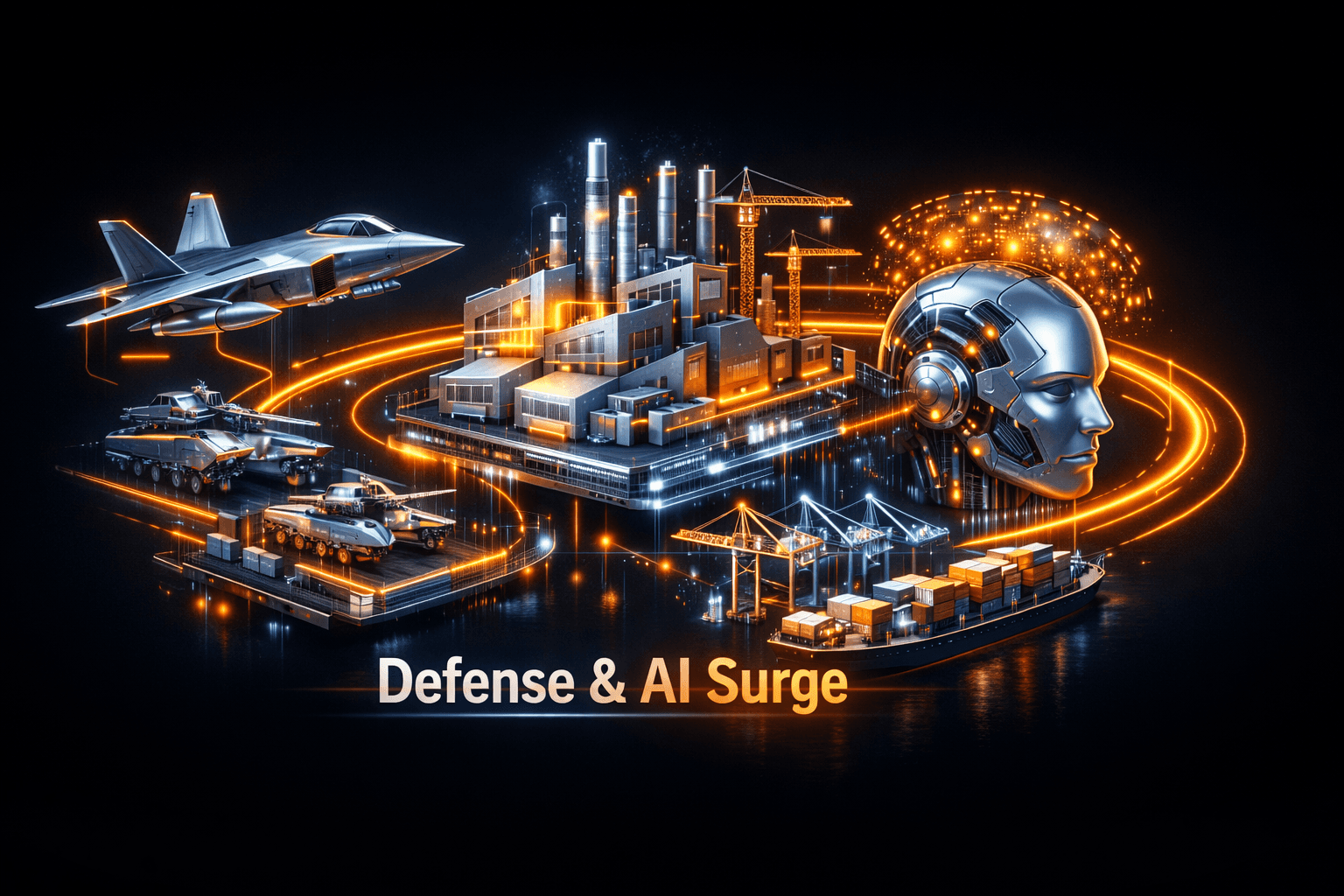
Defense wins and industrial investments set the tone today, as $RTX locked in roughly 30.7 billion dollars of Pentagon contracts and $NOC moved ahead with a multibillion dollar expansion. You should note that capital spending is accelerating across both defense and commercial manufacturing, and that trend matters for suppliers and labor markets.
On the logistics side, firms pushed for faster, smarter inventory management and shifted flows to U.S. West Coast hubs amid Panama Canal disruptions. What does this mean for ports, carriers and you as an investor watching industrial demand?
Market Highlights
Trading reflected the news flow, with defense and industrial names showing strength while logistics and retail suppliers reacted to shifting freight patterns. You saw headlines drive sector rotations today.
- Raytheon Technologies $RTX, announced combined Pentagon contracts valued at 30.7 billion dollars, supporting SM-3 IB and SM-6 interceptor production.
- Northrop Grumman $NOC began a 4.5 billion dollar facility expansion in California to add more than one million square feet for B-21 Raider work.
- GSK $GSK confirmed an 800 million dollar Pennsylvania manufacturing investment expected to create about 300 jobs, boosting pharma manufacturing activity.
- Neighborhood Intelligence moved to standardize forecasting and replenishment using Relex Solutions, signaling rising adoption of AI in retail supply chains.
- Port and logistics shifts accelerated, with shippers diverting cargo to the Port of Los Angeles amid Panama Canal challenges and rising fuel costs.
- New York City offered a 5 million dollar incentive to move deliveries to off-peak hours, a policy aimed at cutting congestion and smoothing urban freight flows.
Key Developments
Massive Defense Orders Boost Production Pipelines
Raytheon secured two Department of Defense agreements totaling 30.7 billion dollars to expand production of Standard Missile-3 Block IB and Standard Missile-6 interceptors at facilities in Alabama and Arizona. The size of the awards gives the RTX supply chain multiyear visibility, and it will likely spur demand for precision manufacturing, electronics, and test equipment providers. You should watch suppliers and regional industrial contractors who may see follow-on work.
Airframe and Systems Capacity Expands with Northrop Project
Northrop Grumman and the Air Force started a 4.5 billion dollar expansion at Plant 42 in California to produce B-21 Raider components, adding more than one million square feet of manufacturing space. The project is a reminder that defense modernization is driving long lead capital projects, and that prime contractors will need larger domestic networks of tiered suppliers. For workers and regional economies the effects could be substantial.
Corporate CapEx and Supply Chain Tech Move the Needle
GSK committed 800 million dollars to a Montgomery County, Pennsylvania manufacturing hub that includes a quality control lab and a technology and process development plant, creating about 300 jobs. At the same time, Neighborhood Intelligence is deploying AI-driven forecasting and replenishment with Relex Solutions to simplify omnichannel inventory. Those investments show both product-focused and digital-focused capital spending accelerating.
Meanwhile, Panama Canal challenges and higher fuel costs pushed shippers toward the Port of Los Angeles. New York City targeted delivery timing with a 5 million dollar program to encourage nighttime deliveries. Those moves are reshaping freight flows and creating opportunities for port operators, drayage fleets and warehouse owners.
What to Watch
Look for follow-on contract announcements, supplier bookings, and regional hiring data that will clarify how long current momentum lasts. You want to see procurement schedules and supplier award notices for signals about sustained industrial demand.
Also monitor port throughput and container dwell times at Los Angeles and other West Coast facilities, because further Panama Canal disruptions or fuel price shifts could force additional rerouting. How resilient are logistics capacities if volumes keep moving westward?
Keep an eye on technology adoption across retail and distribution networks. Early wins in AI forecasting can reduce inventory costs and improve service, but you need to watch implementation timelines and measurable KPI improvements before drawing conclusions.
Finally, regulatory and policy actions matter. Urban delivery incentives in New York could become a model for other cities, changing demand for nighttime warehousing and last mile services.
Bottom Line
- Defense awards and facility expansions are creating near-term demand for manufacturing equipment, skilled labor, and suppliers, which may boost related industrial activity.
- GSKs 800 million dollar investment underscores ongoing pharma manufacturing onshoring and process modernization efforts.
- AI adoption in retail replenishment is a structural tailwind, but benefits will depend on execution and measurable inventory improvements.
- Port and urban logistics shifts are generating winners and losers; ports, drayage services and warehouse operators may benefit if flows remain diverted to the West Coast.
- Monitor procurement timing, supplier contract flow, and port throughput to assess whether todays momentum will translate into sustained revenue growth for manufacturers.
FAQ Section
Q: How do Raytheon and Northrop announcements affect suppliers A: Large defense contracts and facility expansions typically increase demand for components, precision machining, and test services, offering multiyear visibility for qualified suppliers.
Q: Will port shifts to Los Angeles raise shipping costs A: Rerouting can raise inland transport costs and congestion in the short term, but port capacity, drayage availability and fuel prices will determine whether those costs persist.
Q: How quickly will AI in supply chain forecasting deliver savings A: Some firms report measurable inventory and service improvements within months, but large scale rollouts often take one to two years to fully realize benefits and tune processes.