The Big Picture
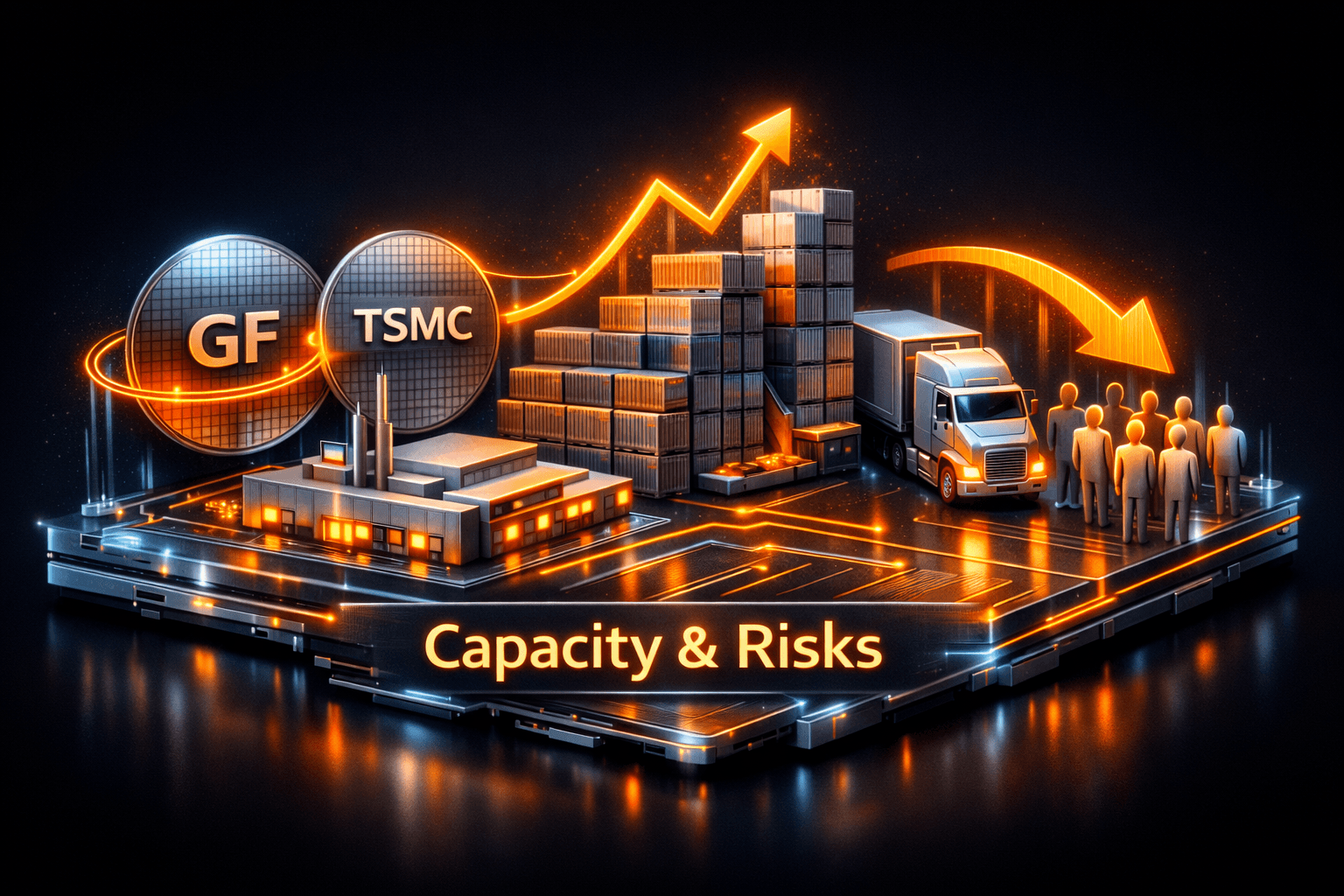
The largest single development this weekend was the multiyear $2 billion agreement between GlobalFoundries and $TSM to expand U.S.-based silicon interposer capacity, a direct response to surging demand for AI and high-performance computing packaging. That deal signals a material commitment to onshore advanced packaging, and it will matter to investors focused on long-term semiconductor supply chains and capital spending trends.
At the same time you need to weigh several countervailing forces, including thousands of reported manufacturing layoffs in September and persistent transportation cost pressure. So while capacity and investment are building, near-term operating and logistics headwinds create a mixed bag for the sector as you plan for the week ahead.
Market Highlights
Markets were closed on Sunday, Oct 11. The last trading session was Friday, Oct 9. Below are the key developments that shaped sector sentiment heading into the long weekend.
- Semiconductor capacity: GlobalFoundries and $TSM struck a $2 billion deal to expand silicon interposer production for advanced packaging, aimed at supporting AI and HPC demand.
- Manufacturing investment: Companies including Blue Origin, $PPG, and $CLF announced site investments or expansion updates, while Xingyu and Re:Build plan or scale U.S. facilities in North Carolina and South Carolina respectively.
- Logistics pressure: Supply Chain Dive cited Freightos reporting that Golden Week in China may not ease Transpacific ocean rates, with weather disruptions keeping freight fees elevated.
- Air freight demand: Nippon Express and Japan Airlines launched a weekly transpacific air freight circuit for AI and semiconductor cargo serving Los Angeles and major Asian hubs.
- Labor trends: Manufacturing Dive documented thousands of layoffs and facility changes in September, with firms such as $BMY among those named in reporting.
Key Developments
GlobalFoundries and TSMC agree on $2B interposer capacity
The $2 billion multiyear deal between GlobalFoundries and $TSM aims to expand U.S. silicon interposer output to support TSMC's advanced packaging efforts. For you, this could mean a more robust domestic supply chain for AI and HPC components over several years, reducing some geopolitical and logistical risks tied to offshore capacity.
Analysts note the pact is primarily about packaging capacity rather than wafer fabs, so the revenue and margin profiles will differ from traditional foundry growth. Still, the agreement signals rising demand for complex packaging and could influence capex plans across chip makers and their suppliers.
U.S. facility investments accelerate — from defense to coatings
Manufacturing Dive reported a string of U.S. investments: Blue Origin and $PPG are among firms expanding facilities, Cleveland-Cliffs provided an update on its Butler Works expansion in Pennsylvania, and firms like Xingyu and Re:Build announced new or expanded U.S. operations in the Southeast. You should note that these investments point to selective reshoring and targeted capacity growth, especially in advanced manufacturing and materials.
These moves are likely to support regional jobs and supplier networks, even as national employment figures show weakness in other parts of the sector. Location choices also reflect incentives and logistics considerations that could alter regional cost structures over time.
Logistics: ocean rates stay high, air freight pivots to premium cargo
Freightos data suggests the Golden Week slowdown in China may not be enough to relieve Transpacific ocean rates because weather-related disruptions are keeping demand for limited capacity elevated. Elevated freight costs can squeeze margins for manufacturers that lack pricing power, and they can delay inventory adjustments.
In response to strong demand for timely chip and AI-related shipments, Nippon Express and Japan Airlines launched a weekly transpacific air freight service linking Los Angeles and key Asian hubs. That premium lane shows how the market is adapting, but it also means higher transportation bills for time-sensitive loads.
What to Watch
Expect the biggest near-term moves to come from company-level capital spending announcements, earnings commentary, and logistics updates. Will semiconductor packaging demand remain strong enough to justify large multiyear investments? That's the question investors will ask as companies report capex plans and revenue trajectories next quarter.
Monitor earnings from key materials and industrial names such as $PPG and $CLF for comments on order books and pricing power. Also watch semiconductor suppliers and packaging specialists for guidance on utilization and lead times, because that will tell you whether the $2 billion deal is timely or ahead of demand.
Keep an eye on freight indices and weather forecasts. If ocean capacity tightens further, transit costs could remain a significant input cost for manufacturers. Finally, track workforce announcements and regional incentives tied to new facilities, since these will affect local operating cost trends and near-term hiring profiles.
Bottom Line
- Major capacity bets are being placed, led by a $2 billion GlobalFoundries and $TSM deal that targets U.S. advanced packaging needs.
- U.S. facility investments from $PPG, Blue Origin and others reinforce a selective reshoring trend, but benefits will be realized over years not weeks.
- Logistics remain a notable headwind, with Freightos reporting ocean rates still elevated and air freight pivoting to premium lanes for AI and semiconductor cargo.
- September layoffs underline uneven labor demand across the sector, reinforcing that growth is uneven and selective.
- Watch capex guidance, freight-cost trends, and packaging utilization for signs of clearer directional momentum.
FAQ Section
Q: How significant is the $2 billion deal between GlobalFoundries and TSMC? A: The deal is significant because it targets silicon interposer capacity for advanced packaging, a critical link in meeting AI and HPC demand and strengthening U.S.-based supply chains.
Q: Will freight rate pressures ease after Golden Week? A: Freightos reported Golden Week may not be enough to lower Transpacific ocean rates, especially with weather-related disruptions. So you should expect freight costs to remain a risk in the near term.
Q: Should I be worried about the manufacturing layoffs reported for September? A: The layoffs indicate pockets of weakness and restructuring across the sector. They matter for near-term sentiment and regional economies, but they do not negate the investment trend in targeted advanced manufacturing areas.