The Big Picture
Industrial and manufacturing news today delivered mixed signals for investors, with expansion and capital commitments running head to head against safety, regulatory and policy uncertainty. You saw growth catalysts in logistics and advanced manufacturing technologies, while safety and compliance stories reminded you of rising operational costs.
That mix matters because it shapes where companies will spend capital and where margins could be pressured. How you position for tomorrow will depend on whether the operational tailwinds, like microfactories and automation, can outweigh the near-term headwinds from new regulation and plant-safety priorities.
Market Highlights
Here are the headline moves and company-specific items you should know from today's coverage.
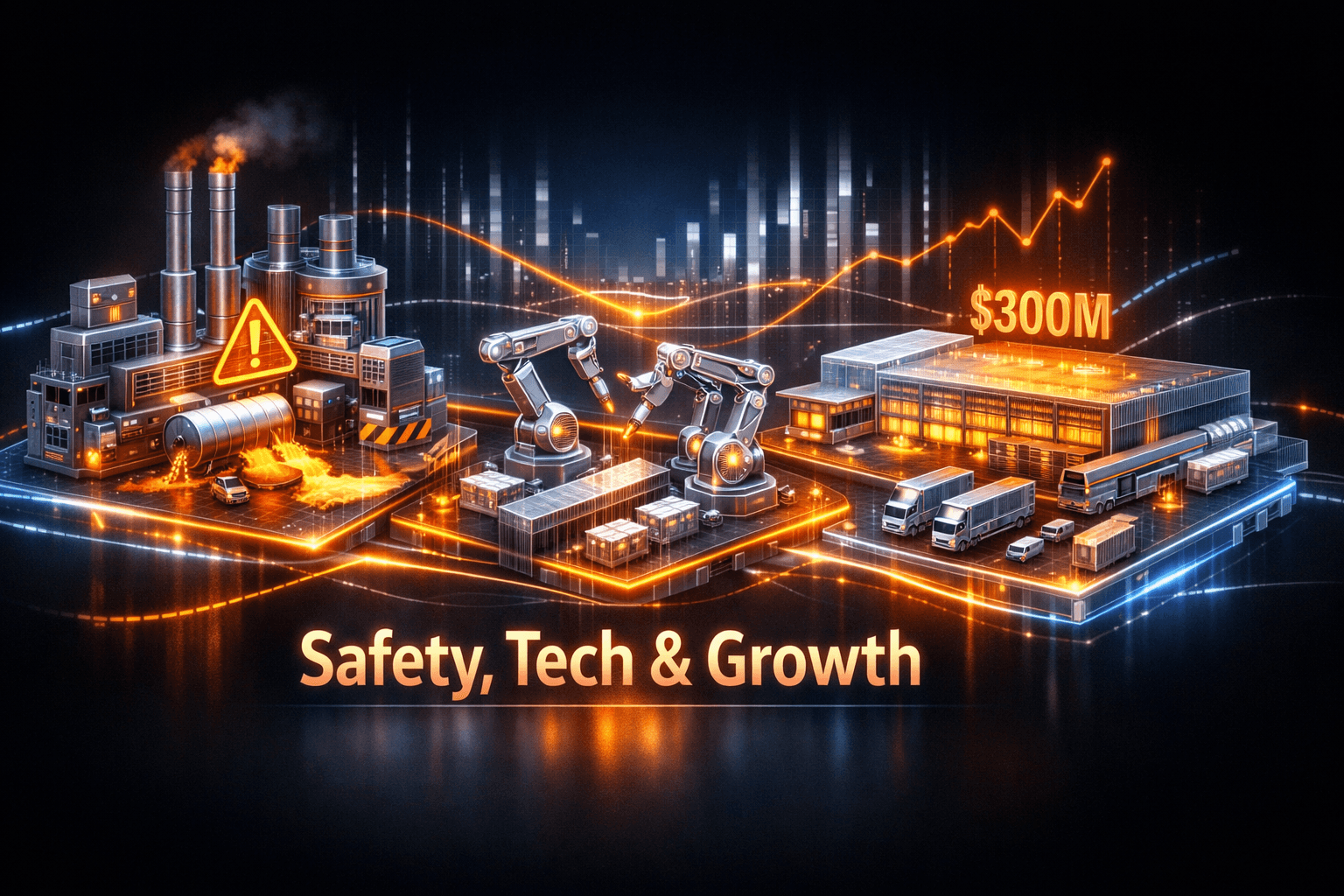
- Walmart, $WMT, announced a $300 million fulfillment center in Ohio focused on oversized goods, signaling more targeted logistics investment and capacity build-out for e-commerce and big-ticket items.
- Manufacturing activity remained in expansion for September, according to the Institute for Supply Management commentary, but manufacturers flagged economic policy uncertainty as a worry.
- Regulation and remediation costs are now visible after the California chemical incident tied to GKN Aerospace, which agreed to up to $100 million in reimbursements to displaced residents.
- Technology and security moves included Event Horizon Group and MSP4MFG launching quantum resilient encryption, a step suppliers and plants will consider as cyber threats evolve.
- On sustainability and retail supply chains, fast fashion leaders including Inditex, $ITX, and H&M, $HNNMY, face scrutiny over whether business models can match sustainability claims.
Key Developments
Safety and Regulation: California law follows costly spill
California Gov. Newsom signed a new explosive chemical safety bill that was reworked following the May spill at a GKN Aerospace facility, an event that forced evacuations and led the supplier to offer up to $100 million in reimbursements. For you as an investor, this is a reminder that localized incidents can trigger costly legislation and reputational fallout, with compliance spending likely to rise for exposed manufacturers.
Logistics and Capacity: Walmart doubles down on oversized items
$WMT’s $300 million Ohio fulfillment center targets non-sortable, large goods such as TVs and furniture. That shows retailers continue to invest in differentiated fulfillment capacity to improve service and margins, and it increases demand for specialty logistics and materials handling suppliers.
Tech and Production Innovation: Microfactories and quantum-ready security
Microfactories are getting traction as a way to shorten lead times using robotics and additive manufacturing, offering a modular alternative to long, centralized supply chains. At the same time, Event Horizon Group and MSP4MFG unveiled quantum resilient encryption based on bi-symmetric techniques, which could become a procurement item for industrial control systems and cloud providers as quantum threats advance.
What to Watch
There are several catalysts that could shift the sector’s near-term trajectory, and you’ll want to monitor these closely.
- ISM and regional PMI updates next month, plus any flash manufacturing indicators, will show whether expansion is sustaining or cooling.
- Regulatory rollouts and compliance costs stemming from California’s new law may set precedents for other states, so watch guidance from affected suppliers and insurers.
- Adoption curves for microfactories and additive manufacturing, especially among tier-one suppliers, will matter for lead times and capex allocation. How fast will companies retrofit or invest in smaller modular facilities?
- Cybersecurity budgets tied to industrial control systems and plant IT will rise if quantum-resistant offerings gain traction, which could lift vendors serving that niche.
- Supply chain capacity moves, like Walmart’s Ohio facility, will influence demand for warehouse automation, conveyors and heavy-material contractors as holiday season planning ramps up. What will that mean for suppliers in the next earnings cycle?
Bottom Line
- Manufacturing expansion is intact but not unambiguous; economic policy uncertainty is weighing on confidence.
- Regulation and safety incidents can create sudden cost spikes and liability, and they deserve your attention when reviewing company disclosures.
- Targeted investments, such as $WMT’s $300M fulfilment center, and the rise of microfactories show selective growth opportunities in logistics and advanced manufacturing technologies.
- Cyber and information security developments, including quantum resilient encryption, are emerging procurement themes that may drive vendor revenue outside traditional capital spending cycles.
- Stay selective, monitor PMI and regulatory developments, and watch capex guidance from suppliers and integrators for clearer signals about demand and margin trends.
FAQ Section
Q: How should I interpret the manufacturing expansion report? A: Expansion means production and orders grew month over month, but commentary about policy uncertainty suggests sentiment is fragile and could reverse if macro or policy conditions worsen.
Q: Will California’s new chemical safety law affect national manufacturing costs? A: The law raises compliance expectations and could influence federal or other state-level actions, so companies with chemical-handling operations may face higher compliance spending and insurance costs.
Q: Are microfactories and quantum encryption immediate investment themes? A: They are growing themes, but adoption will be uneven; you should watch vendor contracts, pilot programs, and capex guidance to see if these trends translate into material revenue for suppliers.