The Big Picture
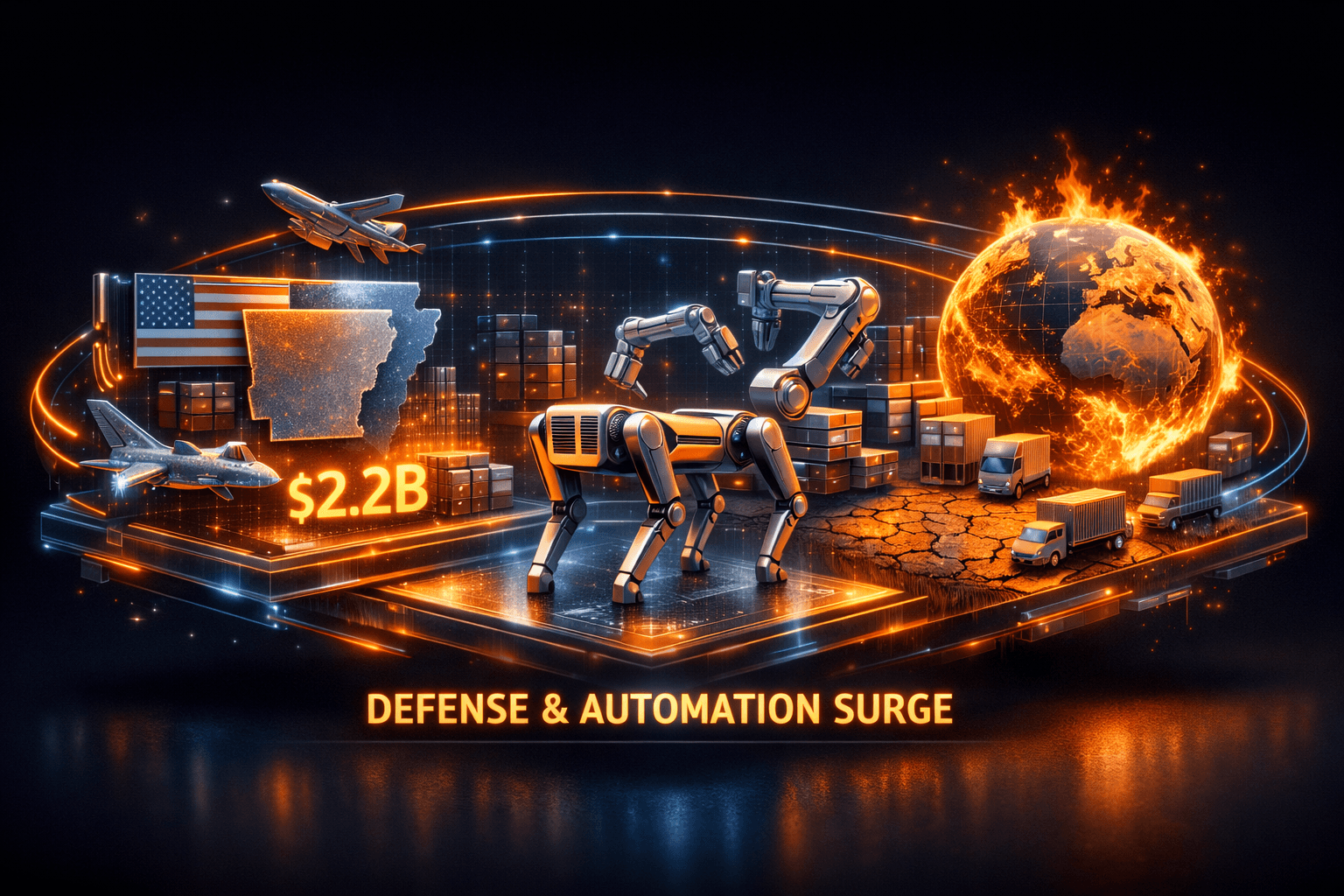
This morning the Industrial & Manufacturing sector is being driven by big-ticket capital projects and accelerating robotics deployment. Hanwha Defense announced a $2.2 billion campus in Arkansas, while robotics firms including Boston Dynamics and Agility rolled out new testing and products that signal faster automation adoption.
Those growth signals matter because they point to sustained industrial capex and long-term demand for automation hardware and services, even as operational risks like extreme heat are squeezing electronics supply chains. If you follow industrials, you should be watching which names benefit from defense spending and factory automation, and which are most exposed to short-term climate disruptions.
Market Highlights
Here are the overnight and pre-market headlines that investors in the sector will want on their radar.
- Hanwha Defense commits $2.2 billion to build a manufacturing campus on the Pine Bluff Arsenal in Arkansas, targeting propellant charges for 155mm artillery and base bleed units.
- Boston Dynamics begins on-site robotics testing with Hyundai, training Atlas humanoids for repetitive and heavy tasks and planning component assembly by 2030.
- Robotics makers continued product reveals from IMTS, with Agility introducing a cooperatively safe humanoid and Universal Robots and Fanuc unveiling new models, highlighting momentum in factory automation.
- Wegmans is investing $110 million to expand and consolidate its supply chain in upstate New York, aiming to reduce reliance on third-party logistics.
- Supply Chain Dive reports electronics manufacturers are seeing supplier delays and productivity losses due to extreme heat, a headwind for the component side of the supply chain.
Key Developments
Hanwha Defense: $2.2B Arkansas campus
Hanwha Defense announced plans to establish a $2.2 billion manufacturing campus at the Pine Bluff Arsenal, producing propellant charges and base bleed units for 155mm artillery. The project ties into U.S. Army procurement needs and could support multi-year demand for defense suppliers and local manufacturing contractors, which may lift adjacent industrial services firms.
Robotics acceleration at Hyundai and IMTS
Boston Dynamics has moved into on-site testing with Hyundai, training Atlas humanoids to perform repetitive and heavy tasks and aiming to start component assembly by 2030. At IMTS, Agility showcased a cooperatively safe humanoid and Universal Robots and Fanuc displayed new units, reinforcing a broader trend toward safer, more flexible automation on factory floors.
These developments suggest robotics vendors and systems integrators will see increased orders over the coming years. Which suppliers capture integration, parts, and maintenance work could matter for your exposure to the automation theme.
Supply chain investments and climate risk
Wegmans’ $110 million investment in a new facility and consolidation of operations shows retailers continue to spend to shorten and control supply chains. P.F. Chang's extension of its partnership with ArrowStream emphasizes software and process controls as a parallel path to reduce waste and improve purchasing visibility.
On the other hand, the Global Electronics Association warned that extreme heat is delaying deliveries and hurting productivity for electronics manufacturers. That operational pressure could pinch margins or delay production ramp ups for firms reliant on tightly timed component flows.
What to Watch
Expect headlines and data that will shape sector sentiment over the next few weeks. You should track these catalysts closely.
- Hanwha project milestones, approvals and hiring timelines. Watch for construction permits and contract awards with U.S. suppliers, which will indicate local supply chain winners.
- Boston Dynamics’ testing results and any pilot contracts with Hyundai. Will humanoids meet safety and throughput targets at scale, and how quickly will integration move from pilot to production?
- Follow IMTS post-show order announcements. Systems integrators often disclose order intake after large trade shows, which can signal near-term revenue for robotics suppliers.
- Monitor weather-driven disruption reports for electronics supply chains. Continued heat events could compress margins and delay deliveries, particularly for semiconductor and assembly suppliers.
- Keep an eye on defense spending updates and procurement notices. The Hanwha deal may presage further private investment tied to military modernization programs.
Bottom Line
- Large capex commitments and robotics rollouts point to a bullish medium term for automation and defense-linked manufacturing, with Hanwha’s $2.2 billion campus the standout headline.
- Robotics testing and product launches at Hyundai and IMTS suggest adoption is moving from pilot stages toward factory integration, which could lift suppliers and integrators.
- Operational risks remain, as extreme heat is already disrupting electronics deliveries and productivity, so expect uneven near-term performance across the supply chain.
- Retail and foodservice operators are investing in supply chain tech and facilities, which supports recurring demand for logistics software and automation services.
- Watch project timelines and procurement notices closely to gauge which firms will capture the growth in defense manufacturing and factory automation.
FAQ Section
Q: How quickly will robotics like Atlas move into production assembly? A: Trials are underway now and companies plan phased integration, with some component assembly targets set for around 2030, so adoption is incremental.
Q: Should you worry about the heat-related supply chain disruptions? A: You should monitor frequency and geographic spread of heat events, since repeated disruptions can meaningfully affect component availability and near-term margins.
Q: What signals show Hanwha’s campus will boost U.S. manufacturing? A: Look for local hiring, supplier awards and awarded government contracts, which will confirm tangible economic activity beyond the announcement.