The Big Picture
Capital spending and automation headlines led today in Industrial & Manufacturing, with Hanwha Defense announcing a $2.2 billion U.S. manufacturing campus and robotics players moving from demos to factory testing. Those expansion stories signal long-term capacity and productivity investments that could reshape production networks.
At the same time, extreme heat is already disrupting electronics suppliers and slowing output, a reminder that physical climate risks will influence capacity and margins. You should weigh near-term weather-related interruptions against longer-term modernization and investment themes.
Market Highlights
Today’s action reflected a split between investment-led optimism and operational caution. Here are the quick facts from the top stories.
- Hanwha Defense commits to a $2.2 billion manufacturing campus at Pine Bluff Arsenal, Arkansas, to produce propellant charges and base bleed units, expanding U.S. defense industrial capacity, reported Manufacturing Dive.
- Boston Dynamics, owned by Hyundai Motor Group, has begun robotics testing at Hyundai facilities and plans component assembly with Atlas humanoids by 2030, a move that underscores automation trends tied to automotive supply chains.
- Supply-chain strains hit electronics makers, with the Global Electronics Association warning extreme heat is delaying deliveries and lowering productivity, according to Supply Chain Dive.
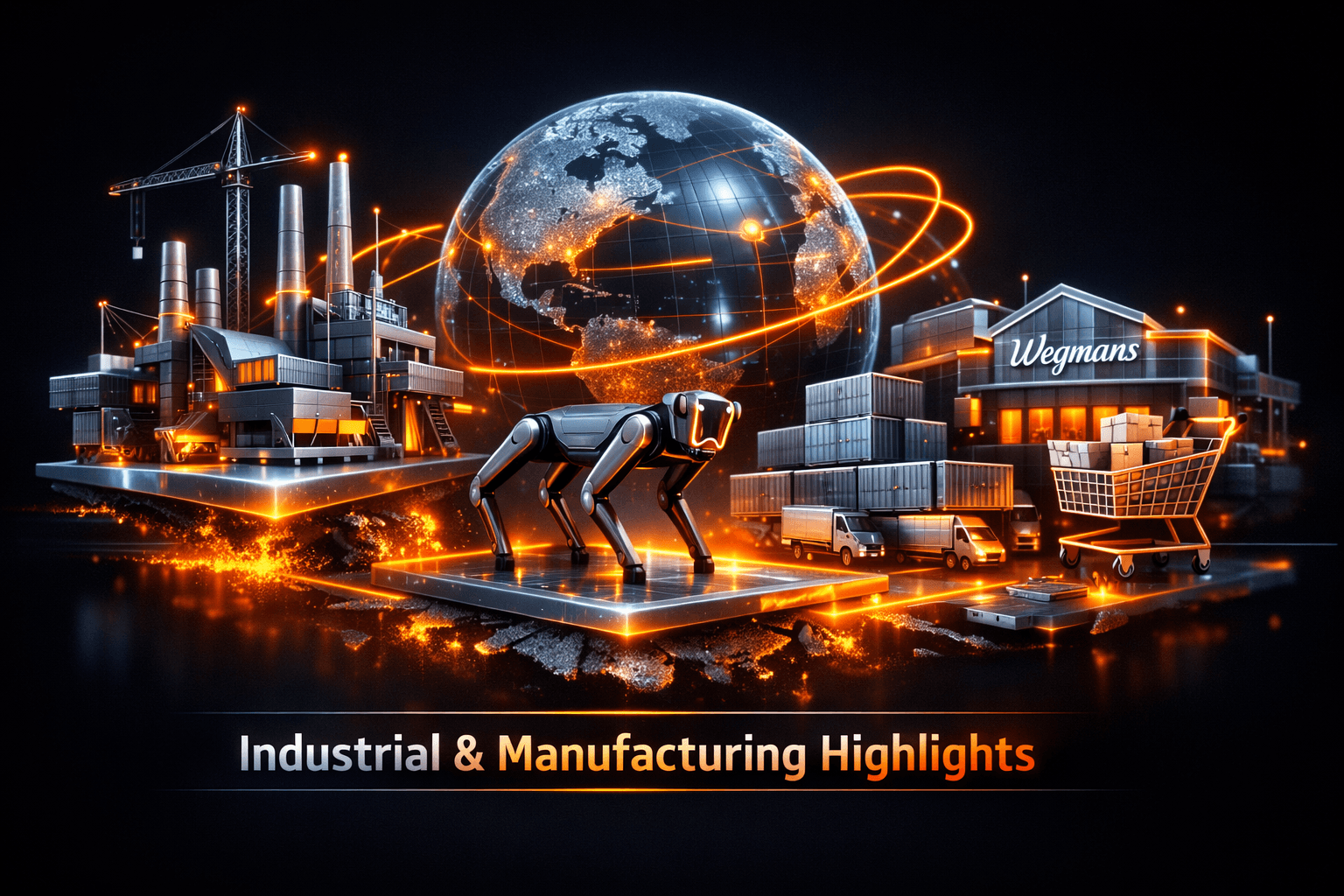
- Retail and foodservice operators are also investing in supply resilience: Wegmans is putting $110 million into a new upstate New York facility, while P.F. Chang’s renewed its ArrowStream tech partnership to sharpen inventory and purchasing controls.
- Robotics innovation continued: Agility unveiled what it calls the first cooperatively safe humanoid, and exhibitors including Universal Robots and Fanuc showed new systems at IMTS in Chicago.
Key Developments
Hanwha Defense’s $2.2B Arkansas Campus
Hanwha Defense will build a large manufacturing campus at the Pine Bluff Arsenal to make propellant charges for 155mm artillery and base bleed units. This is a major U.S. industrial investment tied to defense demand and supply chain onshoring, and it should create local jobs and long-term capacity.
For you as a reader, this signals continued government-driven spending in the defense supply chain. Analysts note such projects can support suppliers across metals, chemicals and logistics ecosystems, so expect ripple effects into related industrial suppliers.
Robotics Moving from Lab to Line
Boston Dynamics’ testing of Atlas humanoids at Hyundai marks a shift from research demos to practical factory deployments. The company aims for component assembly work by 2030, while Agility, Universal Robots and Fanuc unveiled new collaborative and safe humanoid designs at IMTS.
Automation is becoming a tangible productivity lever, not just a buzzword. Could widespread humanoid deployment change how manufacturers staff repetitive and hazardous tasks? If so, you should watch automation suppliers and integrators closely for new revenue streams.
Heat Stress Exposes Supply Fragility
The Global Electronics Association warned that extreme heat is already delaying supplier deliveries and reducing factory throughput in electronics manufacturing. Heat-related downtime and logistics delays have a direct effect on inventory levels and lead times.
This highlights the counterpoint to today’s investment headlines. While companies invest to scale and automate, climate and operational shocks are forcing firms to rethink resilience and contingency planning right now.
What to Watch
There are a few catalysts and risks to monitor as this story set evolves. You’ll want to track both macro and firm-level signals to judge near-term volatility and longer-term momentum.
- Defense procurement timelines, contract awards and permitting for the Pine Bluff campus. Watch announcements from the U.S. Army and Hanwha for timing on site buildout and first production runs.
- Robotics integration milestones from Hyundai and Boston Dynamics, plus demonstrations at trade shows. Look for pilot results that quantify productivity gains and uptime improvements.
- Short-term supply disruptions tied to extreme heat, especially in electronics. Keep an eye on supplier lead-time data and inventory notices that could affect suppliers across the value chain.
- Capital spending and facility buildouts from retailers and grocers like Wegmans. These projects can reduce third-party dependency and compress logistics costs over time.
- New product rollouts from robotics makers and integrators. Successful commercialization of cooperative humanoids would be a structural story for automation vendors and systems integrators.
Bottom Line
- Major investments and automation pilots drove a positive tone across the sector today, reflecting long-term capacity and productivity bets.
- Climate-driven operational risks from extreme heat are a clear short-term headwind, particularly for electronics manufacturers and suppliers.
- Defense and retail supply-chain investments suggest durable demand for industrial capex and logistics modernization.
- Robotics are transitioning to production environments, which could lift suppliers of automation hardware and integration services over time.
- Stay selective, and watch near-term operational indicators, contract milestones, and pilot outcomes for clearer signals on which names might benefit most.
FAQ Section
Q: How should I interpret Hanwha’s $2.2B campus announcement? A: It signals large-scale defense-related industrial investment in the U.S., likely creating supplier opportunities and regional job growth while reinforcing onshoring trends.
Q: Will humanoid robots replace factory workers soon? A: Not immediately, but pilots and testing at Hyundai show humanoids are moving into repetitive and heavy tasks, so you should expect gradual redeployment and productivity gains over the next several years.
Q: How material are heat disruptions for electronics supply chains? A: They can be significant, reducing throughput and delaying shipments, so close monitoring of supplier lead times and inventory levels is warranted for exposed firms.