The Big Picture
Policy moved to the front of the tape as the administration approved steep new duties and had a court back removal of a long-standing import exemption, while major corporates pushed the other way by investing in domestic automation and production. Those shifts matter because they change cost equations, sourcing strategies, and hiring plans across the supply chain.
As you head into the long weekend markets are closed, but these developments create a new backdrop for factories, logistics providers, and industrial technology firms when trading resumes on Monday. What should you watch for first when markets reopen?
Market Highlights
Quick facts and numbers to start your research.
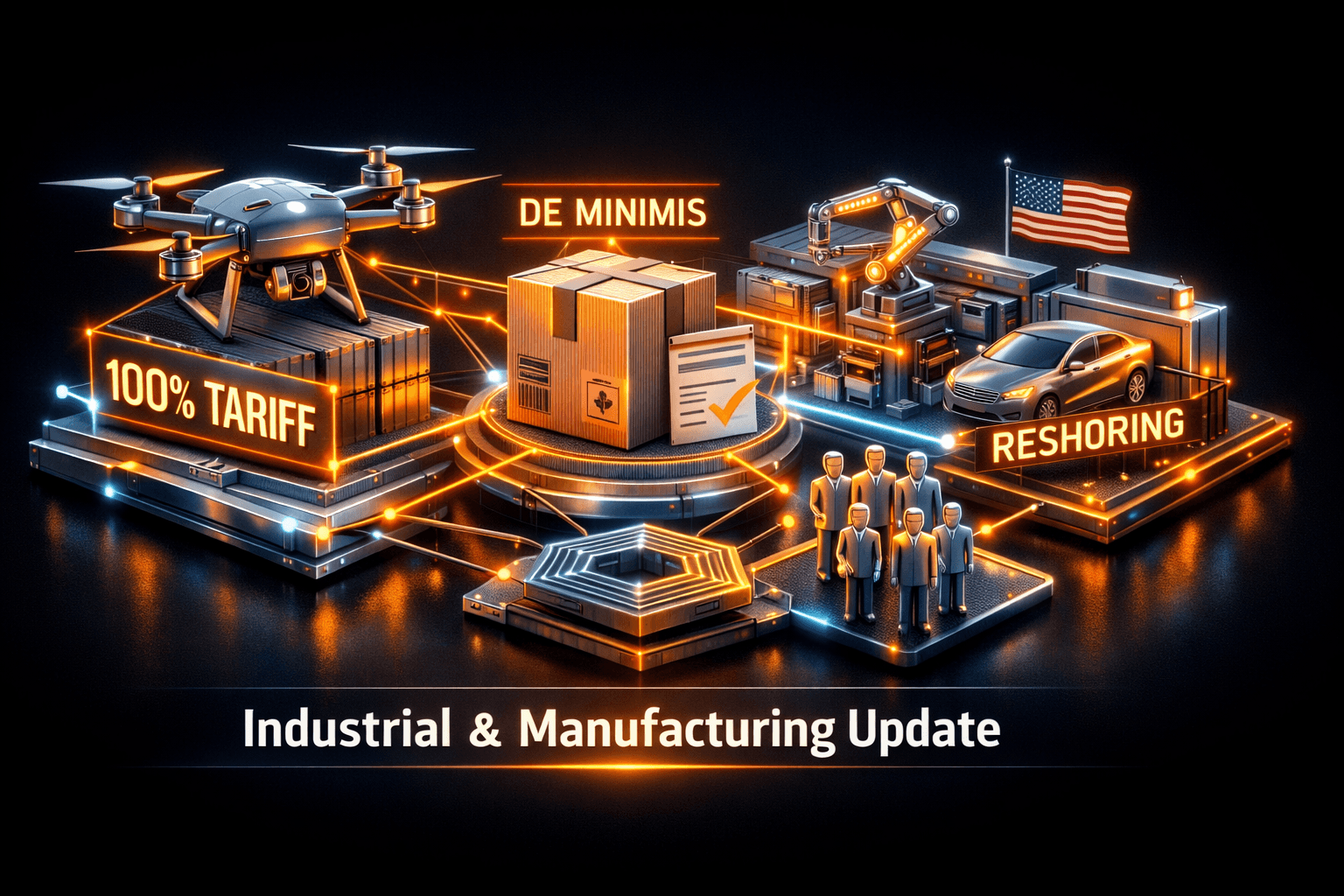
- Tariffs: The president imposed 100% tariffs on certain drones and components, aiming to reduce reliance on foreign suppliers, including China.
- De minimis: The Court of International Trade upheld the administration's authority to rescind the sub 800 dollar de minimis tariff exemption.
- Domestic automation: Walmart is installing Symbotic's SymMicro fulfillment system in a store, with the system expected to go live in about six months, signaling more in-store automation for retailers.
- Reshoring: Ford plans to phase out China-built Lincoln models for the U.S., a move the company says will create thousands of domestic jobs as it ramps up local manufacturing.
- Workforce and outreach: The Defense Department funded a television-style series called Cast in Steel with 16.3 million dollars, awarding a 25,000 dollar prize to help attract metal casters and forge interest in skilled trades.
- Names to note: $WMT for retail automation rollout, $SYM for Symbotic's systems, and $F for Ford's production shift. Analysts and supply chain managers will be parsing these announcements when markets reopen Monday.
Key Developments
Tariff surge on UAS and parts
The White House directive put a 100 percent duty on specified unmanned aerial systems and components. The move aligns with an executive push to lessen supply chain dependence on major foreign producers including China, which the report notes had a 15.6 billion dollar drone market in 2025.
For you that means higher landed costs for import-heavy suppliers and original equipment manufacturers that rely on foreign UAS parts. Defense contractors, commercial drone suppliers, and logistics partners will be watching passthrough pricing and contract clauses closely.
De minimis ruling tightens import rules
The Court of International Trade affirmed the president's authority to eliminate the de minimis exemption for shipments under 800 dollars. That change broadens the universe of goods subject to duties and customs processing.
Smaller vendors and cross-border e-commerce channels could see higher compliance costs and slower fulfillment unless supply chain teams adjust. Are you tracking vendors that import high volumes of low-value goods? They may face the biggest near-term impact.
Automation, reshoring and workforce lift domestic demand
On the corporate side, Walmart said it will equip a store with Symbotic's SymMicro system and expects it to come online in about six months. That shows retailers are still deploying automation to speed pickup and delivery operations.
Ford's plan to phase out China-built Lincoln models for the U.S. market signals a commitment to local production that the company says will create thousands of jobs. And the DoD-funded Cast in Steel series aims to build interest in metal casting careers with 16.3 million dollars in funding and a 25,000 dollar competition prize.
Taken together these items suggest rising demand for robotics, automation software, machine tools, and domestic supplier capacity. If you're watching industrial tech names, those segments may see renewed investor interest as companies look to insource and automate.
What to Watch
Focus on the following catalysts and risks as trading resumes on Monday, Aug 17.
- Tariff scope and enforcement guidance, including detailed product codes and effective dates. Clarity here will determine which suppliers are hit first and how quickly costs show up in margins.
- Supply chain responses, such as vendor re-sourcing, price renegotiations, and inventory builds. Will companies shift to domestic suppliers or absorb higher import costs?
- Orders and deployment schedules for automation systems. Symbotic's rollout timing is a near-term read on retailer capex and will influence peers considering similar upgrades.
- Labor and capacity indicators for reshoring plans. Ford's ramp may create demand for stamping, tooling, and supplier investments. How fast can domestic supply chains scale?
- Regulatory and legal follow-ups to the de minimis ruling. Expect trade groups to pursue additional challenges or request phased compliance windows.
Bottom Line
- Policy actions create immediate cost and compliance headwinds for import-reliant manufacturers and retailers.
- Corporate moves toward automation and reshoring offer countervailing demand for domestic industrial equipment and skilled labor.
- Short-term earnings and margin pressure is possible in exposed supply chains, while longer-term capital spending could benefit automation and tooling suppliers.
- Watch policy clarifications and rollout timelines closely, because details will shape which companies are most affected.
- Analysts note the tone is mixed, so a selective approach is prudent when you review industrial names after the long weekend.
FAQ
Q: How will 100 percent tariffs on drones affect prices for manufacturers? A: Tariffs at that level raise landed costs dramatically for affected components and finished UAS items, which could force higher end prices or margin compression until supply chains adjust.
Q: What does elimination of the de minimis exemption mean for small imports? A: Goods under 800 dollars will no longer be exempt from duties and customs processing, increasing compliance work and potential costs for small parcel importers and e-commerce sellers.
Q: When will investors see the impact of Walmart's Symbotic deployment and Ford's reshoring? A: Walmart's SymMicro system is expected in about six months, offering an early read on retailer automation benefits. Ford's reshoring impacts will roll out over quarters as production lines and supplier networks are retooled.