The Big Picture
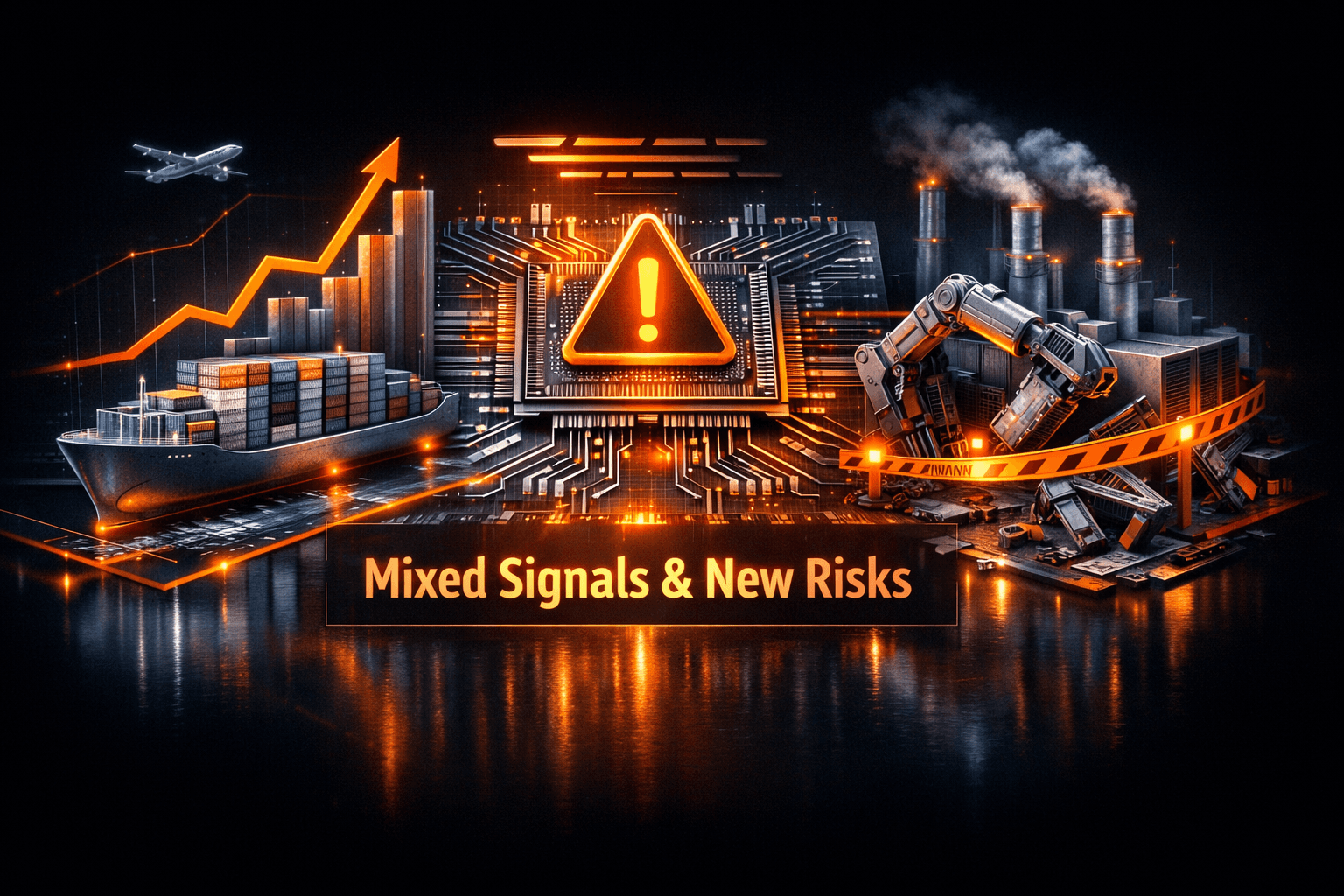
Global demand and tactical inventory building pushed Asia to U.S. East Coast ocean freight rates to a new high today, a sign that retailers and manufacturers are still moving goods aggressively ahead of the holiday season. At the same time, high-profile safety failures and criticism of federal chip investment strategy remind you that structural and regulatory risks remain front and center.
Why this matters to you is simple. Freight and inventory decisions will affect margins for many industrial suppliers and retailers, while safety and policy gaps can create reputational and operational shocks for manufacturers. Expect selective winners and losers as companies navigate costs and compliance.
Market Highlights
Key price and activity moves were driven by demand signals and corporate actions rather than broad equity swings.
- Ocean freight: Freightos and industry observers report Asia to U.S. East Coast rates rose to a new high as import volumes held up late into the season.
- Retail & inventory: The NRF says imports at major U.S. ports have peaked, as retailers front-loaded inventory ahead of new tariffs.
- Walmart: $WMT flagged 754 supplier standard violations in fiscal 2026, down 35 percent year over year per its ESG report, reflecting improved supplier compliance.
- U.S. Steel: Federal probe into the Clairton Works blast found safety failings and called the incident one that "should never have happened," elevating regulatory and liability risk for $X.
- EV battery sector: Samsung SDI moved to full ownership of the Indiana EV battery plant by acquiring General Motors' stake, marking the Korean firm's first wholly owned North American factory and reshaping partnerships for $GM and $SSDIY.
Key Developments
Ocean freight jumps as retailers stock up
Freightos says Asia to U.S. East Coast rates climbed to a new high amid sustained import volumes, a surprising trend for some observers given the timing in the season. The NRF data shows retailers have been building inventory ahead of tariffs, which combined with peak purchasing, put upward pressure on shipping rates.
Higher freight costs are a double edged sword for you and companies in the chain. They signal demand and revenue flow, but they also compress margins unless firms pass costs on to consumers or find logistics efficiencies.
U.S. Steel blast triggers safety and regulatory scrutiny
The U.S. Chemical Safety and Hazard Investigation Board released a final report saying the explosion and subsequent worker deaths and injuries at Clairton Works should never have happened. The findings highlight lapses in process safety management and maintenance oversight at $X.
Investors and suppliers should watch for follow up enforcement actions, remediation costs, and tighter oversight that could affect operating schedules and capital allocation. You also need to factor reputational risk into assessments of industrial names.
Samsung SDI buys out GM stake in Indiana plant
Samsung SDI completed the acquisition of General Motors' stake in an EV battery plant in Indiana, turning the facility into the South Korea firm's first wholly owned North American factory. The move gives $SSDIY more control over production and supply chain decisions in a fast-growing market for EV components.
For $GM the divestment adjusts partnership exposure and may change supplier dynamics. For you, this underscores consolidation and vertical integration trends in the EV supply chain that could affect vendor selection and long term capacity planning.
GAO flags Commerce Department's chip programs
The Government Accountability Office found that the Commerce Department's semiconductor and microelectronics programs have stalled and need a new strategy to meet statutory requirements. The critique raises questions about how federal capital intended to bolster domestic chip capacity is being deployed.
Given the strategic importance of chips for manufacturers, slowed program delivery could delay broader industrial upgrades and sourcing shifts. How will the department respond and what timelines will change for grants and projects?
Walmart reports fewer supplier violations, safety advice resurfaces
$WMT reported 754 supplier standard violations in fiscal 2026, down 35 percent year over year, a sign of progress on supplier compliance and ESG monitoring. Separately, industry experts reiterated best practices for hazard protection and PPE in a Plant Engineering piece.
Stronger supplier audits matter for retailers and their manufacturing partners because compliance reduces disruption risk. You should ask whether supplier improvements are sustainable and how safety practices are being audited across the network.
What to Watch
Several near term catalysts will shape the sector's path. Keep an eye on shipping indices, port throughput, and tariff timing to gauge how inventory flows evolve and whether freight pressure eases.
Regulatory and policy moves could also shift the landscape. Watch for a Commerce Department response to the GAO critique and any announcements on semiconductor grant timelines. Also monitor enforcement activity or remedial plans tied to the U.S. Steel investigation, since those actions can change capital spending and operating plans.
Corporate calendars matter too. You should check upcoming earnings from major industrial suppliers and logistics providers for commentary on freight cost pass through and inventory levels. Finally, track how the Samsung SDI move affects EV supply chain contracts and capacity announcements.
Bottom Line
- Freight rates rising and retailer inventory builds signal sustained demand, but higher logistics costs will pressure margins for some suppliers.
- Safety failures at $X and the CSB's findings increase regulatory and remediation risk for steel producers and their partners.
- Samsung SDI's full ownership of the Indiana EV battery plant reshapes North American EV supply dynamics and highlights integration trends.
- GAO criticism of Commerce Department chip programs adds uncertainty around federal semiconductor funding timelines and project delivery.
- Be selective and watch ports data, policy responses, and company disclosures for signs of durable demand or emerging headwinds.
FAQ
Q: What does rising ocean freight mean for industrial profit margins? A: Higher freight costs increase input and logistics expenses for manufacturers and retailers unless companies can pass those costs to consumers, find efficiency gains, or reduce other expenses.
Q: How serious are the implications of the U.S. Steel investigation? A: The CSB report highlights major safety and process shortcomings. Expect potential enforcement, remediation spending, and operational reviews that could affect production and costs.
Q: Will Samsung SDI's acquisition speed up EV battery supply in North America? A: The move gives Samsung SDI full control over the plant, which can streamline decisions and capacity deployment, but broader supply chain scaling still depends on raw material sourcing and demand trends.