The Big Picture
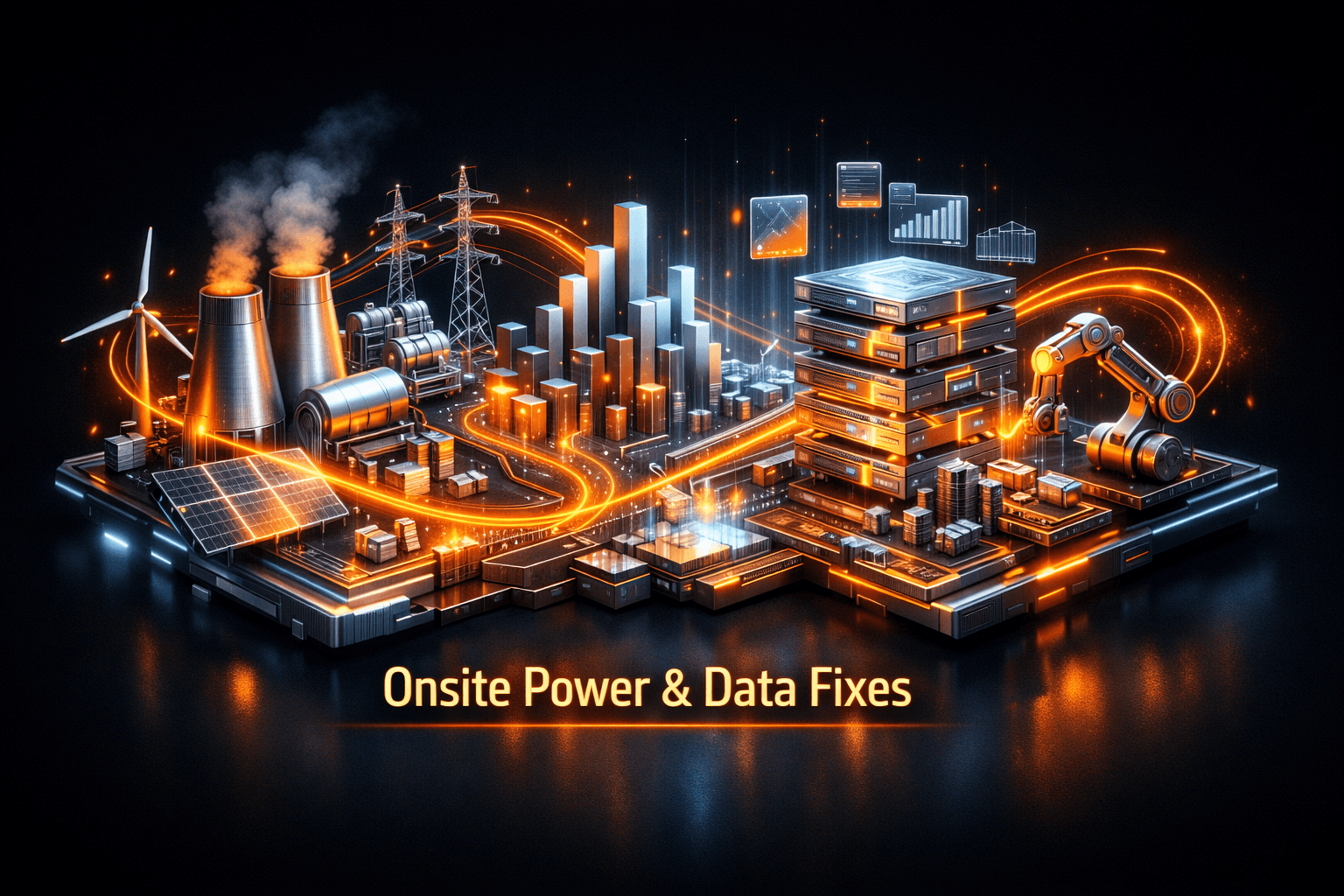
Manufacturers are responding to two pressing operational constraints today: unreliable grid availability and legacy data systems that limit actionable insights. These are not small tweaks; they're driving decisions about where factories put capital and which vendors win long-term contracts.
Why does this matter to you as an investor? Energy resilience and digital modernization tend to spur durable spending on equipment, controls, and software, so companies that supply onsite power solutions and modernization services may see growing demand.
Market Highlights
Overnight reporting focused on industry trends rather than individual stock moves, but several names are worth watching as potential beneficiaries. Here are fast facts to keep in mind as markets open.
- Onsite power is gaining urgency. Manufacturers cited rising grid delays and reliability concerns in Manufacturing Dive’s guide to energy independence.
- Legacy data historians are being called out. Another Manufacturing Dive piece highlights how older historian deployments can block operational outcomes and must be modernized around business value.
- Key suppliers and integrators to watch include power systems and equipment firms such as $GE, $CMI, and $CAT, plus automation and controls players like $ABB and select industrial software vendors.
Key Developments
Onsite power and energy independence
Manufacturing Dive reports that grid power delays are on the rise, prompting manufacturers to explore onsite generation, storage, and hybrid configurations. Plants are sizing projects not just for backup power, but to support continuous operations and to avoid costly downtime.
For investors, the implication is straightforward, you're likely to see increased demand for gensets, combined heat and power systems, battery storage, microgrids, and engineering services. That can translate into multi-year contracts for equipment makers, EPC firms, and energy integrators.
Data historians are hampering operational gains
The second story takes aim at data historians, the long-running time-series systems that many factories still rely on. The critique is practical: when historian upgrades are treated as IT projects rather than drivers of operational outcomes, projects stall and expected productivity gains don't materialize.
This steers manufacturers toward outcome-focused modernization, tying historian upgrades to metrics like yield, uptime, and energy consumption. For you, that means industrial software, OT/IT integrators, and analytics firms could capture recurring revenue as plants move from legacy stacks to more prescriptive systems.
What to Watch
Monitor company announcements, vendor win disclosures, and sector capex trends. Are manufacturers publicly committing to microgrids, CHP, or large-scale battery projects? Are they publishing digital transformation road maps with measurable KPIs?
Key catalysts include earnings calls where industrials discuss capex allocation, procurement announcements from large OEMs and contract manufacturers, and trade events where vendors demo integrated energy plus analytics solutions. Who's partnering with grid-edge and software providers, and how will contracts be structured?
Risk factors to watch include project execution, permitting and interconnection delays, and the cash intensity of onsite energy projects. Digital modernization also faces integration risk, where data quality and change management can slow expected benefits. Are vendors offering as-a-service models or one-off installs, and how will that affect recurring revenue?
Bottom Line
- Manufacturers are prioritizing resilience and measurement, pushing demand for onsite power and modern analytics stacks.
- Energy solutions and industrial software vendors stand to gain as plants move from grid dependence and legacy historians to integrated, outcome-driven systems.
- Watch public capex guidance, vendor contract disclosures, and partnership announcements for early signs of sustained spending.
- Execution and integration risks remain, so selectivity matters when assessing which firms can deliver at scale.
- Analysts note this trend could support longer-term growth in equipment, controls, and industrial software spending, but data suggests returns will vary by vendor and contract structure.
FAQ Section
Q: What is onsite power and why are manufacturers choosing it? A: Onsite power includes generators, battery storage, microgrids, and combined heat and power systems that help plants maintain operations during grid outages and reduce exposure to delays and price volatility.
Q: How do legacy data historians limit manufacturers? A: Old historian systems often prioritize data capture over actionable outcomes, which makes it harder to link metrics to productivity improvements without a modernization effort focused on business value.
Q: Which types of companies benefit from these trends? A: Suppliers of power equipment, energy integrators, industrial automation firms, and industrial software and analytics vendors are the primary beneficiaries as manufacturers invest in resilience and outcome-driven digital upgrades.