The Big Picture
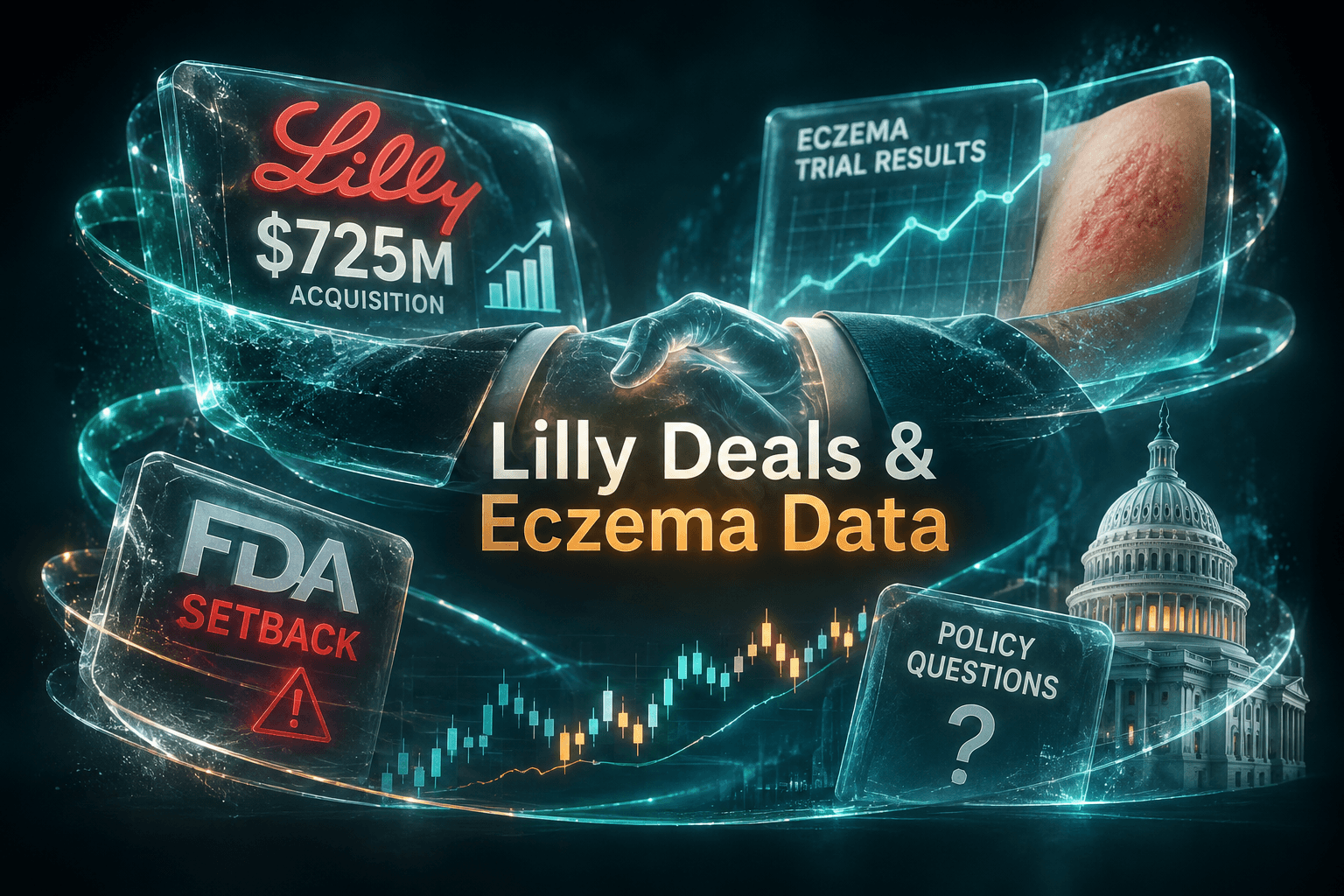
Biotech innovation and healthcare policy collided in Monday’s headlines, with Lilly pursuing a potential $725 million Huntington’s disease deal as Kymera reported positive mid-stage eczema trial results. Both developments point to commercial possibilities, but neither eliminates the sector’s regulatory and execution risks.
The broader picture is mixed: the FDA again rejected Capricor’s experimental Duchenne muscular dystrophy drug, while a federal portal aims to make out-of-network billing disputes easier to manage. What should you take from a day with both promising clinical data and setbacks? Selectivity and attention to upcoming evidence remain important, because the news supplied no closing share-price moves to establish a sector-wide market reaction.
Market Highlights
Several stories carried potential implications for listed drugmakers and healthcare companies, though the reports did not include daily stock-price changes. For you, that means separating the reported clinical and legal developments from any assumptions about how shares actually traded.
- Lilly Eli Lilly and (LLY) agreed to acquire Huntington’s drug developer LoQus23 in a deal that could be worth up to $725 million. STAT described this as Lilly’s 15th acquisition of 2026.
- Kymera Therapeutics $KYMR said its oral eczema drug met goals in a 244-patient Phase 2 trial. Analysts described the results as showing “biologic-like efficacy” and said the pill could compete with injectable treatments including Dupixent.
- A judge dismissed Tampa General’s 340B lawsuit against Lilly. Separately, the FDA again rejected Capricor Therapeutics’ $CAPR experimental Duchenne drug, according to STAT.
- One in 12 children with suspected Lyme disease in a new study showed signs of Powassan virus co-infection, underscoring a potential diagnostic concern.
The reports identify possible catalysts, not confirmed changes in revenue or market share. If you’re tracking the companies involved, note that the articles provided no percentage moves, closing prices or updated financial guidance.
Key Developments
Lilly expands its pipeline as 340B dispute continues
Lilly’s planned acquisition of LoQus23 would add an experimental approach aimed at MSH3, a protein that can worsen the genetic abnormalities associated with Huntington’s disease. The treatment is at a development stage, so the potential deal value of up to $725 million reflects an investment in future possibilities, not an established product or near-term sales stream.
The acquisition comes alongside a legal setback for Tampa General, whose 340B case against Lilly was dismissed. The dispute reflects ongoing tension between hospitals and drugmakers over data requests and efforts to prevent duplicate discounts in the 340B drug pricing program. For investors, the pipeline expansion and the unresolved program debate are separate considerations: one concerns research potential, the other the rules and economics of drug distribution.
Kymera’s eczema results raise the competitive stakes
Kymera reported that its oral protein degrader met the goals of a Phase 2 study involving 244 patients with eczema. The company’s pill could offer an oral alternative in a market where Dupixent, developed by Sanofi $SNY and Regeneron Regeneron Pharmaceuticals (REGN), is a leading treatment. Analysts’ “biologic-like efficacy” characterization is encouraging, but the report does not provide detailed response rates or establish how the drug would compare directly with approved therapies.
The next tests will include further clinical evidence, safety findings and the path toward later-stage studies. A mid-stage result can support a development program, but it doesn’t settle whether a candidate can win approval or attract broad use. You’ll want to distinguish promising trial headlines from evidence of a durable commercial challenge.
FDA and policy developments keep uncertainty in view
STAT reported that the FDA again rejected Capricor’s experimental Duchenne muscular dystrophy drug, renewing a setback for the company and patients awaiting potential treatment options. The stories provided no additional detail about the agency’s reasoning or a new timeline, so the development leaves important regulatory questions open.
Elsewhere, federal officials introduced a centralized portal for tracking disputes under the No Surprises Act arbitration process. The tool is intended to help entities manage out-of-network billing cases, but its launch alone doesn’t establish whether disputes will resolve faster or reduce costs. A preventive-services panel also met for the first time in more than a year, with votes cast privately amid debate over changes to the science and medicine process.
Science headlines added longer-range context. Yale researchers examined how sensory information becomes signals that help the brain pursue goals, while other reports covered family history and cancer risk and the Powassan findings among children with suspected Lyme disease. These are relevant to health research and care, but the summaries don’t point to immediate commercial catalysts for publicly traded companies.
What to Watch
Tomorrow, focus on whether companies or regulators provide fuller details that clarify the implications of today’s headlines. For Kymera, additional trial data, safety information and development milestones would help investors assess the result beyond the initial characterization. For Lilly and LoQus23, deal terms, development plans and progress on the MSH3-targeting approach are key points to monitor.
Policy developments deserve attention, too. Watch for further information on the No Surprises Act portal’s operation, updates on the 340B dispute and any clarification following the preventive-services panel meeting. Regulatory follow-up on Capricor’s drug could also affect expectations, although no new timeline was included in the reports.
Keep the risks in perspective: early and mid-stage candidates can face later trial or regulatory hurdles, while legal and reimbursement disputes can affect healthcare economics. No specific earnings, event dates or market moves were supplied in today’s news, so don’t treat these headlines as a substitute for company filings or updated data.
Bottom Line
- Today’s sector signals are mixed, with positive pipeline news alongside regulatory, legal and policy uncertainty.
- Lilly’s potential $725 million LoQus23 deal adds an experimental Huntington’s program, not an approved treatment.
- Kymera’s Phase 2 eczema result is notable, but further evidence is needed to assess its competitive potential.
- The Capricor rejection and 340B lawsuit dismissal highlight ongoing regulatory and reimbursement risks.
- Reported stories did not include stock-price changes, so no specific market reaction can be confirmed from this news set.
FAQ
Q: What was the biggest biotech development today? A: Lilly’s potential acquisition of LoQus23, a developer of an experimental Huntington’s disease treatment, could be worth up to $725 million.
Q: Did Kymera’s eczema drug receive approval? A: No. It met goals in a 244-patient Phase 2 trial, but the report does not announce approval or provide a later-stage timeline.
Q: What does the No Surprises Act portal do? A: It is a centralized platform intended to help entities track and manage out-of-network billing disputes in the federal arbitration process.
This article is for informational purposes only and is not personalized investment advice or a recommendation to buy, sell or hold any security.