The Big Picture
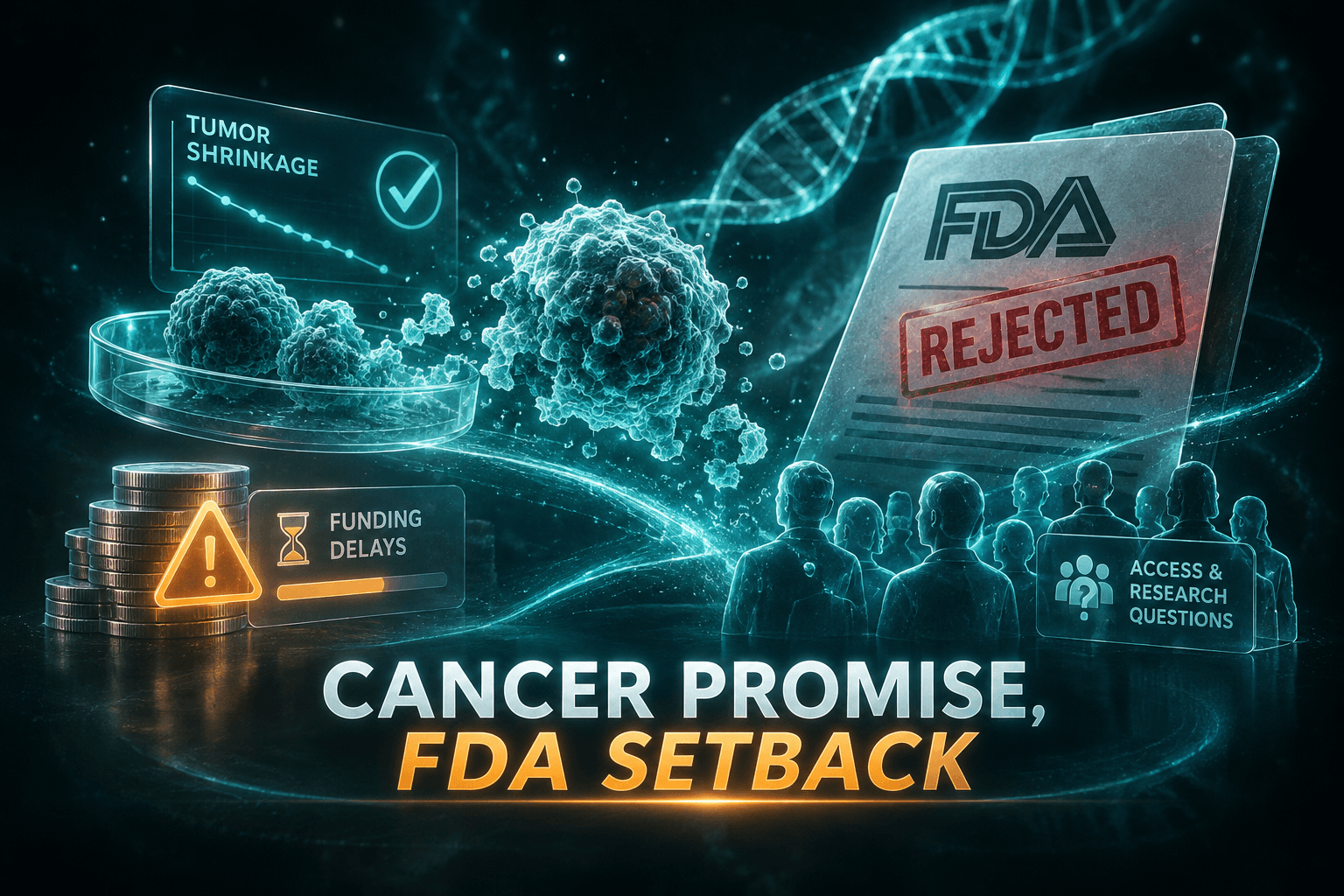
Healthcare’s weekend headlines offer a reminder that promising research and regulatory setbacks can arrive side by side. Early results for Erasca’s experimental drug ERAS-0015 showed tumor shrinkage in a Phase I trial for hard-to-treat cancers, while the FDA rejected Capricor Therapeutics’ Duchenne muscular dystrophy cell therapy.
For investors, the stories point to selective catalysts rather than a broad sector trend. U.S. markets are closed Saturday, November 21, and will reopen Monday, November 23, so there are no Saturday stock moves to assess; what matters is how investors weigh the clinical and policy news when trading resumes.
Market Highlights
Among the most consequential company developments, ERAS-0015’s Phase I findings offer an early clinical signal, but the report provides no response rate or other detailed trial figures. The FDA rejection for Capricor is a clear setback for its Duchenne program, while a separate report says Erasca’s data could intensify competition with Revolution Medicines in pancreatic cancer.
- Erasca’s ERAS-0015 showed tumor shrinkage in a Phase I trial involving hard-to-treat lung and pancreatic cancers. Early-stage findings don’t establish whether a treatment will prove effective in larger trials.
- The FDA rejected Capricor’s cell therapy for Duchenne muscular dystrophy. The supplied report doesn’t include the agency’s detailed rationale or the company’s next steps.
- Democrats are seeking answers about delays to second-year state awards from the $50 billion Rural Health Transformation Program. Eighteen lawmakers cited a lack of public transparency in a letter to CMS chief Mehmet Oz.
- Research coverage also highlighted gaps in New Zealand data on gut disorders, which may affect about one in three adults, and the need for emotional well-being support for more than 1.5 million Australians living with diabetes.
No share-price changes were provided in these reports, and U.S. equities are closed for the weekend. You’ll need to wait until Monday’s session for a market reaction to these developments.
Key Developments
Early cancer data meet a tough development reality
The Phase I AURORAS-1 results for ERAS-0015 describe the drug as safe and report tumor shrinkage in lung and pancreatic cancers. That makes the finding worth watching, but a small, early-stage trial is primarily a first test of safety and activity. It doesn’t establish a treatment’s benefit, approval prospects, or commercial potential.
Competition is also part of the picture. BioPharma Dive reported that data from Erasca add pressure on Revolution Medicines’ Rasonque, which has had a strong oncology launch, while limitations may leave room for competing approaches. Erasca is nearing the start of a Phase 3 trial, a later-stage test that could provide more meaningful evidence, but no results from that trial are reported here. For your assessment, keep the distinction between early signals and confirmatory evidence front and center.
FDA rejection highlights biotech regulatory risk
The FDA’s rejection of Capricor’s Duchenne therapy is a setback for the company and for patients awaiting new treatment options. The supplied story calls the decision long anticipated, but does not spell out the agency’s reasoning. That leaves investors with important unanswered questions about whether Capricor can address the FDA’s concerns, and on what timeline.
The contrasting cancer and Duchenne news illustrates why clinical progress doesn’t move in a straight line. A positive early result at one company doesn’t offset a regulatory rejection at another, and each program’s evidence and agency feedback need to be considered on their own. Capricor Therapeutics trades as $CAPR; Erasca as $ERAS; Revolution Medicines as $RVMD.
Public health and research capacity face scrutiny
Measles and vaccination featured in two reports. KFF Health News collected journalists’ media appearances on measles, pediatric care, and Democrats’ post-election healthcare agenda. A STAT opinion article argued that Robert F. Kennedy Jr. and the MAHA movement could demonstrate support for vaccination by promoting the MMR vaccine. The opinion is a call to action, not a report of a new policy decision.
Other coverage raises questions about the systems supporting care and research. Eighteen Democrats want CMS to explain delays in the $50 billion rural health program’s second-year awards, citing transparency concerns. Meanwhile, a Princeton graduate student and neuroscience researcher’s detention by ICE after a conference has unsettled academic circles. Reports on diabetes support in Australia and limited New Zealand gut-disorder data point to further needs in care delivery and health research.
What to Watch
On Monday, watch for any company or agency follow-up on Capricor’s rejection, including clarification of the FDA’s concerns and the company’s response. For Erasca, the next major evidence milestone is the start and eventual reporting of its Phase 3 program. Until more trial details are available, the Phase I tumor-shrinkage report should be treated as preliminary.
Policy and access questions may also matter. Monitor whether CMS responds to lawmakers’ questions about the rural health awards and whether states receive clarity on timing. In drug development, coverage and pricing remain central to the commercial prospects of a first FDA-approved psychedelic, with Compass Pathways and nonprofit Usona competing in the field. The report identifies access and payer coverage as potential determinants, but doesn’t establish an approval date or likely market size. What will distinguish a scientific milestone from a durable business case? Evidence, regulatory progress, and access will all need to align.
Public health developments are worth tracking as well, including measles prevention discussions and research efforts addressing care needs and data gaps. These stories don’t provide a direct near-term revenue estimate for listed companies, but they may inform the policy and healthcare environment over time.
Bottom Line
- Healthcare news is mixed: early cancer-drug activity is encouraging, but it remains preliminary.
- The Capricor rejection underscores regulatory risk; watch for the FDA’s rationale and the company’s next steps.
- Competition, trial progression, pricing, and payer coverage remain important uncertainties for emerging therapies.
- Questions about rural health funding transparency and research capacity add policy context, not a clear near-term company catalyst.
- U.S. markets are closed Saturday, November 21. The next trading session is Monday, November 23.
FAQ Section
Q: Did ERAS-0015 prove effective against lung or pancreatic cancer? A: No. The Phase I report described tumor shrinkage, but early findings don’t establish effectiveness or approval prospects.
Q: Why did the FDA reject Capricor’s Duchenne therapy? A: The supplied report confirms the rejection but doesn’t provide the agency’s detailed rationale.
Q: Are U.S. stock markets open on Saturday, November 21? A: No. U.S. markets are closed Saturday and are scheduled to reopen Monday, November 23.