The Big Picture
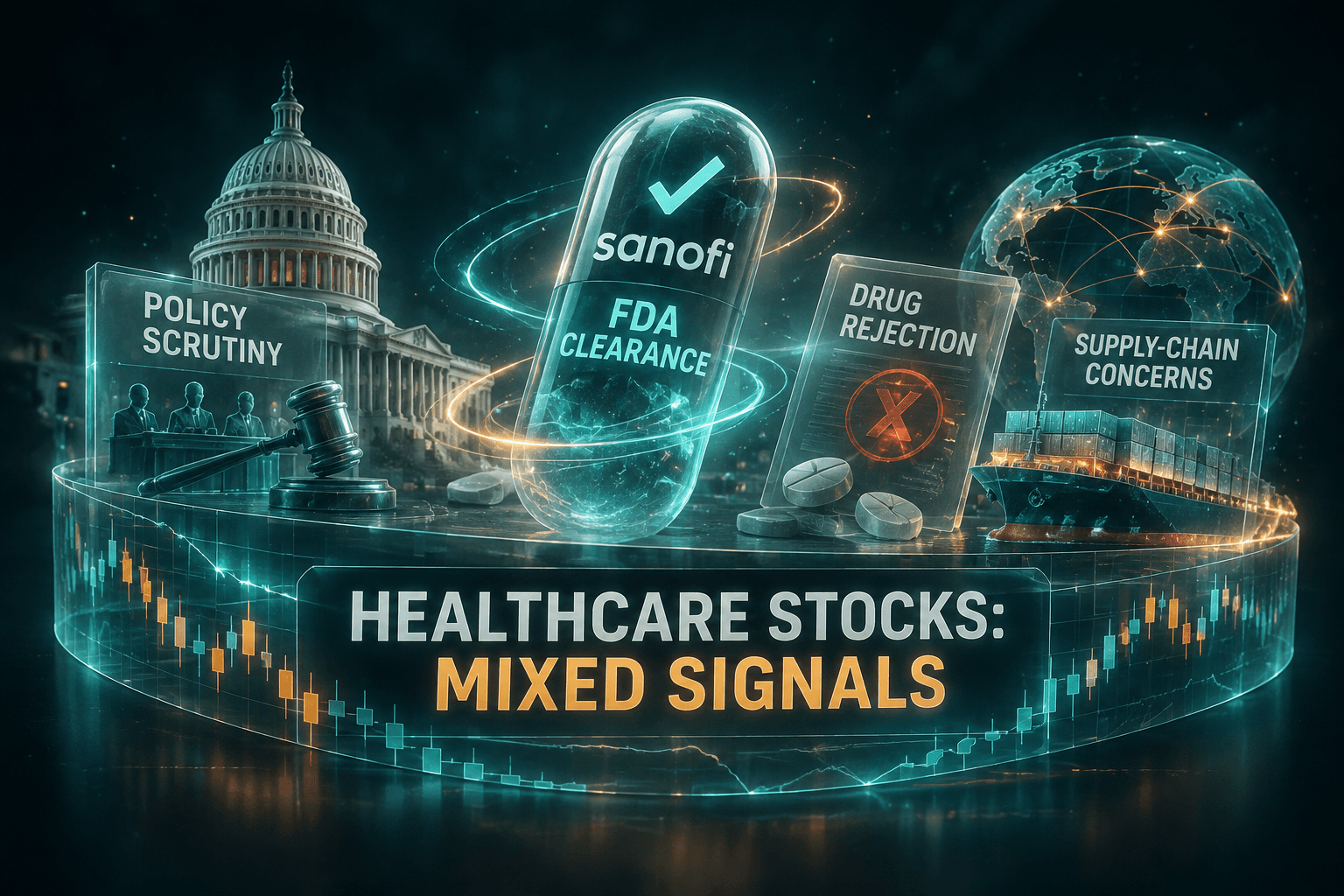
Sanofi’s FDA clearance for a Gaucher disease pill is the clearest commercial catalyst in a mixed morning for healthcare, offering the drugmaker a new potential source of income as it looks toward Dupixent’s looming patent expiration. The approval contrasts with news of an FDA rejection for a closely tracked lung cancer drug, underscoring how regulatory decisions can move companies in different directions.
Beyond drug approvals, today’s headlines touch on ACA coverage, medical research and the resilience of drug supply chains. There are no stock-price moves or percentage changes in the reports provided, so you won’t find a reliable basis here to assess how shares are trading. For investors, the day calls for a selective approach and attention to company-specific catalysts rather than a broad sector conclusion.
Market Highlights
The corporate headline to watch is Sanofi’s clearance of Infilbray, a pill for Gaucher disease. The company described the approval as the culmination of a winding development journey. It may broaden Sanofi’s revenue sources, although the reports provide no sales forecast, launch details or share-price reaction to quantify the potential.
Policy and regulatory developments offer a counterweight. The Trump administration canceled coverage for 760,000 Affordable Care Act enrollees, saying the enrollments were unauthorized, while lawmakers are seeking answers about the process. Separately, a STAT News podcast highlighted a new FDA leadership search and an agency rejection for a lung cancer drug, but the supplied report does not identify the drug or provide further details.
- Sanofi, traded as $SNY in the U.S., received FDA clearance for Infilbray, a Gaucher disease pill.
- The administration canceled ACA coverage for 760,000 enrollees, with lawmakers preparing to probe the process.
- A study reported Singapore’s cervical cancer mortality rate has fallen 65% since 1990, even as global deaths are projected to rise nearly 40% by 2050.
- A U.S. commission warned that reliance on China’s biopharma sector could create supply-chain vulnerabilities.
Key Developments
Sanofi adds a product ahead of a major patent question
Infilbray’s FDA clearance gives Sanofi a new treatment to add to its portfolio. The timing matters because the report links the approval to the company’s effort to find income ahead of Dupixent’s looming patent expiration. That makes the new pill relevant to the company’s longer-term product mix, but the available information does not establish how much revenue it could generate or how quickly it might contribute.
For you, the key distinction is between regulatory progress and commercial performance. Approval is an important milestone, but uptake, access and future sales data will be needed to show how much it changes Sanofi’s outlook. The FDA’s reported rejection of a lung cancer drug is a reminder that the same regulatory environment can also create setbacks for developers.
ACA coverage and FDA leadership bring policy uncertainty
The cancellation of coverage for 760,000 ACA enrollees has prompted lawmakers to seek an account of how the administration identified and removed those enrollments. Democrats are poised to take control of the House and Senate, according to the report, and key lawmakers want answers. The news adds scrutiny to the administration’s insurance decisions, but the supplied reporting does not establish what changes, if any, may follow.
Open enrollment is also underway, with KFF Health News highlighting free assistance for people choosing ACA plans. That practical help matters to consumers navigating their options, while the larger political dispute could keep insurance policy in focus. What should you watch? Any further details on the review process, coverage effects or potential legislative oversight would help clarify the issue for health insurers and plan members.
Research and global health point to both promise and gaps
A report on implantable defibrillators describes how subtle changes in cardiac electrical signals may help anticipate severe arrhythmias in people with heart failure. Remote analysis could make those signals useful as an early warning, though the story does not provide commercial timelines, clinical adoption data or named companies. It is a potentially important research development, not yet a quantified business catalyst based on the information available.
Other health stories show why prevention and patient-centered research remain important. Singapore’s cervical cancer mortality rate has declined 65% since 1990, but screening gaps remain, and global deaths are projected to rise nearly 40% by 2050. A brain implant trial participant is also calling for patients to have more agency in research. Separately, South Korea reported its first cholera case in 10 years, while an opinion piece argued for more exercise prescriptions after concussion. These reports point to ongoing public-health needs, rather than immediate changes in listed-company earnings.
What to Watch
During today’s open U.S. session, check company announcements and market data for any response to Sanofi’s clearance, but distinguish reported share moves from expectations: none were included in the stories provided. Further information on Infilbray’s availability, commercial outlook or Sanofi’s commentary would help investors assess the significance of the approval.
Policy developments are another near-term watch point. Look for additional details about the ACA cancellations and the lawmakers’ planned inquiry, as well as updates on the search for a new FDA leader. For biopharma companies, the U.S. commission’s warning about China dependence raises questions about manufacturing and sourcing resilience, but the report does not specify which companies or products are most exposed.
Clinical and public-health headlines should also be followed with care. Further validation of cardiac signal monitoring, or details about implementation, would be needed before judging its impact on device makers or care delivery. The cervical cancer outlook reinforces the importance of screening access and vaccination, while the cholera report is a developing health event rather than a reported market catalyst.
Bottom Line
- Healthcare sentiment is mixed, with Sanofi’s FDA clearance offset by a reported drug rejection and policy uncertainty.
- $SNY’s Infilbray approval is a portfolio milestone, but sales potential and market reaction are not specified in the reports.
- ACA coverage changes affecting 760,000 enrollees could draw further scrutiny; watch for details rather than assuming a policy outcome.
- Supply-chain reliance on China is a strategic risk raised by a U.S. commission, though company-specific exposure remains unclear.
- Research and prevention stories are important context, but they do not establish immediate earnings or share-price effects.
FAQ
Q: What is the most direct company catalyst in today’s healthcare news? A: Sanofi received FDA clearance for Infilbray, a Gaucher disease pill. The reports do not include sales estimates or share-price changes.
Q: Why are ACA plans in the headlines? A: The administration canceled coverage for 760,000 enrollees, and lawmakers are seeking answers. Open enrollment is underway, with free plan-selection help available.
Q: What should healthcare investors watch today? A: Monitor Sanofi updates, developments around the ACA inquiry and FDA leadership, and any new details on drug approvals or supply-chain exposure. The available reports do not provide market moves.