The Big Picture
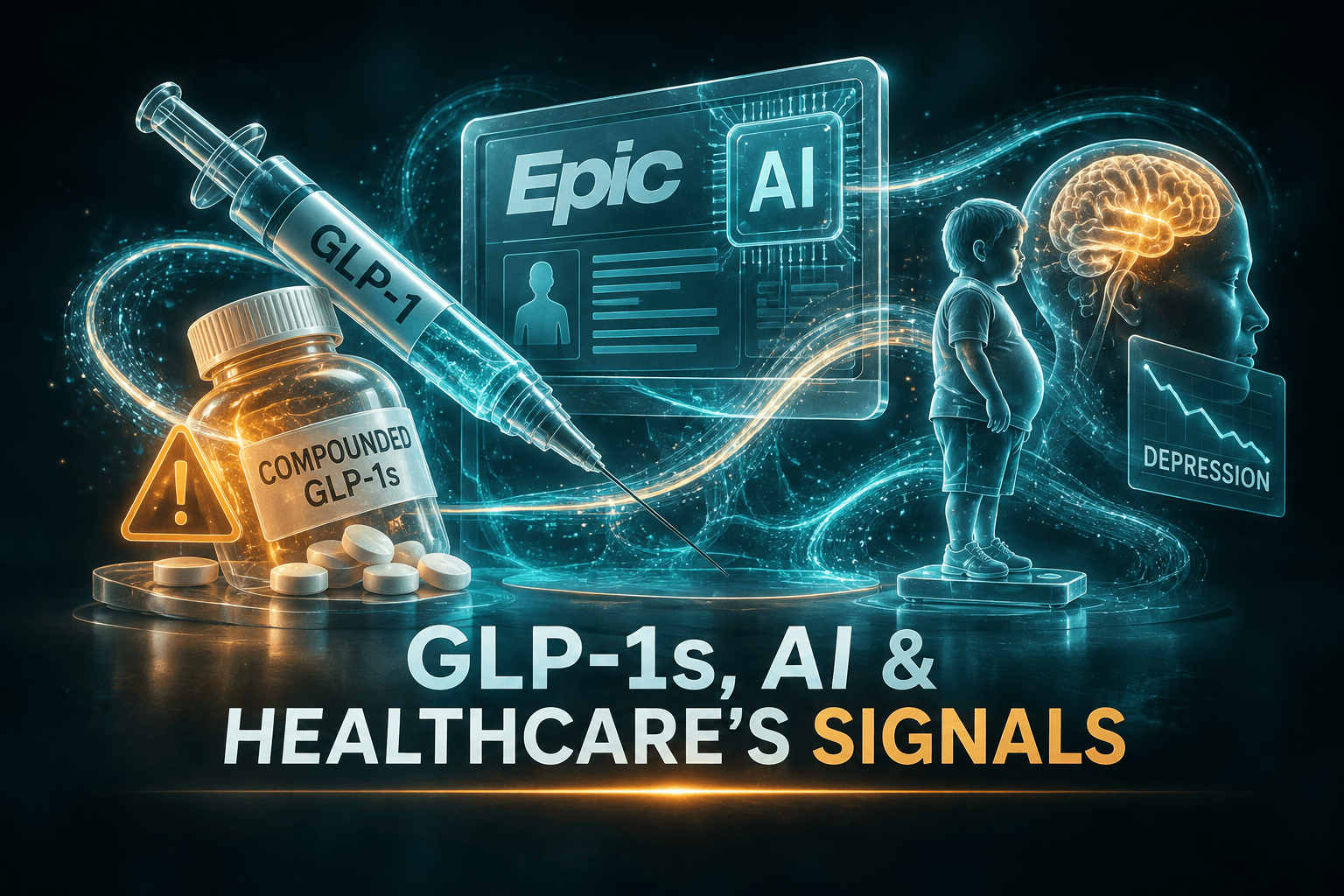
Healthcare's clearest investor-relevant tension this morning is between expanding access to care and making sure that access is safe, dependable and governed well. At the HLTH conference, experts raised concerns about compounded GLP-1 drugs even as proponents argued they can lower costs and serve patients needing individualized treatment. Epic, the largest electronic health records vendor, meanwhile defended its competitive practices and promised to let AI access its records.
Those debates sit alongside early research on depression and obesity, questions about medication use, and policy reporting. What does that mean for you today? The stories point to issues that could shape healthcare delivery and regulation, but they don't establish a clear near-term revenue change or a broad market direction.
Market Highlights
The reports published overnight and this morning focus mainly on research, policy and industry practices, rather than earnings or company guidance. No share-price movements or percentage changes were provided in the source material, so the news alone doesn't establish how healthcare stocks are trading during Thursday's open session.
- At HLTH, Epic defended its competitive practices and said it would allow AI access to its records.
- Experts debated compounded GLP-1s, with supporters citing access, lower prices and individualized formulations, while critics raised serious concerns.
- A study involving almost 125,000 children examined measures intended to help families make healthier choices and prevent obesity.
- South Australia recorded 44 people in residential aged care per 1,000, the highest rate noted in a report on GP access to aged care facilities.
For your watchlist, the most useful distinction is between a report that describes a potential long-term healthcare issue and a company-specific catalyst that could change financial expectations. None of the supplied stories reports a new earnings outlook or a quantified impact on sales, costs or market share.
Key Developments
Drug access and evidence remain under scrutiny
The debate over compounded GLP-1s highlights a practical and commercial tension. Proponents say compounding can widen access, reduce prices and allow individualized versions of medicines. Experts speaking at HLTH raised serious concerns, with the article describing a sharp dispute over products and marketing. The report doesn't provide a new regulatory decision or quantify the size of the market affected.
A separate STAT opinion piece examines the STREAM trial and the question of deprescribing statins. Cardiologist Vishal Khetpal says he is puzzled by the blockbuster study, but the summary doesn't detail its findings. For investors, that makes this a prompt to follow how clinicians interpret the evidence, not a basis for assuming prescribing patterns will change. You may want to watch for fuller trial analysis and any subsequent professional or policy response.
AI access and care delivery could shape the next debate
Epic's defense of its competitive practices and promise to allow AI access to its records put health data access in focus. The announcement signals a public commitment around AI interoperability, but the report doesn't specify a timetable, technical conditions or commercial terms. Those details matter: a stated willingness to provide access doesn't by itself show how broadly tools will be deployed or what value will accrue to vendors, providers or patients.
Care delivery challenges also appear in the report on Australian aged care, where researchers say changes are needed to allow more general practitioners to attend residential facilities. The rising number of people living permanently in aged care adds pressure to access, and South Australia's rate was reported at 44 per 1,000. This is a healthcare-system signal rather than a direct update on U.S. company finances, but workforce capacity remains relevant to how care is organized and funded.
Research and policy stories add context, not immediate catalysts
UT Southwestern Medical Center researchers and colleagues, including two researchers at UT Dallas, found evidence that pregnenolone may alter communication patterns between brain regions involved in depression and cognitive control. Pregnenolone is a naturally occurring steroid hormone produced from cholesterol. The report describes evidence about brain changes, not a proven treatment or a clinical outcome, so the work remains an early research development.
A study including almost 125,000 children looked at two measures to help parents and young people make healthier choices and prevent obesity. The summary doesn't name the measures or report their results, which limits conclusions about likely adoption or impact. KFF Health News also published coverage of an increase in early Social Security claims, with experts pointing to last year's widely publicized turmoil at the agency as a possible spark. Its weekly health news audio and a reader-comment feature on topics including gender-affirming care, rural doctor shortages and other recent coverage add public-policy context, but no new clinical or market findings.
Political spending is another part of the policy backdrop. STAT reported that MAHA PAC spent more at a Washington, D.C., steakhouse than on the House race of a key ally, before midterm losses. The report points to a mismatch in spending priorities, but the summary gives no amounts and does not establish a direct effect on healthcare policy or company results. Treat it as political context rather than a standalone financial signal.
What to Watch
Over the coming sessions, look for more detail on compounded GLP-1 oversight and on how policymakers balance affordability, individualized treatment and safety. Any formal regulatory action or clearer evidence of changes to access could matter more to companies and providers than today's conference debate alone.
For health technology, watch whether Epic's AI-access promise becomes a defined program, including conditions, timing and the scope of records available. In research, further publication or expert interpretation of the STREAM trial, the obesity study and the pregnenolone findings could clarify whether the reports have practical implications. You should also distinguish early scientific signals from validated clinical results. No earnings releases, scheduled company events or specific stock catalysts were identified in these stories, so today's reports offer limited grounds for a directional sector call.
Bottom Line
- The overall signal is mixed: healthcare access and innovation are advancing alongside safety, evidence and competition concerns.
- Compounded GLP-1s remain a debate, not a reported regulatory resolution or quantified market shift.
- Epic's AI commitment is notable, but implementation details will determine its practical significance.
- Pregnenolone and obesity findings are research developments, not proof of new treatments or commercial outcomes.
- No stock moves or company financial updates were provided. Use the reports as context, not as investment advice or a trading signal.
FAQ Section
Q: Is the healthcare sector outlook bullish or bearish today? A: Neutral. The reports contain a mix of research, technology and policy developments, without a clear financial catalyst or reported sector-wide price move.
Q: What is the main issue in the compounded GLP-1 debate? A: Supporters cite access, affordability and individualized formulations, while experts raised serious concerns at HLTH. The report describes debate, not a new regulatory decision.
Q: Does the pregnenolone research show a new depression treatment is available? A: No. Researchers reported evidence of changes in brain communication patterns, but the summary does not describe a proven treatment or clinical outcome.