The Big Picture
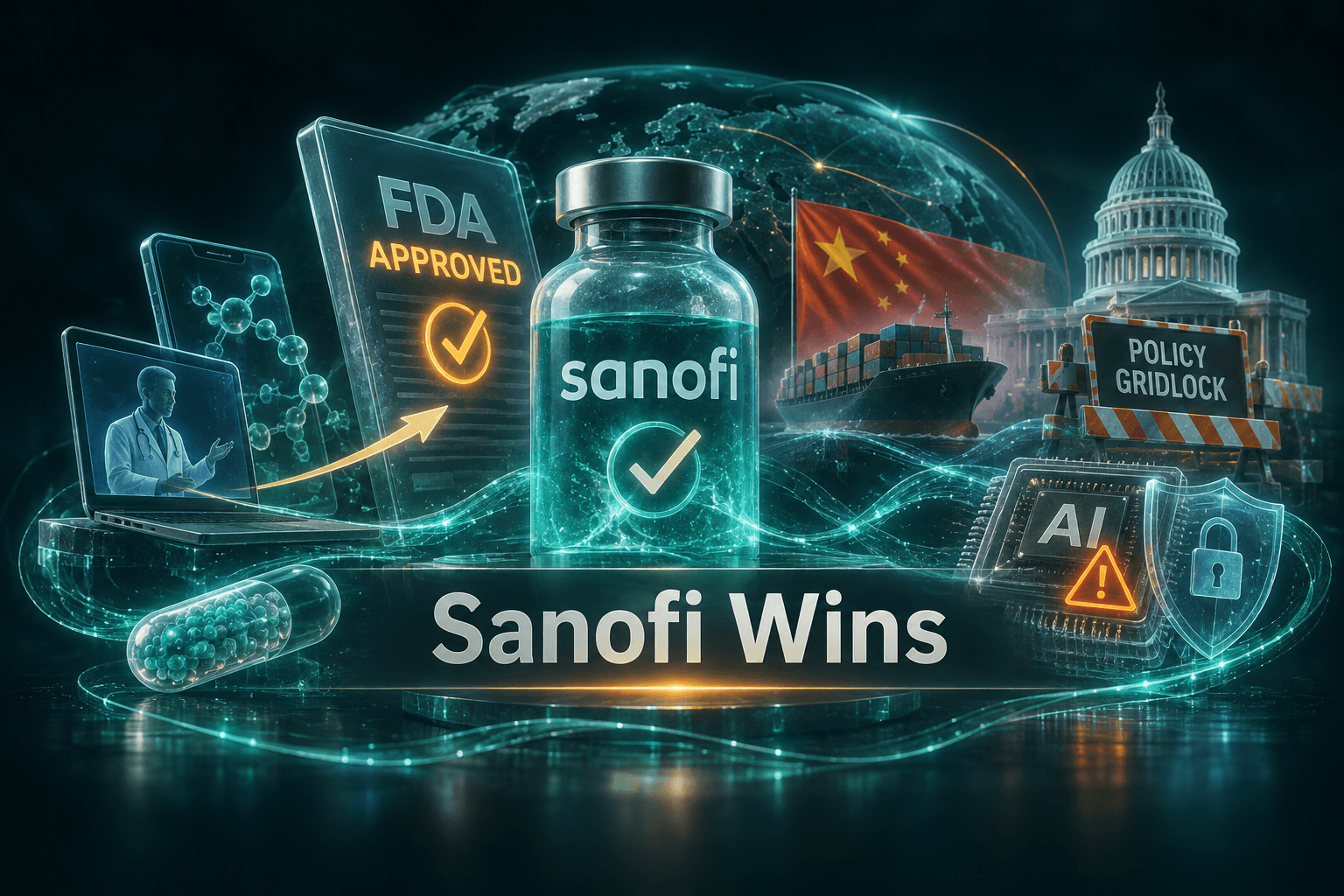
Sanofi’s FDA approval of the Gaucher disease pill Infilbray was the day’s clearest commercial milestone for healthcare, giving the company a new potential revenue source as investors look ahead to Dupixent’s looming patent expiration. The approval follows a winding development path, according to BioPharma Dive, but the news provided no sales forecasts or estimates of how quickly the medicine could contribute to results.
Beyond the product news, the day highlighted a sector balancing innovation and expansion against policy, supply-chain and cybersecurity concerns. What should you take from that mix? The headlines point to selective opportunities, but several important developments remain early-stage or unresolved.
Market Highlights
The provided reports did not include closing prices or percentage moves for healthcare stocks, so there is no reported share-price reaction to quantify here. With U.S. markets open today, company-level trading data would be needed to distinguish market response from the news itself.
- Sanofi ($SNY) received FDA approval for Infilbray, a Gaucher disease pill that could add a source of income ahead of Dupixent’s patent expiration.
- Hims & Hers (Hims & Hers Health (HIMS)) and private telehealth company Noom launched peptide programs this week, following a change that made it easier for compounding pharmacies to offer some products.
- Lawmakers and a commission warned that U.S. reliance on China for biopharma could create supply-chain vulnerabilities, while another report described limited progress on drug-cost policy.
- Healthcare providers and firms face potential exposure from insufficient oversight of AI tools, including unauthorized or unmonitored “shadow AI” use.
These stories have different time horizons. An FDA approval is a concrete regulatory event, while policy proposals, research findings and warnings about technology practices require follow-through before their financial effects become clear.
Key Developments
Sanofi adds a product milestone, but commercial questions remain
The FDA approval of Infilbray concludes a difficult development journey and gives Sanofi another product to bring to patients with Gaucher disease. For shareholders, the announcement is relevant in part because it arrives ahead of the anticipated patent expiration for Dupixent, a major product for the company. However, the reports provided no launch timetable, pricing, addressable-market estimate or revenue guidance for Infilbray.
That leaves execution and uptake as the next questions to watch. An approval establishes that the product has cleared a regulatory hurdle, but it does not by itself show how much it will contribute to earnings or offset future changes in revenue from other medicines. You’ll want to separate the significance of the regulatory win from the still-unknown commercial impact.
Peptide launches meet demand and safety questions
Hims & Hers and Noom are entering the peptide market with new programs after HHS made it easier for compounding pharmacies to offer drugs such as BPC-157, according to STAT. Their launches point to telehealth companies’ interest in expanding beyond established services. The available reporting, however, does not detail program pricing, expected participation or the products’ eventual contribution to company results.
The commercial opening comes with questions about oversight and health risks. Compounded products and newer peptide offerings can draw consumer interest, but the reports do not establish their clinical effectiveness or broader safety profile. For investors, the distinction matters: new services may widen a company’s offering, while regulatory scrutiny, patient safety and consumer confidence can shape whether that interest becomes durable business.
Competition, policy and technology create sector-wide pressure
Two reports underscored concern that China could gain a stronger position in biopharma. A commission warned that overdependence could leave U.S. patients vulnerable to supply-chain disruption, while lawmakers in the congressional BIOTech Caucus called for Washington to act faster to help U.S. biotech compete. These are policy and strategic warnings, not evidence that a specific disruption has occurred, but they put sourcing resilience and future government action in focus.
Meanwhile, a Senate committee hearing highlighted agreement that drug costs are too high, even as industry pushback and delays have stalled reform. That leaves uncertainty around the direction and timing of potential policy changes. Healthcare organizations also face an immediate operational challenge: firms are adopting AI tools faster than some security teams can monitor them, creating risks from shadow AI and possible data breaches.
Scientific research added longer-range context. Umeå University researchers identified an RNA-related mechanism that may help silence tumor-suppressor genes in ovarian cancer cells, potentially informing future treatment strategies. A Finnish study linked adolescents’ screen use and physical activity with differences in brain structures involved in memory and learning, while a separate expert review examined the TikTok “brain stacking” trend. These findings are not near-term revenue catalysts, but they illustrate the ongoing research pipeline and the need to distinguish early findings from proven clinical or commercial outcomes.
What to Watch
For Sanofi, monitor any company updates on Infilbray’s launch, access, uptake and financial contribution. Those details can help clarify how material the approval may be relative to the company’s broader portfolio and the future patent outlook for Dupixent.
In policy, watch for concrete proposals from Congress on U.S. biotech competitiveness, supply-chain resilience and drug costs. Statements of concern are not policy outcomes, and legislative delays remain part of the picture. For Hims & Hers and Noom, future disclosures about peptide-program rules, safety measures and customer demand may help show whether this is a lasting business line or an early expansion effort.
Healthcare companies’ management of AI tools is another practical risk to track, particularly where sensitive patient information is involved. You can also watch for follow-up research on the ovarian cancer mechanism, but clinical validation and any treatment development would take time. No upcoming event or earnings date was specified in the reports.
Bottom Line
- Sanofi’s FDA approval is the day’s clearest company-specific positive, though the financial contribution remains unreported.
- Peptide launches create a new area of telehealth activity, alongside unresolved safety and oversight questions.
- U.S.-China competition and drug-policy gridlock could affect the sector’s longer-term operating environment.
- AI adoption is creating cybersecurity oversight challenges for healthcare organizations.
- Research headlines are informative, but the reported findings do not establish near-term commercial outcomes.
FAQ Section
Q: What did the FDA approve for Sanofi? A: The FDA approved Infilbray, a pill for Gaucher disease. The reports did not provide launch or revenue estimates.
Q: Why are Hims & Hers and Noom entering the peptide market? A: Both launched peptide programs after HHS made it easier for compounding pharmacies to offer certain products. Their commercial prospects and safety considerations remain to be assessed.
Q: What are the main risks healthcare investors are watching? A: The day’s reports highlighted drug-policy delays, potential biopharma supply-chain dependence on China, questions around peptide products and cybersecurity risks from unmonitored AI tools.
This summary is for informational purposes only and is not personalized investment advice or a recommendation to buy, sell or hold any security.