The Big Picture
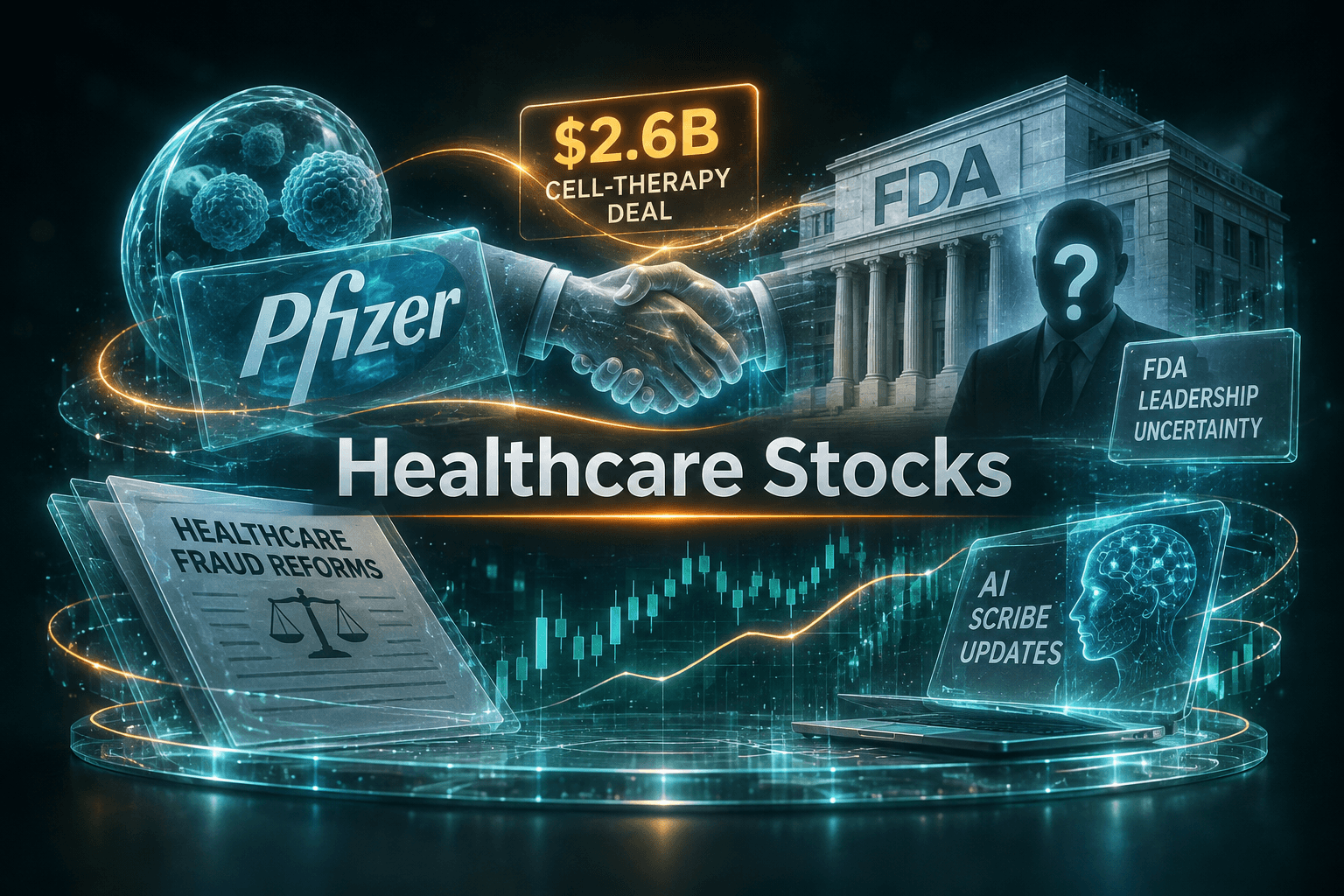
Pfizer's move into in vivo CAR-T research was the day's clearest growth-oriented development in healthcare, even as policy questions and mixed clinical research findings kept the broader picture unsettled. The potentially $2.6 billion collaboration aims to reprogram cells inside the body to treat autoimmune conditions, placing Pfizer in a developing competitive field.
At the same time, the White House withdrew FDA nominee Heidi Overton's candidacy, CMS proposed tougher tools to address suspected healthcare fraud, and experts debated compounded GLP-1 drugs. What does that mean for healthcare stocks? It points to a sector where company-specific research and policy developments may matter more than a single industry-wide signal. The reports provided don't include share-price changes, so today's market reaction can't be quantified here.
Market Highlights
The news flow mixed a large pharmaceutical collaboration with regulatory and healthcare delivery issues. None of the supplied reports included specific stock moves, so investors can't use this roundup to compare company performance or sector returns today.
- Pfizer's collaboration with China's Starna could be worth up to $2.6 billion, according to BioPharma Dive. The report describes a potential deal, not a completed commercial product or revenue stream.
- The White House pulled Heidi Overton's FDA nomination. Analysts cited in coverage said the change shouldn't disrupt the agency, though the next leadership choice remains uncertain.
- CMS proposed changes intended to curb healthcare fraud, including easier denial or revocation of Medicare enrollment for providers suspected of fraud, plus new restrictions affecting Medicaid and marketplace plans.
- Research reports covered early stroke risk, pregnancy-related brain changes in people with MS, and a study finding no behavioral benefit from CBD oil for youths with intellectual disability.
For your read of the day's activity, distinguish company catalysts from sector policy exposure. Pfizer has a named collaboration and a stated potential deal value; several other stories concern proposals, debates, or research that may take time to influence business results.
Key Developments
FDA leadership and healthcare oversight remain in focus
The withdrawal of Overton's nomination adds uncertainty to the FDA's leadership transition. BioPharma Dive reported that the move likely means a Democrat-controlled Congress will choose the next agency head, while analysts said the change shouldn't disrupt the FDA's work. STAT also examined open questions about the agency's future, underscoring that leadership, priorities, and continuity are on the industry's watch list.
Separately, CMS proposed a broad package to curb fraud. The proposal would make it easier to deny or revoke Medicare enrollment for providers suspected of fraud and would add restrictions to Medicaid and marketplace plans. If finalized, the rules could increase compliance pressure for affected providers and plans. The proposal is not a final rule, so its scope and implementation remain important details to follow.
Compounded GLP-1 drugs were another point of debate at the HLTH conference. Supporters say compounding can improve access, reduce prices, and provide individualized formulations, while experts raised concerns about marketing and product quality. For companies involved in obesity treatment and healthcare delivery, the debate highlights the tension between access and oversight. You should watch for further regulatory guidance rather than treat conference comments as a policy decision.
Pfizer adds an emerging cell-therapy approach
Pfizer's deal with Starna moves the company into in vivo CAR-T, an approach designed to reprogram cells inside the body. The collaboration could be worth as much as $2.6 billion and is aimed at autoimmune conditions, according to BioPharma Dive. The headline figure signals the potential scale of the partnership, but the report doesn't specify near-term sales or clinical milestones.
For investors assessing Pfizer's longer-term research strategy, the collaboration offers a development catalyst to monitor, not evidence of an approved treatment or immediate earnings contribution. The field is competitive, and progress will depend on research and development outcomes. The separate STAT report on the AI scribe market also points to competition within healthcare technology, but the supplied summary doesn't name the emerging winners or losers, or provide company-level financial details.
Research updates offer mixed clinical signals
A study published in Neurology associated migraine and smoking separately with a higher risk of early stroke among people who had given birth. Participants with both factors had the highest risk, and early stroke was defined as occurring by age 60. The finding is relevant to prevention and risk awareness, but the summary doesn't provide effect sizes or establish that either factor caused the outcomes.
Researchers at The Alfred and Monash University are investigating brain-volume changes during pregnancy among women with MS. The changes had raised concern about disease progression, but the research may help explain pregnancy-related effects on the brain and inform future treatment work. That possibility is an early research lead, not a cure or clinical result reported today.
By contrast, a new study found no behavioral benefit from CBD oil for youths with intellectual disability. The result is a caution for a treatment area that has gained popularity despite limited evidence, and it differs from potential benefits sometimes associated with CBD. NIH also plans to move its last government-owned chimpanzees still living in a laboratory to a sanctuary next year, a research and animal-welfare development rather than a near-term commercial catalyst.
What to Watch
Tomorrow, the key questions are whether any additional details emerge on Pfizer's collaboration, how the FDA nomination process develops, and whether CMS releases more specifics about the proposed fraud rule. For the latter, watch for comment periods, implementation timelines, and which provider or plan categories could be affected.
Investors can also track whether compounded GLP-1 discussions lead to formal regulatory action, and whether further data clarify the safety, effectiveness, or commercial prospects of in vivo CAR-T and AI scribe products. The research findings on stroke, MS, and CBD may inform future studies, but the reports don't identify immediate commercial or policy changes. With no stock-price data in the supplied coverage, check market quotes separately before drawing conclusions about how shares responded.
Bottom Line
- Pfizer's potential $2.6 billion Starna collaboration is the day's most concrete company-specific development, but it remains a research-stage catalyst.
- FDA leadership uncertainty and proposed CMS fraud controls add policy questions for healthcare companies and providers.
- The compounded GLP-1 debate centers on access, affordability, and oversight, with no policy outcome reported.
- Clinical research was mixed: the MS work may guide further study, while the CBD study reported no behavioral benefit.
- Today's supplied reports lack stock-price data, so market reactions and percentage moves can't be verified from this roundup.
FAQ
Q: What was the biggest healthcare company development today? A: Pfizer's collaboration with Starna, potentially worth $2.6 billion, expands Pfizer's work into in vivo CAR-T for autoimmune conditions.
Q: Did the FDA leadership change mean an immediate agency disruption? A: Analysts cited in coverage said Overton's withdrawn nomination shouldn't disrupt the agency, though the next leadership choice remains uncertain.
Q: What did the CBD study find? A: It found no behavioral benefit from CBD oil for youths with intellectual disability, according to the report.