The Big Picture
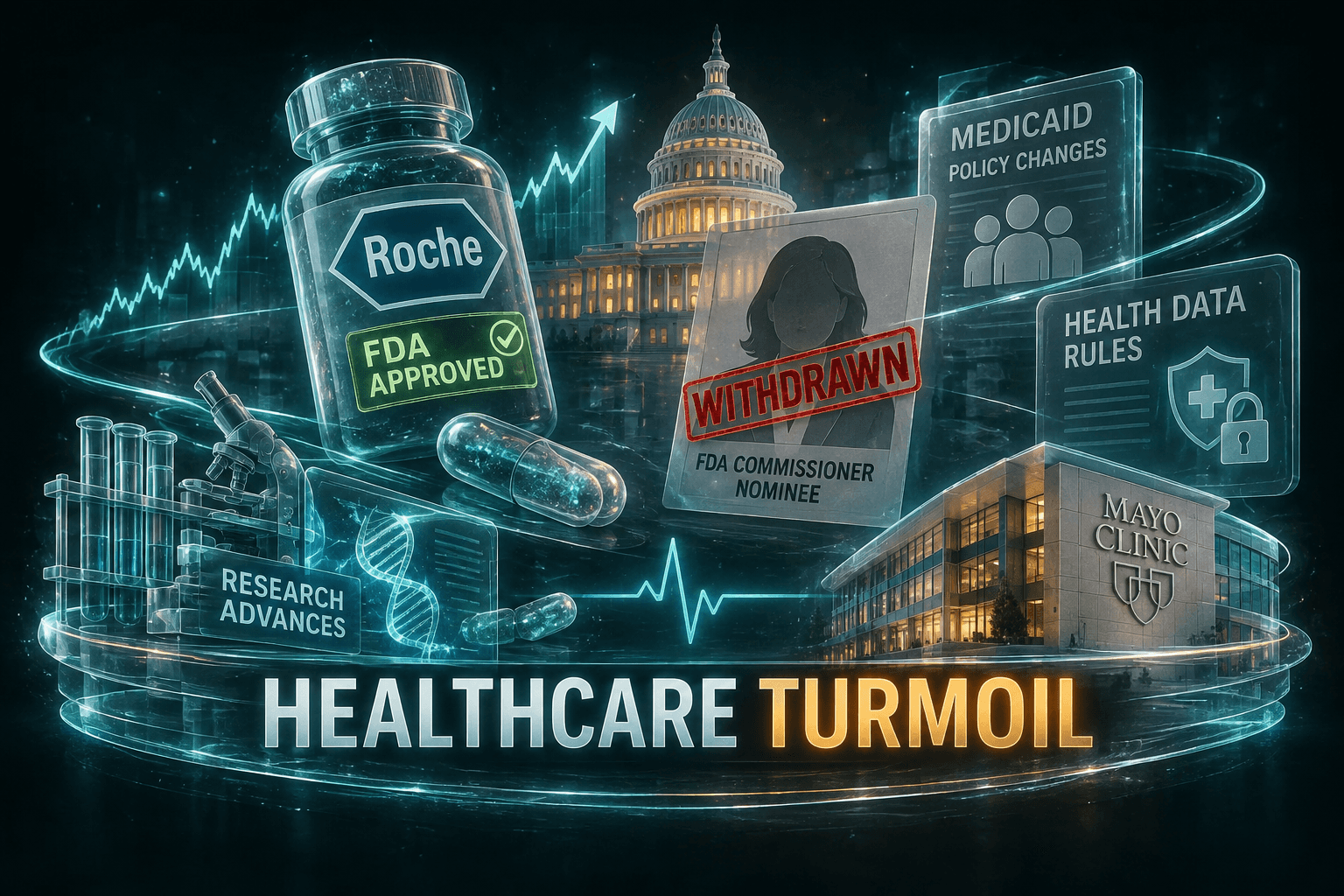
Healthcare investors have a fresh FDA development to assess this morning: the White House has withdrawn Heidi Overton’s nomination to lead the agency, while Roche has secured FDA approval for its breast cancer pill Wilserdly. The contrast puts regulatory uncertainty and a commercial milestone side by side, making selectivity important across the sector.
Other headlines span Medicaid access, patient privacy, hospital care, and early-stage research. Those developments may matter to different healthcare businesses in different ways, but the supplied reports don’t include stock prices or percentage moves, so there’s no basis to claim a sector-wide market reaction. What should you take away? The news points to distinct company and policy catalysts rather than one clear direction for healthcare stocks.
Market Highlights
Roche’s approval is the clearest direct commercial catalyst in the headlines. Analysts described the decision as a key first step for a launch the company has said could make Wilserdly its top-selling product. An approval opens a commercial path, but sales uptake, competition, and further launch details will be important to evaluate.
- Roche’s breast cancer pill Wilserdly received U.S. FDA approval. No share-price move or sales estimate was provided in the reports.
- The White House withdrew Heidi Overton’s nomination for FDA commissioner after her candidacy faced opposition, including criticism related to her work on vaping.
- A Medicaid policy change will allow traditional healing in two states’ programs, while broader restrictions are expected to affect access to care for an estimated 7.5 million people.
- A federal health data privacy update sets standards for sharing records with apps, with a stated focus on helping patients access their records.
Several other stories are relevant to the longer-term healthcare landscape, though they don’t provide near-term financial figures. Mayo Clinic has named Dr. Matthew Callstrom, its medical director overseeing AI and strategy, as CEO starting next year. University of Sydney researchers also reported experimental mRNA nose drops that improved memory in aged mice and prevented memory loss in a mouse model of Alzheimer’s disease.
Key Developments
FDA leadership uncertainty meets a Roche approval
The withdrawal of Overton’s nomination follows a reported clash among Republicans and MAHA leaders over her record on vaping. The immediate investor takeaway is uncertainty around who will lead the FDA and how the agency’s priorities may develop. The reports don’t specify a replacement or a timetable for a new nominee, so investors will need to watch for official announcements rather than assume a quick resolution.
That uncertainty comes as Roche, traded in the U.S. as $RHHBY, begins a significant product launch opportunity. The FDA cleared Wilserdly for breast cancer, and analysts characterized the approval as an important first step. The company’s projection that the pill could become its top-selling product is a company claim, not a guarantee; the launch’s commercial progress will depend on information that has not yet been reported here, including uptake and sales performance.
Medicaid and data access create policy questions
The administration approved Native traditional healing for Medicaid programs in two states. The move expands a recognized care option for Native Americans, but it sits alongside restrictions that are expected to affect access to care for an estimated 7.5 million people. For healthcare providers and organizations that rely on Medicaid, the scope and implementation of those restrictions are important details to follow. The reports don’t quantify financial effects for specific companies.
Separately, an updated federal health data privacy rule sets standards for sharing records with apps and emphasizes patient access to medical information. That could affect how health systems, app providers, and digital health businesses handle records, but the supplied summary doesn’t detail implementation dates or specific compliance requirements. If you follow digital health companies, the rule’s operational details will matter more than the headline alone.
Research and leadership point to longer-term change
Experimental mRNA nose drops showed memory benefits in aged mice and in a mouse model of Alzheimer’s disease. The approach uses technology similar to that developed for COVID-19 vaccines, but these are preclinical findings. They don’t establish safety or effectiveness in people, and no clinical trial timeline was provided. Treat the result as an early research signal, not a near-term product catalyst.
Other Medical Xpress reports examined how young neurons may help the brain form social memories and whether young adults who identify as perfectionists show associated behaviors and traits. These studies add to broader scientific understanding, but the summaries don’t identify commercial products or market-ready treatments. Meanwhile, Mayo Clinic’s selection of Dr. Callstrom as CEO, effective next year, brings an AI and strategy leader into a major healthcare leadership role. The appointment makes digital strategy worth watching, though no specific business plans were announced.
What to Watch
For Roche, monitor the company’s launch commentary and any reported evidence of prescribing, access, or sales uptake for Wilserdly. The approval is a concrete milestone, but it’s too early to infer from the headlines how quickly the product could contribute to revenue. You’ll also want to watch for Roche’s own updates on its expectations and the competitive landscape.
On policy, look for developments on a new FDA commissioner nominee and any further detail on the health data rule’s requirements. Medicaid implementation and the reach of restrictions affecting an estimated 7.5 million people could have implications for patients and care providers; the two-state traditional healing approval is a separate, more targeted change. For Mayo Clinic and digital health businesses, upcoming strategy or implementation disclosures may clarify how leadership and privacy changes translate into operations.
Finally, keep a firm line between laboratory research and clinical evidence. The mouse-memory findings are scientifically notable, but human trials would be necessary before drawing conclusions about treatment potential. With no reported sector trading data in these stories, a measured reading of company updates and policy details is more useful than assuming the headlines have already changed valuations.
Bottom Line
- Healthcare news is mixed, with no reported sector-wide stock moves in the supplied stories.
- Roche’s Wilserdly approval creates a commercial milestone, while launch performance remains to be demonstrated.
- Overton’s withdrawn FDA nomination leaves a leadership question open; watch for a replacement announcement.
- Medicaid restrictions, the two-state traditional healing approval, and new health data standards merit attention as implementation details emerge.
- Mouse-based memory research is preliminary and should not be confused with evidence of a treatment for people.
FAQ
Q: What is the biggest direct company catalyst in today’s healthcare headlines? A: Roche received FDA approval for its breast cancer pill Wilserdly, which analysts called an important first step for the launch.
Q: Why does the FDA nomination withdrawal matter to investors? A: It leaves uncertainty about agency leadership and future priorities. The reports don’t identify a replacement or a timeline.
Q: Do the experimental nose drops show a new Alzheimer’s treatment is ready? A: No. The reported benefits were in mice, and the findings do not establish safety or effectiveness in people.