The Big Picture
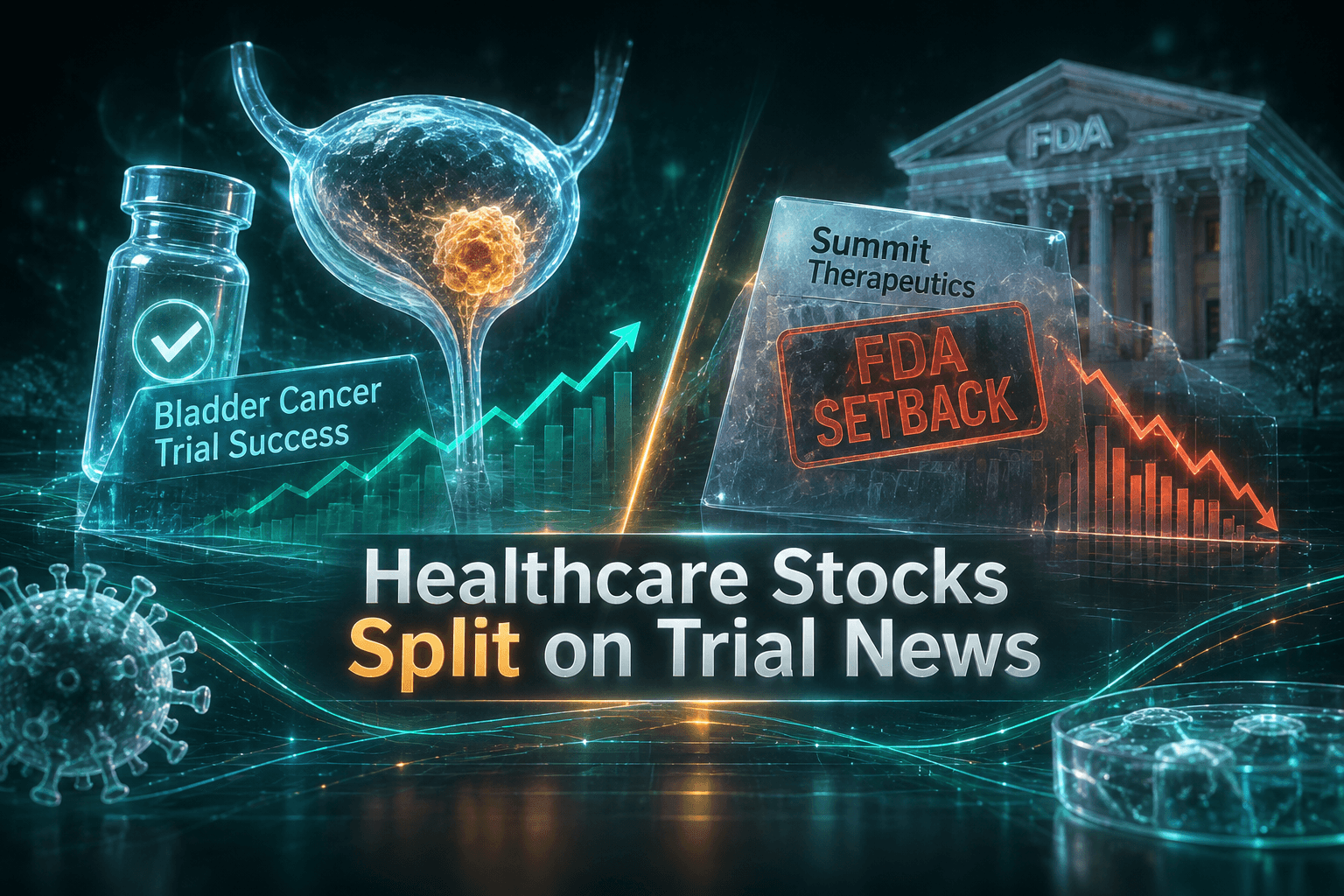
Healthcare’s latest investment signals pull in opposite directions: CG Oncology reported that its bladder cancer therapy cut recurrence risk by 68% in a key trial, while the FDA rejected Summit Therapeutics’ closely watched lung cancer drug. The contrast underscores how sharply prospects can differ across drug developers, even as both companies seek to advance cancer treatments.
Beyond biotech, today’s headlines cover measles concerns in newborns, overdose prevention funding, nicotine products, and research into the gut and brain. For you, the takeaway is a sector with meaningful scientific progress alongside regulatory, safety, and public health risks, rather than one clear market-wide trend.
Market Highlights
The most direct company news came from the oncology sector. CG Oncology’s trial result was described as exceptional, while Summit’s FDA setback concerned ivonescimab’s initial failure to extend survival in a form of lung cancer. The reports say CG shares rose and Summit shares fell, but provide no exact price moves.
- CG Oncology, $CGON: cretostimogene cut the risk of bladder cancer recurrence by 68% when given after surgery, according to the reported trial results.
- Summit Therapeutics, $SMMT: the FDA rejected ivonescimab, citing its failure to initially extend survival in a form of lung cancer.
- Both company updates were reported late Monday, Nov. 16. The available reports don’t give the size of either stock’s move.
Other stories offer context for healthcare demand and policy, but no immediate company revenue or share-price figures. Researchers are examining links between gut viruses and irritable bowel syndrome and how genetic changes may affect brain cells, while reports also highlight hurdles in accessing healthcare after moving between states.
Key Developments
Oncology results diverge
CG Oncology’s reported 68% reduction in recurrence risk is a notable trial finding, and the result surpassed Wall Street expectations, according to BioPharma Dive. The therapy, cretostimogene, was administered after surgery. The company’s shares rose on the news, although the report doesn’t specify by how much or provide further trial details.
Summit faces a different regulatory outcome. The FDA refused to overlook ivonescimab’s initial failure to extend survival in a form of lung cancer, setting back the company’s first opportunity to win U.S. approval for the drug. These updates show why you’ll want to distinguish promising trial results from regulatory approval: they are different milestones, and neither headline alone supplies a complete view of a company’s outlook.
Gene therapy safety remains a central question
A STAT report revisits an unexpected death in a gene therapy trial for a brain disease. The event rattled researchers working to get treatment across the blood-brain barrier, and the report says some now believe they have a better way to mitigate risks. The summary doesn’t describe the proposed approach or establish its effectiveness.
For investors following gene therapy, the story highlights the balance between scientific ambition and patient safety. What details will clarify the path forward? Trial updates on safety measures, patient outcomes, and regulators’ assessment will matter more than broad claims of progress. No specific timing for those updates was provided in the report.
Public health and research widen the healthcare picture
Doctors are raising concerns about U.S. babies born with measles, an issue described as the first of its kind in decades. Separately, public health advocates say federal cuts are hobbling efforts to prevent overdoses from tainted drugs. The Trump administration contends that harm reduction efforts, including drug testing, promote drug use, while proponents say testing helps people make more informed decisions. The reports frame these as public health and policy disputes, not new company earnings signals.
Another concern is the tobacco industry’s flavored nicotine tablets, which melt in the mouth and can be used discreetly. Their appeal and form are drawing concern from public health advocates. The stories also include practical coverage advice for people moving to another state, a debate over hospital signs addressing bad behavior, and research into viruses in the gut microbiome and genetic variation in brain cells. The research could help explain disease biology, but the summaries provide no clinical results or near-term commercial milestones.
What to Watch
For $CGON, the next useful information will include additional detail about the bladder cancer trial, including the strength and context of the recurrence finding. The reported 68% reduction is important, but the story summary doesn’t provide the study’s full design, patient numbers, or follow-up period. Those details can help investors assess what the result means and what questions remain.
For $SMMT, watch for further explanation of the FDA decision and any company response or next steps. The core issue in the report is the drug’s initial survival result, so additional evidence on that endpoint will be central to understanding the setback. For gene therapy companies, updates on trial safety and risk mitigation deserve close attention given the reported patient death.
Across the wider sector, monitor developments in public health policy and funding, including the debate over overdose prevention. Measles concerns and nicotine product scrutiny may also prompt further attention from health authorities, though no specific regulatory action is reported here. You can also track whether microbiome and brain-cell research advances from biological insight toward evidence relevant to clinical care.
Bottom Line
- Healthcare sentiment is mixed, with one notable oncology trial result offset by an FDA rejection.
- $CGON reported a 68% reduction in bladder cancer recurrence risk after surgery; further trial details remain important.
- $SMMT’s U.S. approval path for ivonescimab has been set back by the FDA decision.
- Gene therapy safety, overdose prevention policy, and emerging nicotine products are key non-earnings issues to follow.
- Research headlines on measles, the gut microbiome, and brain cells offer context, but the summaries don’t establish near-term commercial impact.
FAQ Section
Q: Why did Summit Therapeutics face an FDA setback? A: The FDA rejected ivonescimab after it failed to initially extend survival in a form of lung cancer, according to the report.
Q: What did CG Oncology report? A: Its drug cretostimogene cut the risk of bladder cancer recurrence by 68% when administered after surgery, as described in the reported trial results.
Q: Is today’s healthcare news broadly positive or negative? A: It is mixed, with a strong trial result alongside a regulatory setback and several public health and safety concerns.