The Big Picture
The U.S. losing its measles elimination status puts public-health resilience back in the spotlight, while a series of federal policy changes keeps healthcare coverage and provider operations in focus. For healthcare investors, the headlines point to a sector shaped as much by government decisions and public-health capacity as by new research or technology.
Markets are closed Sunday, November 15, so there is no U.S. equity trading today. The next session is Monday, November 16, and Friday, November 13, is the latest trading reference point. The news flow is mixed: some federal deadlines have been pushed back and new tools are being tested, while disease-control and access concerns remain. What should you take from a weekend with no single company catalyst? The practical takeaway is to watch policy implementation and its effects on providers, payers and patients.
Market Highlights
The stories largely concern healthcare policy, public health and clinical research rather than company earnings or guidance. They do not report stock-price changes, so there are no defensible percentage moves to cite. For you, the immediate investor focus is how the developments may shape operating conditions over time.
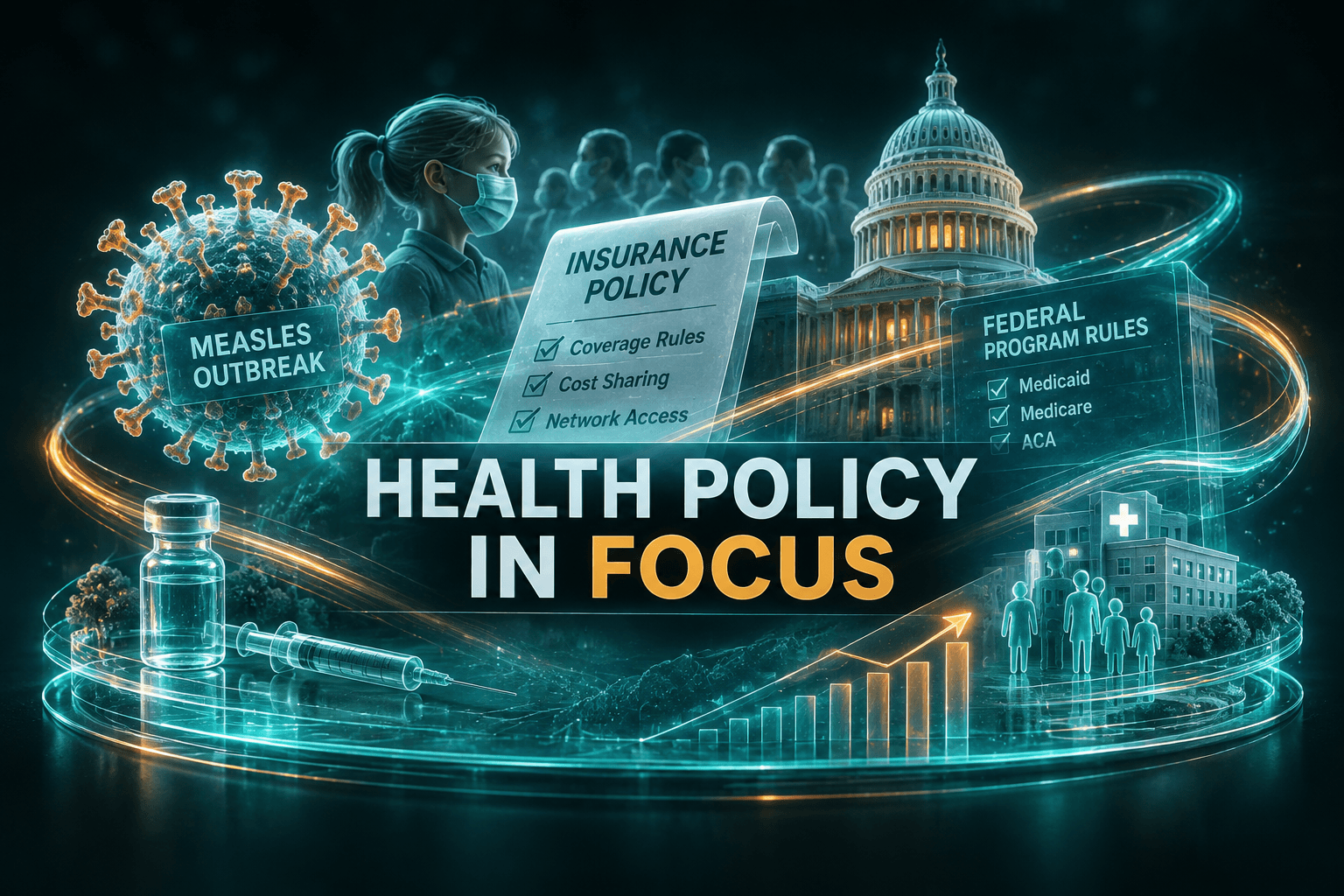
- Measles: Global health authorities say the U.S. has lost its measles elimination status, renewing attention on vaccination and public-health response.
- Medicaid: Enforcement of new work requirements is delayed six months, until July 1, 2027.
- Medicare providers: The restriction on adding new home health and hospice facilities to Medicare is extended for another six months amid fraud concerns.
- Research and care delivery: Studies examine brain-heart activity after oxygen loss and ADHD’s effects, while federal agencies invite organizations to test electronic prior authorization.
Other developments include a new national professional-society guidance document on medetomidine withdrawal and renewed discussion of expanding Medicare coverage. These items may matter to particular healthcare services, but the reports don’t provide financial forecasts or quantify any effect on listed companies.
Key Developments
Public-health risks and research point to long-term needs
The reported loss of U.S. measles elimination status is the clearest public-health warning in this group. KFF Health News links the resurgence to continuous spread and discusses a political climate it characterizes as hostile to public-health measures. For healthcare organizations, sustained outbreaks can put added pressure on prevention, communication and care systems, although the stories provide no estimate of costs or commercial impact.
Research coverage offers a different kind of signal. A study published in eNeuro examined whether brain-heart interactions in a rat model of severe oxygen loss could predict survival after resuscitation. The work builds on earlier findings, but it is not evidence that a clinical prediction tool is ready for patients. Research presented at Neuroscience 2026 also highlights ADHD’s effects on breathing, perception and behavior across the life span. These findings can inform future research and care, but they shouldn’t be treated as immediate revenue catalysts.
Coverage policy remains unsettled
The six-month delay in enforcing Medicaid work requirements gives states and affected individuals more time before enforcement begins on July 1, 2027. It changes the timing, not the existence, of the policy described in the report. For health plans, providers and state governments, that distinction matters: the delay may defer operational changes, while the eventual rules and their effects remain uncertain.
Democrats are also coalescing around proposals described as “Medicare for More” and “Medikids,” signaling continuing debate about how to broaden public coverage. These are proposals, not enacted policy. Alongside the current open-enrollment season and ongoing concerns about high costs, the discussion keeps affordability and insurance access on the agenda. If you follow healthcare businesses, policy details and enrollment effects will matter more than campaign labels.
Provider oversight and health technology in focus
Medicare’s six-month extension of the restriction on enrolling new home health and hospice facilities is intended to address fraud concerns, according to Healthcare Dive. The pause may limit new entrants’ ability to join the program, while established providers continue to operate under the rules that apply to them. The report does not quantify the restriction’s effect on capacity, revenues or existing agencies.
Separately, federal health technology officials are inviting organizations to test electronic prior-authorization processes in a virtual environment ahead of a federal deadline. Testing could help payers and providers prepare for process changes, but the story doesn’t specify how many organizations will participate or what implementation costs may be. The American Society of Addiction Medicine has also issued the first national guidance for recognizing and treating medetomidine withdrawal. Together, these updates reflect efforts to improve consistency in care and administration, even as adoption and execution remain key questions.
What to Watch
As the week begins, monitor how federal agencies and states explain the Medicaid delay and the extended Medicare enrollment restriction. Timelines, implementation guidance and any further adjustments could shape expectations for insurers and providers. You’ll also want to track developments in the measles response and whether public-health authorities report further spread or changes to prevention efforts.
For healthcare technology, look for details on participation in the electronic prior-authorization test environment and progress toward the federal deadline. In research, watch for follow-up studies that test whether promising findings in animal models or conference presentations translate into clinical practice. These stories have no reported earnings estimates or stock moves attached, so avoid reading them as near-term company-specific signals. The picture is not one-way: operational preparation may create efficiencies, but policy uncertainty and access challenges remain.
Bottom Line
- The overall healthcare news picture is mixed, with public-health and policy risks balanced by delayed enforcement and efforts to improve care processes.
- The U.S. measles status raises questions about disease prevention and the capacity of public-health systems.
- Medicaid work requirements are delayed until July 1, 2027, while the Medicare restriction on new home health and hospice enrollments is extended six months.
- Research on brain-heart interactions and ADHD is informative, but the reported findings do not establish immediate clinical or commercial outcomes.
- Markets were closed Sunday; Friday, November 13, was the last trading day, and Monday, November 16, is the next session.
FAQ Section
Q: Why is the healthcare sector news sentiment neutral? A: The headlines include public-health and access concerns, alongside policy delays, clinical research and technology testing, without a clear overall direction for the sector.
Q: When do the delayed Medicaid work requirements take effect? A: Enforcement is delayed for six months, until July 1, 2027, according to the report.
Q: Did healthcare stocks trade on Sunday, November 15? A: No. U.S. stock markets were closed Sunday; the next trading session is Monday, November 16.
This article is for informational purposes only and is not personalized investment advice or a recommendation to buy, sell or hold any security.