The Big Picture
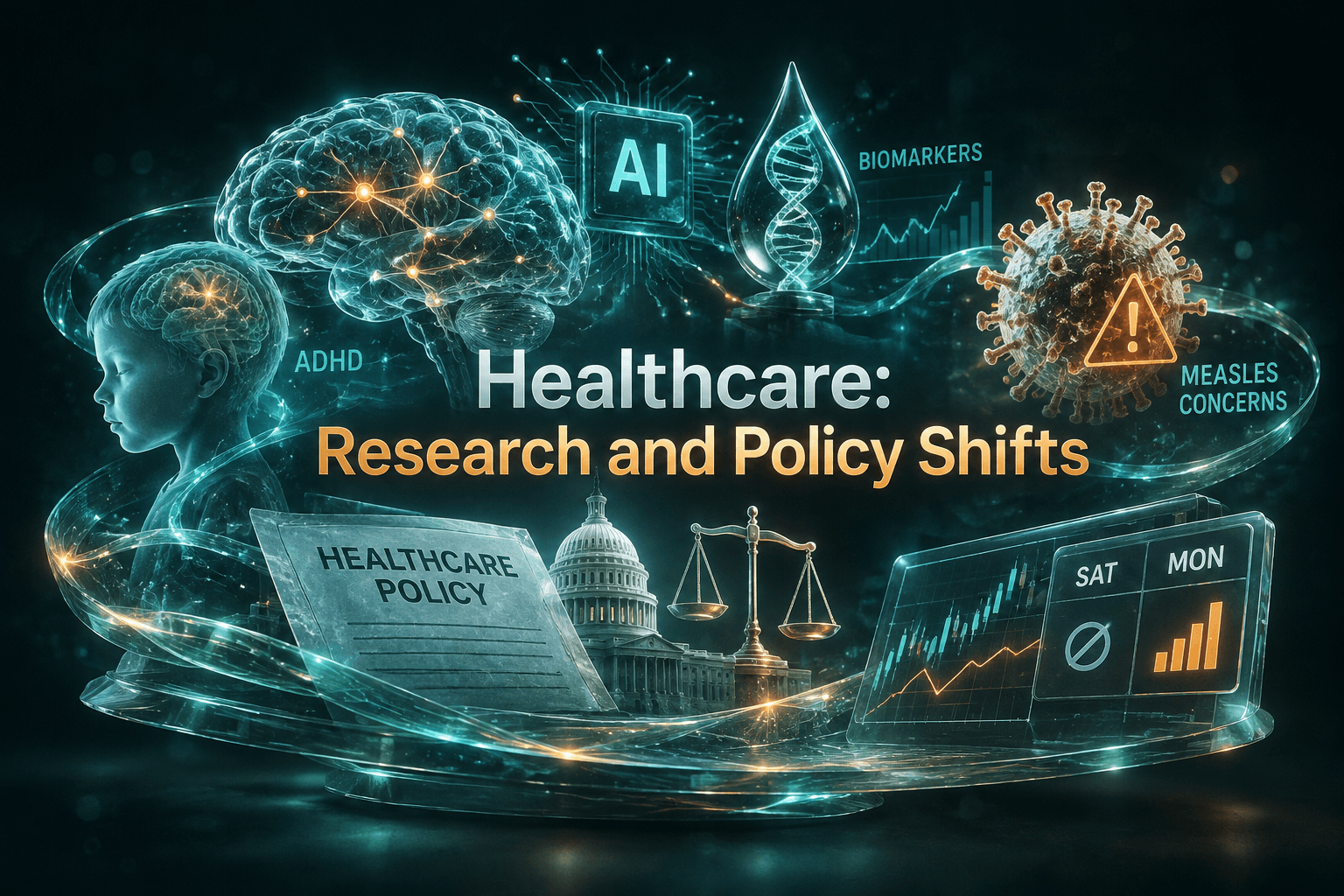
Healthcare's Saturday headlines offered a split view of the sector: new neuroscience research points to potential advances in understanding brain disorders, while measles and policy developments underscore persistent challenges in public health and healthcare access. The reports span scientific research, federal programs, and care delivery, but none provided company-specific financial results or stock catalysts.
U.S. markets were closed Saturday, November 14. That means there were no U.S. equity moves or trading-session price changes to report; the next session is Monday, November 16. For you, the key takeaway is a mixed set of developments whose significance will depend on future evidence, implementation, and policy decisions.
Market Highlights
Three stories tied to the Society for Neuroscience's annual meeting described research involving ADHD, artificial intelligence in neuroscience, and biomarkers for neurological and mental health conditions. The reports suggest areas of scientific activity, but they don't provide study details, quantified results, or information about commercial products, so the near-term investment impact remains difficult to assess.
Policy and public health headlines were more immediate. KFF Health News reported that the U.S. has lost measles elimination status, while federal Medicaid work requirements were delayed six months, until July 1, 2027. Medicare enrollment restrictions for new home health and hospice facilities were also extended by six months amid fraud concerns.
- U.S. equities: markets closed Saturday; Friday, November 13, was the last trading day. No percentage changes or stock prices were provided in these stories.
- Research: ADHD, AI-assisted neuroscience, and biomarkers were featured at Neuroscience 2026.
- Policy and operations: Medicaid work-requirement enforcement was delayed to July 1, 2027, and the Medicare enrollment ban for new home health and hospice facilities was extended six months.
- Care systems: federal agencies invited organizations to test electronic prior authorization processes ahead of a federal deadline.
No individual public-company ticker or share-price information was identified in the reports. What does that mean for your read-through? These are sector-level signals, not a basis for attributing a specific day's performance to any one company.
Key Developments
Neuroscience research highlights discovery potential, not yet commercial proof
Medical Xpress reported that ADHD research presented at Neuroscience 2026 examined effects on breathing, perception, and behavior, framing the condition as one that can influence mental and physical health across the life span. The summary doesn't specify the research methods, study population, or findings in enough detail to assess clinical readiness. The implications for treatment or healthcare spending therefore remain uncertain.
Two other meeting reports described AI's role in neuroscience research and newly developed biomarkers that may improve detection and treatment of conditions including Alzheimer's disease, depression, mood disorders, and neurodevelopmental conditions. Better tools could matter to clinicians and researchers if they are validated and adopted, but the reports don't establish regulatory approval, clinical performance, or a timeline to widespread use. For investors, the distinction between promising research and a validated commercial product is where the rubber meets the road.
Measles and addiction guidance bring public health needs into focus
KFF Health News reported that global health authorities say the U.S. has lost its measles elimination status, after the disease had been largely vanquished for roughly a quarter century. The article summary links renewed spread to public health concerns, including misinformation and actions that can constrain public health efforts. The report signals a public health challenge, but doesn't provide figures on cases, costs, or effects on healthcare providers.
Separately, the American Society of Addiction Medicine issued the first national guidance for recognizing and treating withdrawal among patients who have taken medetomidine, according to STAT News. New clinical guidance can help inform care, but the summary doesn't state how widely the drug is being encountered or what resources implementation may require. Together, these stories highlight ongoing needs in prevention and treatment, while leaving the scale of the operational and financial impact unclear.
Coverage and care-delivery rules remain in flux
The six-month delay in enforcing new Medicaid work requirements moves the start date to July 1, 2027. STAT News also reported that Democrats are coalescing around proposals described as “Medicare for More” and “Medikids,” indicating continuing debate over expanding public coverage. KFF's open-enrollment coverage separately focused on ACA sign-ups and high costs. These items point to active discussion over eligibility, affordability, and coverage, but the summaries don't establish the final details or outcome of future proposals.
Meanwhile, Medicare's extended restriction on enrolling new home health and hospice facilities keeps a barrier in place for providers seeking to join the program, as authorities address fraud concerns. The Office of the National Coordinator for Health Information Technology has invited organizations to test electronic prior authorization in a virtual environment, ahead of a federal deadline. These moves pull in different directions: one limits provider enrollment, while the other seeks to test administrative processes. Their practical effects will depend on implementation and responses from payers and providers.
What to Watch
On Monday, November 16, the next U.S. trading session begins after the weekend. The stories supplied don't identify scheduled company earnings or a specific healthcare-sector event for that day, so there is no reported near-term corporate catalyst to flag. You can watch for any company disclosures or market responses that connect directly to these policy and research themes, while keeping separate confirmed developments from broader interpretation.
Over the coming months, track whether the neuroscience findings lead to fuller data or clinical validation, and whether federal agencies clarify the electronic prior authorization testing process and deadline. Public health updates on measles, the July 2027 Medicaid work-requirement date, and the ongoing Medicare enrollment restriction could also shape the operating environment for relevant healthcare organizations. What matters most is follow-through: policy timelines, evidence quality, and actual effects on access and care delivery.
Risks include continued measles spread, uncertainty around coverage policy, and constraints for home health and hospice providers. Potentially constructive signals include additional evidence supporting biomarkers or AI research tools and practical progress on prior authorization testing. Neither outcome is assured by the reports available today.
Bottom Line
- The overall news flow is mixed, with scientific activity alongside public health and policy challenges.
- Neuroscience findings are early-stage signals in these summaries, not confirmation of approved therapies or revenue opportunities.
- Medicaid work-requirement enforcement is delayed until July 1, 2027; Medicare enrollment restrictions for new home health and hospice facilities are extended six months.
- Markets were closed Saturday, and no stock prices or percentage changes were reported. The next U.S. trading session is Monday, November 16.
- Use future clinical evidence, policy details, and company disclosures to assess possible business impacts. This summary is for informational purposes only and isn't personalized investment advice.
FAQ
Q: Were healthcare stocks trading on Saturday, November 14? A: No. U.S. stock markets were closed; Friday, November 13, was the last trading day, and the next session is Monday, November 16.
Q: What does the neuroscience news establish? A: It identifies research topics presented at Neuroscience 2026, but the summaries don't provide enough study detail to establish clinical readiness or commercial impact.
Q: When do the delayed Medicaid work requirements take effect? A: Enforcement was delayed six months, until July 1, 2027, according to STAT News.