The Big Picture
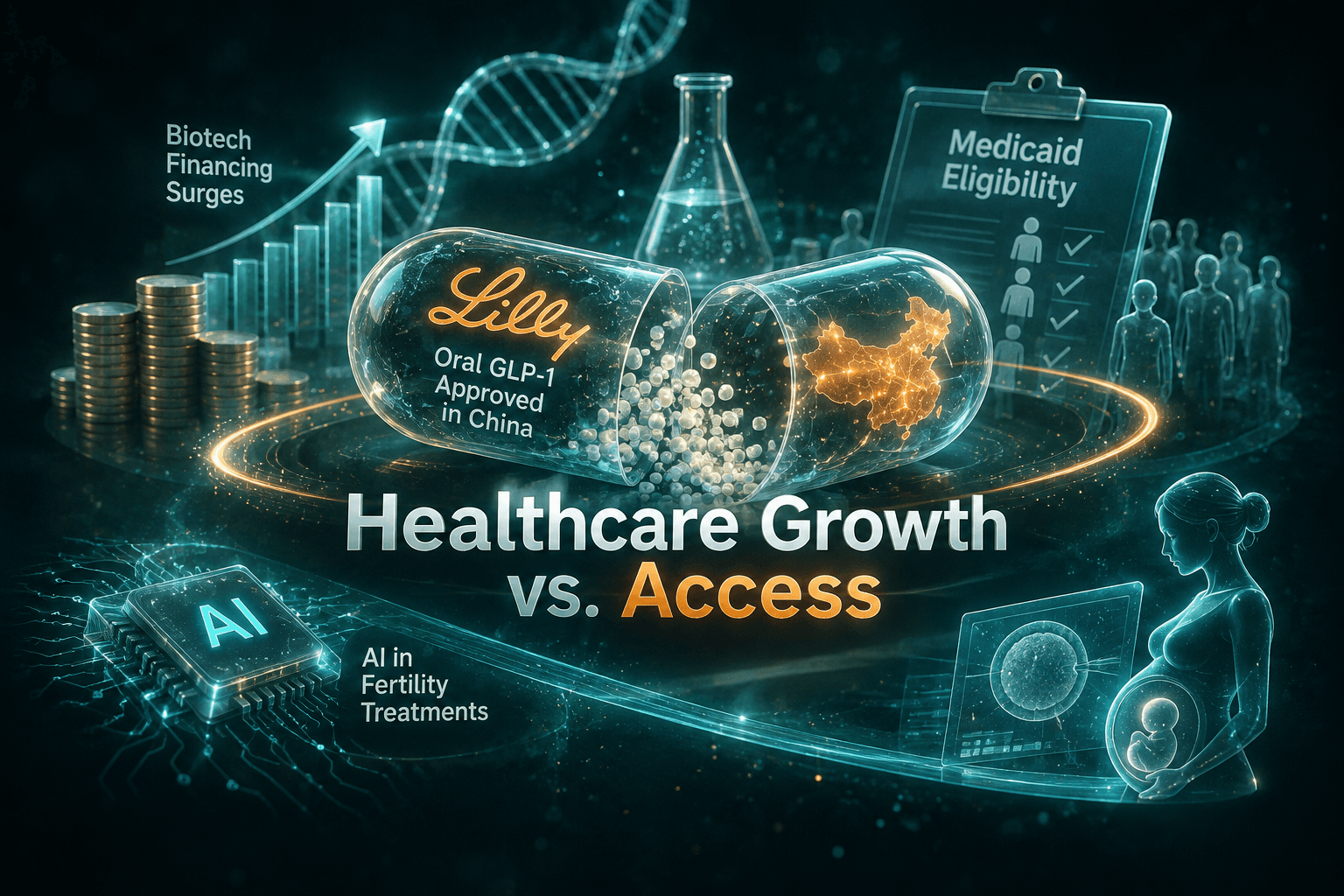
Healthcare's strongest commercial headline today is a new China market opening for Eli Lilly's oral GLP-1 drug, but the broader news flow is a mix of growth signals and unresolved access concerns. The approval gives Eli Lilly and (LLY) a potential route into a large weight-management market, while Windward's planned $175 million IPO points to continued investor interest in biotech drug development.
At the same time, coverage of insulin costs, Medicaid eligibility, clinical AI, and unproven fertility treatments highlights the policy and trust issues that can shape healthcare adoption. What should you take from a day with both opportunity and caution? The reports support a selective, evidence-focused read, not a clear sector-wide signal.
Market Highlights
Two developments stand out for commercial potential: Lilly's orforglipron pill has received approval in China, and Swiss biotech Windward is moving ahead with a public offering to fund its lung-drug pipeline. Neither report provided a share-price change, so the news should be assessed as a business and industry development rather than evidence of a market reaction.
- $LLY: China approved orforglipron, Lilly's oral GLP-1 weight-loss drug. The report cites a projection that 630 million adults in China could be overweight or obese by 2050.
- Windward: The Swiss biotech priced a $175 million IPO to advance lung-drug programs licensed from China, with a concurrent $50 million private share sale to Sanofi.
- Glaucoma research: A new genetic test may identify people with up to 10 times the normal risk of open-angle glaucoma, according to researchers.
Other stories are less directly tied to near-term revenue, but matter to the healthcare operating environment. The American Cancer Society updated its prostate cancer guidance to call for regular screening among middle-aged men, while North Dakota enacted an insulin price cap for patients. Separately, reporting flagged uncertainty around Medicaid work-rule eligibility checks for Native Americans, despite their exemption from the requirements.
No percentage changes or trading prices were included in the supplied reports. For your watchlist, the key distinction is between potential long-term demand catalysts and near-term policy, execution, and evidence questions.
Key Developments
Lilly's China approval comes with relationship questions
China's approval of orforglipron gives Lilly access to a market where the scale of potential weight-management need is substantial. The report doesn't provide launch timing, pricing, or sales estimates, so the commercial contribution remains difficult to quantify from the available information.
Lilly also appears in a separate story about Oura's acquisition of health-tech startup Counsel. Experts cited by STAT say the deal could complicate the relationship between Lilly and a telehealth company that markets GLP-1 drugs. The reports don't establish a specific financial impact, but the questions are relevant as drugmakers, digital health platforms, and consumer data companies build closer ties. You'll want to watch for details on commercial arrangements, patient data, and how any conflicts are addressed.
Screening advances, while trust and evidence remain central
The glaucoma genetic test could help identify people at substantially elevated risk, potentially supporting earlier monitoring. However, the report doesn't specify when the test may become available, its cost, or how researchers have established its performance across different populations. Those details will matter before investors can assess its path to broad clinical use.
The American Cancer Society's prostate cancer guideline update is another signal of changing screening practice. Greater screening attention can affect demand for diagnostic services, but the source summary doesn't quantify how many patients will be screened or identify a direct company beneficiary. Senator-elect Abdul El-Sayed's discussion of restoring trust in science and public health adds a policy backdrop: communication and confidence can influence whether patients and clinicians act on medical guidance.
Policy and technology create uneven implications
North Dakota's bipartisan insulin cap reflects growing efforts to limit patient costs, but the report doesn't state the cap amount or its effect on manufacturers, insurers, or pharmacy benefit managers. Meanwhile, Native American tribal citizens are exempt from Medicaid work requirements, yet limited federal guidance on eligibility checks could still put coverage at risk. For healthcare providers and plans, implementation details may matter as much as the stated exemption.
Two other stories raise questions about the quality and oversight of care. STAT's investigation found clinics offering an unproven “three-parent IVF” procedure to older women through fertility tourism. A separate physician survey found AI increasingly embedded in daily workflows, including literature review and clinical decision-making, despite concerns about accuracy and effects on newer employees. In both areas, adoption is moving alongside questions about evidence, safeguards, and accountability.
What to Watch
For Lilly, monitor further information on orforglipron's China rollout, including timing, pricing, access, and any company disclosures that clarify the opportunity. Also watch for follow-up on Lilly's relationship with telehealth and health-tech partners, particularly disclosures about data use and potential conflicts. The current reports don't supply guidance or sales forecasts.
Windward's IPO and its $50 million private share sale to Sanofi are near-term financing developments to follow. Investors can look for additional information about the offering, pipeline milestones, and progress toward a potential competitor to Tezspire, a blockbuster asthma treatment. The report doesn't provide clinical-trial results or a development timeline, so those remain important unknowns.
On the policy side, watch how states implement Medicaid eligibility checks and whether North Dakota's insulin cap is followed by similar measures elsewhere. For medical technology, follow evidence and oversight around genetic screening, physician use of AI, and unproven fertility procedures. Which of these themes will translate into measurable business impact? The supplied reports don't yet answer that; upcoming company disclosures, policy guidance, and clinical evidence will help narrow the picture.
Bottom Line
- Lilly's China approval is a meaningful market-access development, but launch details and commercial estimates weren't provided.
- Windward's planned $175 million IPO and $50 million Sanofi share sale offer a financing and pipeline story, with clinical milestones still to come.
- New glaucoma and prostate-screening developments may influence care, though adoption, access, and measurable business effects remain uncertain.
- Insulin affordability and Medicaid eligibility underscore policy risks that can affect patients, providers, and healthcare companies differently.
- AI use and fertility tourism highlight the need to track evidence, safeguards, and trust alongside innovation.
This summary is for informational purposes only and isn't personalized investment advice or a recommendation to buy, sell, or hold any security.
FAQ
Q: What is the main healthcare business development today? A: China approved Eli Lilly's oral GLP-1 drug orforglipron, creating a potential new market opportunity, though launch and sales details weren't reported.
Q: What does Windward's IPO news include? A: Windward priced a $175 million IPO to advance lung-drug programs and arranged a concurrent $50 million private share sale to Sanofi.
Q: What healthcare policy issues should I follow? A: Track implementation of North Dakota's insulin price cap and Medicaid eligibility checks affecting Native Americans, as well as ongoing questions about clinical AI and unproven fertility procedures.