The Big Picture
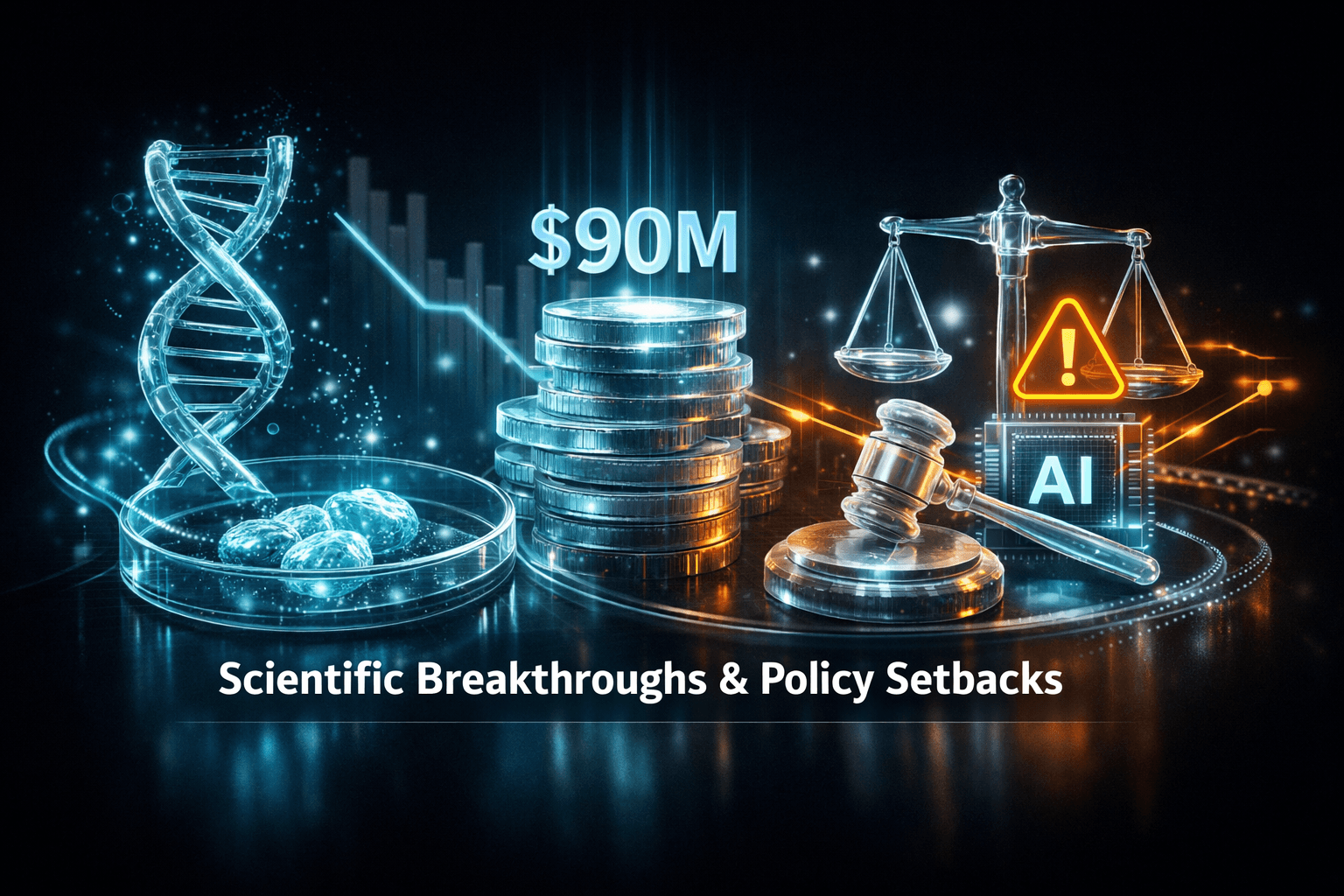
Research wins and fresh venture capital gave the healthcare space a lift overnight, but policy and regulatory uncertainty kept upside in check. A new imaging study identified genomic weak points that make some tumors exquisitely sensitive to PARP inhibitors, and a startup raised $90 million to attack rare blood cancers.
At the same time, federal delays to a $50 billion rural health fund and rising scrutiny of clinical trials in China, plus renewed questions about health AI governance, mean you're likely to see selective market reactions today rather than broad momentum.
Market Highlights
Quick facts to start your trading day.
- Academic breakthrough: NYU Langone-led research published Nov 5 found small, vulnerable DNA sites that heighten cancer cell sensitivity to PARP inhibitors, a finding that may influence oncology drug development and trial design.
- Venture funding: Alethio Therapeutics secured $90 million in Series A financing to advance treatments for rare myeloproliferative neoplasms, signaling continued investor appetite for targeted oncology bets.
- Policy and funding: The federal office overseeing the Rural Health Transformation Program has delayed second-year allocations from a planned five-year, $50 billion fund, creating uncertainty for state and provider budget planning.
- AI and regulation: Midterm results and growing skepticism about AI are raising questions about how quickly the U.S. will move on health AI rules, an issue that could affect large platform partners such as Microsoft (MSFT) and Alphabet Inc. Class C (GOOG) and healthcare software vendors.
Key Developments
Genomic insight boosts PARP inhibitor relevance
The NYU Langone study found that failures in DNA copying at a few genomic sites make cancer cells vulnerable to PARP inhibitors. That class includes drugs marketed by major firms, and analysts note that new mechanistic insight often changes how trials are designed and how patient populations are selected.
For you, that means companies tied to PARP drugs could see targeted upside if these biomarkers translate into clinical stratification, but the upside will depend on follow-up validation in larger cohorts.
Alethio raises $90M to pursue rare blood cancers
Alethio Therapeutics announced a $90 million Series A to advance a candidate aimed at myeloproliferative neoplasms. The raise highlights continued capital flows into precision oncology and rare disease platforms despite broader macro caution.
This is a reminder that early-stage biotech remains a place for outsized returns, but it also carries binary clinical risk. You'll want to watch trial readouts and partnership announcements that could de-risk programs further.
Policy, trials, and AI create headwinds
Federal delays to Rural Health Transformation Program awards leave states uncertain about year-two funding from the five-year, $50 billion initiative. That matters for rural providers and companies that serve those markets, since revenue timing and expansion plans may be pushed out.
Separately, Chinese regulators have tightened rules after safety incidents, slowing investigator-initiated biotech trials. Meanwhile U.S. midterms amplified negative sentiment around AI, and STAT reports that health systems are weighing whether to block clinician use of chatbots or embrace them under stricter controls. These developments increase regulatory and operational risk for clinical-stage biotechs and health AI vendors.
What to Watch
Key catalysts and risks that could move healthcare names in the coming days.
- Follow-up validation on the PARP vulnerability study. Look for larger academic or industry-funded studies that confirm biomarker utility. Will translational partners move quickly to test these sites in trials?
- Alethio milestones. Track preclinical to IND timelines and any partnerships. Early de-risking events often prompt volatility in related small-cap and private markets.
- Rural Health allocations. States will seek clarity on timing and size of second-year awards. Any prolonged delay could pressure stocks of rural health providers and vendors that had budgeted expansion plans.
- AI oversight and hospital policies. Expect statements from large health systems and trade groups about chatbot governance. Regulatory guidance or major hospital bans would affect software vendors and platform partners.
- China trial activity. Watch for concrete rule changes and pause durations that affect global trial timelines, enrollment and supply chains for experimental therapies.
Bottom Line
- Neutral tone: science and funding advances are balanced by policy and regulatory uncertainty, producing mixed signals for the sector.
- Scientific breakthroughs can create targeted winners, but you should wait for validation before extrapolating broad commercial impact.
- Regulatory and funding delays are near-term risks for providers and health-tech vendors, especially those focused on rural care or dependent on cross-border trials.
- Health AI remains a watchlist item; changing rules or hospital policies could drive fast repricing for software and platform partners.
- Focus on catalysts you can track, such as trial readouts, funding milestones and official allocation guidance, to make selective, data-driven decisions for your portfolio.
FAQ Section
Q: How could the PARP vulnerability discovery affect drug makers? A: Data suggests it could allow better patient selection and trial design for PARP inhibitors, potentially improving trial success rates and commercial positioning for companies tied to those drugs.
Q: What does the Rural Health funding delay mean for providers? A: States and providers may face timing and cash flow uncertainty, which could slow planned expansions and vendor contracts until allocations are clarified.
Q: Should I be worried about AI regulation in healthcare? A: Heightened scrutiny means implementation timelines could slow and vendors may need stronger compliance measures, so monitor regulatory developments and major health system policies closely.