The Big Picture
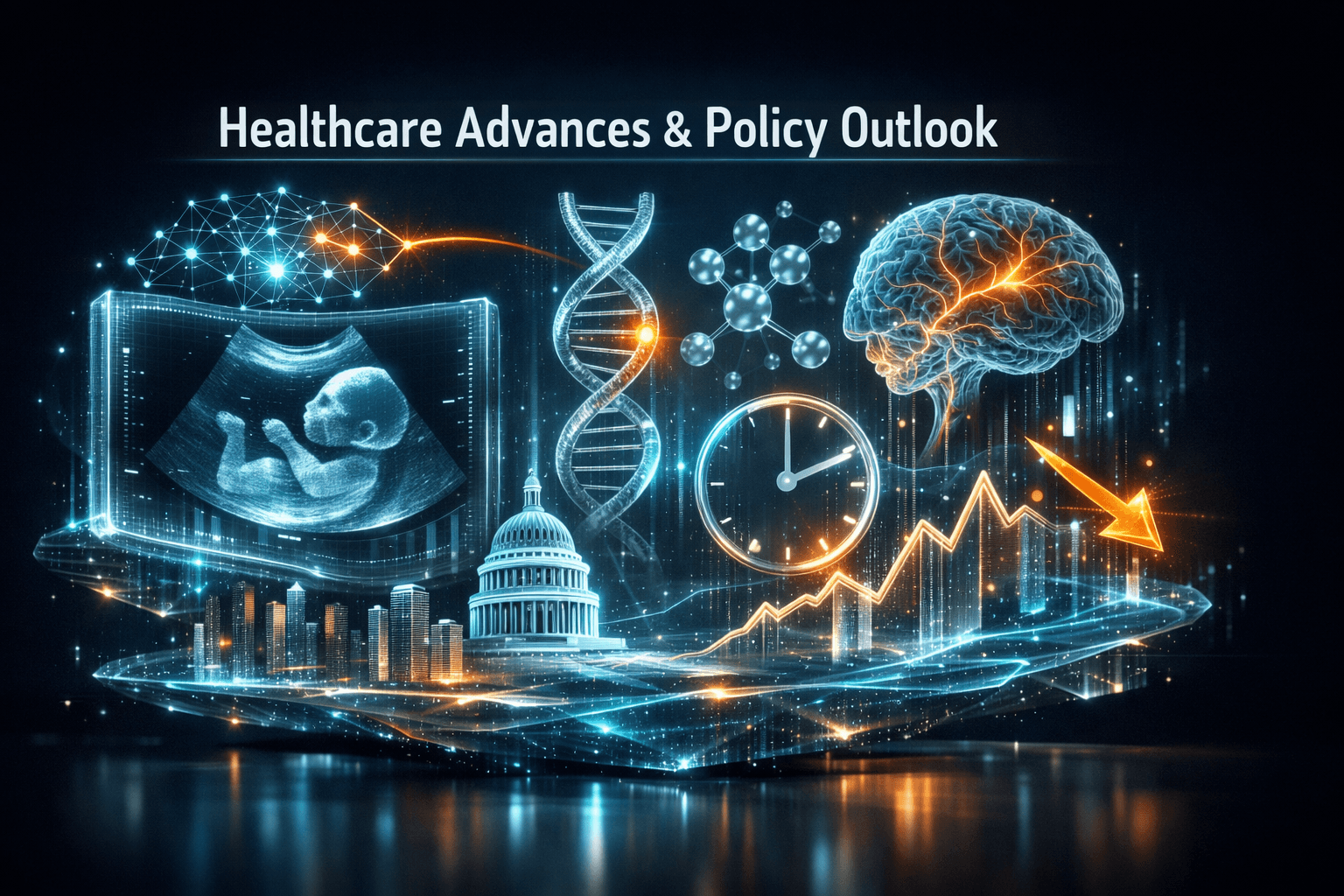
Weekend headlines show tangible progress across diagnostics, acute care and cancer biology, a mix that should matter to you if you follow healthcare innovation. Researchers unveiled a vision-language AI agent to speed ultrasound reads, new evidence on delayed clot removal after stroke, and a discovery of a cancer protein-production pathway that could unlock new drug targets.
At the same time, policymakers and lobbyists are parsing midterm outcomes and their implications for reimbursement, drug pricing and regulatory priorities. That policy angle raises questions about near-term volatility, but the scientific momentum looks constructive for long-term therapeutic and diagnostic players.
Market Highlights
Markets were closed Sunday. For price context, refer to levels as of Friday, October 30, heading into the long weekend.
- Big-cap pharmaceuticals remain central to any sector discussion, with names such as Johnson & Johnson (JNJ), Merck & (MRK) and Pfizer (PFE) frequently cited as defensive anchors.
- Medtech and diagnostic developers, including Medtronic (MDT) and $ABT, look set to benefit from diagnostic AI and stroke-device advances in the research pipeline.
- Biotech names focused on oncology targets and precision therapies are getting renewed attention after the new pathway discovery, which may influence small-cap pipeline valuations.
Key Developments
Vision-language AI could speed ultrasound interpretation
Researchers at the University of Colorado Anschutz reported a vision-language AI agent designed to help radiologists interpret ultrasound exams faster and more accurately. The goal is to triage emergency cases faster and flag patients who may need urgent surgery, a practical efficiency gain for hospitals and imaging groups.
For you, that means companies building clinical AI workflows and imaging integrations could see increasing demand for validated tools. How quickly hospitals adopt these systems will depend on real-world performance data, integration costs and regulatory clearances.
Extended window for clot removal after stroke, with caveats
New reporting reiterates that endovascular thrombectomy can be effective days after some strokes in selected patients, expanding the potential treatment window beyond the traditional 24-hour emergency window. The procedure can restore blood flow and reduce long-term disability for more patients, though it carries procedural risks and requires careful patient selection.
This development matters for device makers and stroke centers. You should watch adoption trends and guideline updates because expanded indications could raise volumes for firms supplying thrombectomy devices and supporting imaging platforms.
Discovery of a cancer protein-production pathway opens new drug targets
Scientists at MD Anderson described a previously unknown mechanism that helps cancer cells selectively produce proteins like KRAS that drive tumor growth. Targeting the enzyme in this pathway may improve responses to existing targeted therapies and help overcome resistance.
That’s a clear research-to-commercial pathway for oncology-focused biotechs and big pharmas pursuing novel targets. Expect increased preclinical and early clinical activity from companies and academic spinouts working on inhibitors or combination strategies.
What to Watch
Here are the near-term catalysts and risks you should track as markets reopen on Monday, November 2.
- Regulatory milestones, including FDA submissions and EU assessments for diagnostic AI and thrombectomy devices. Clearances would reduce adoption friction and could be a catalyst for partnerships or licensing deals.
- Follow-up clinical data and peer-reviewed publications. You want to see multi-center validation for the AI tool and randomized or registry evidence supporting delayed thrombectomy outcomes.
- Early-stage programs targeting the new cancer pathway. Watch for licensing activity, IP filings and biotech financings that signal commercial progress.
- Policy signals after the midterms, especially on drug pricing, Medicare reimbursement and research funding. Those choices could change revenue outlooks for portions of the sector. How will policymakers balance cost containment and innovation incentives?
- Sentiment in small-cap biotech and medtech. News flow that validates a scientific mechanism or device utility can sharply re-rate early-stage names, but volatility may rise if policy uncertainty increases.
Bottom Line
- Scientific and clinical advances are the dominant theme this weekend, with AI diagnostics, stroke care and oncology research offering potential upside for targeted names.
- Policy uncertainty from midterm outcomes adds background risk, especially for pricing and reimbursement, so keep an eye on news flow and legislative developments.
- You should watch regulatory and clinical readouts closely, since approvals and robust validation studies will be the main commercial catalysts.
- Expect selective opportunities rather than broad sector moves, as benefits will favor companies with validated products or clear development paths.
- Data suggests momentum building in innovation, but caution is warranted around execution, reimbursement and political risk.
FAQ
Q: How likely is the ultrasound AI to reach hospitals widely soon? A: It depends on validation and regulatory review, but early results suggest potential for rapid interest among imaging centers if performance is confirmed.
Q: Will expanding thrombectomy timelines change device makers' earnings immediately? A: Not immediately, because guideline updates and broader adoption take time, but volume growth could follow if clinical evidence and payer coverage align.
Q: Does the new cancer pathway mean immediate new drugs? A: No, it creates a new target that may take several years of preclinical and clinical work to translate into approved therapies, though partnerships and licensing could accelerate development.
Analysts note these developments point to selective, research-driven opportunities rather than guaranteed commercial gains. This summary is for informational purposes only and not personalized investment advice.