The Big Picture
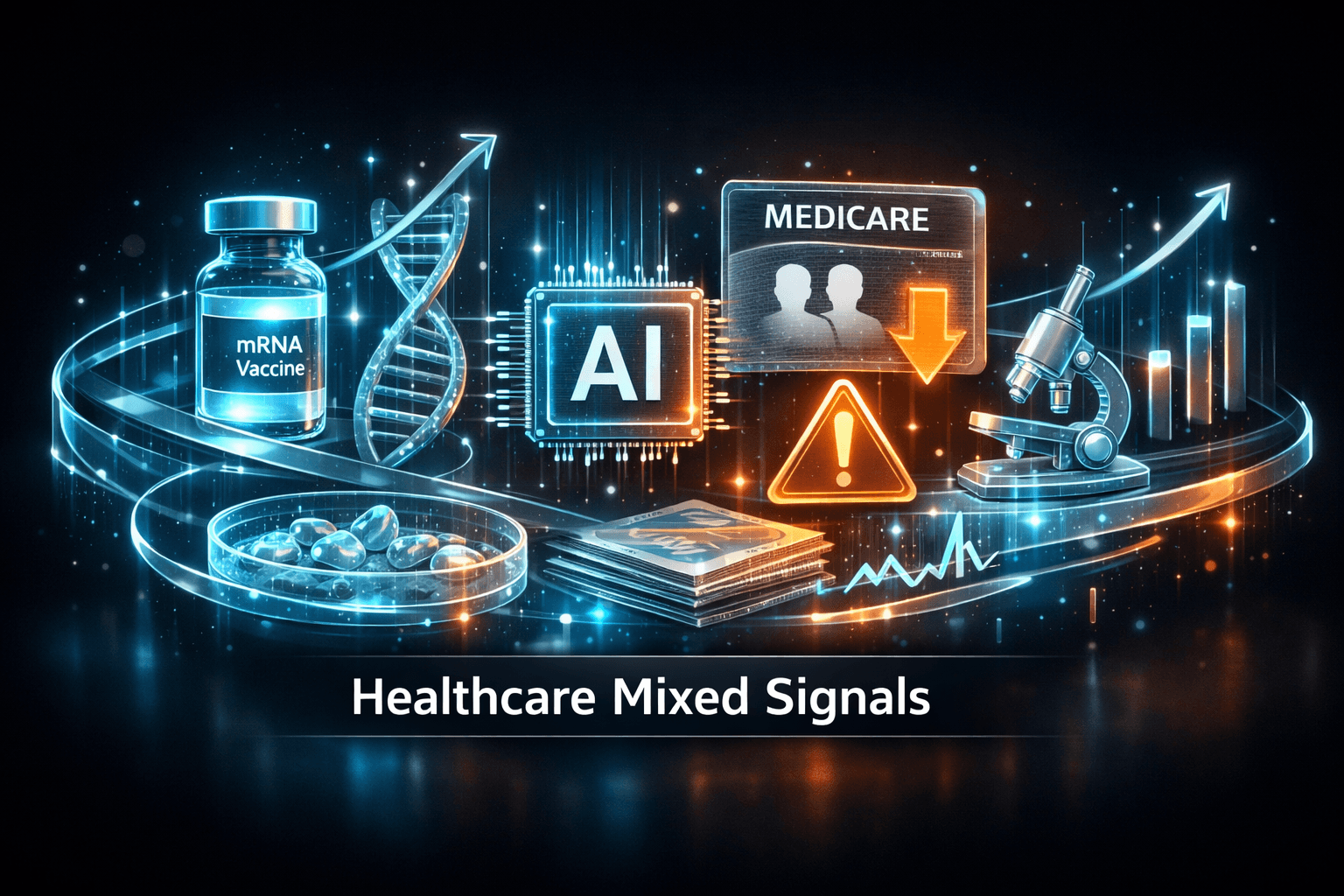
Healthcare is sending mixed signals this morning, as scientific and corporate advances sit alongside mounting affordability and access concerns. You see strong innovation in areas from cancer vaccines to multiomic brain atlases, yet rising patient costs and a proposed Medicare rule threaten services many rely on.
That tension matters to you as an investor because it’s shaping revenue flows, regulatory risk, and long-term demand for new therapies and digital tools. Will innovation outpace policy headwinds, or will cost pressures force a reallocation of spending? Those questions will guide market reactions today.
Market Highlights
Quick facts and headlines to watch this session.
- Moderna, Moderna (MRNA), remains in the spotlight after CEO Stéphane Bancel discussed the company’s recent cancer vaccine success and next steps for the business strategy.
- Federal policy and patient cost stories are prominent, with KFF reporting Americans are rationing care and a proposed Medicare rule that could reduce access to remote patient monitoring services.
- Research and clinical practice updates include a new multiomic atlas of the embryonic thalamus, fresh guidance on women’s heart health in four stages, and continuing shifts toward surveillance for low-risk prostate cancer.
Key Developments
Moderna’s cancer vaccine success, and what’s next
STAT’s interview with Moderna CEO Stéphane Bancel highlights how the company plans to build from its cancer vaccine win. The discussion centers on commercial strategy and pipeline prioritization, and analysts note the development could reshape revenue mix if broader approvals and uptake follow.
For you, the important point is that translational success is driving investor focus on late-stage oncology platforms and mRNA applications beyond infectious disease. That momentum doesn’t remove regulatory and commercialization hurdles, but it does create expectation for further clinical readouts and partnership activity.
Policy headwinds: affordability and Medicare remote monitoring
KFF’s reporting on rising out-of-pocket costs shows many Americans are forgoing care, rationing drugs, and cutting visits. That trend can compress demand for elective procedures and increase bad debt for providers over time, analysts say.
At the same time a proposed CMS rule could narrow Medicare reimbursement for remote patient monitoring programs. If finalized without revisions, the change may reduce device deployment and limit telemonitoring revenue for companies and health systems that invested in remote care infrastructure.
Research, clinical guidance and manufacturing attention
Science and operational stories round out the headlines. A Spanish research team released the first multiomic atlas of the mouse embryonic thalamus, a resource that could accelerate neuroscience discovery and target identification. STAT published new guidance describing four stages of women’s heart health to help clinicians tailor prevention and treatment.
Industry coverage also flagged manufacturing challenges and innovations for novel protein, peptide, bispecific and ADC therapeutics. Taken together, these developments point to steady R&D momentum even as manufacturers adapt to complex biologics production.
What to Watch
Keep these catalysts and risks on your radar in the near term.
- CMS rulemaking timeline, public comments and any revisions to remote monitoring reimbursement, which could materially affect device and telehealth firm revenues.
- Follow-up updates from Moderna on commercialization plans, regulatory filings and additional trial readouts tied to its cancer vaccine program.
- Health cost indicators and consumer behavior, including surveys on skipped care and medication adherence, which will signal demand pressures for providers and payers.
- Scientific and clinical milestones, including publication of datasets like the thalamus multiomic atlas and implementation of the new women’s heart health framework in guidelines or screening programs.
- Manufacturing capacity reports for complex biologics, as supply constraints or scale-up successes could tilt outcomes for companies focused on ADCs, bispecifics and peptide therapeutics.
How should you think about exposure amid these mixed signals? Consider that innovation can generate long runway but policy shifts and patient affordability are immediate demand drivers you can’t ignore. Are you positioned for both scenarios?
Bottom Line
- Innovation is visible across biotech and AI, with Moderna’s cancer vaccine news and new neuroscience resources underscoring R&D progress.
- Affordability and access issues are immediate headwinds, as KFF reports growing cost-driven care avoidance and CMS proposals threaten remote monitoring access.
- Operational realities matter, manufacturing and reimbursement will determine which innovations translate to revenue.
- Analysts note this is a classic double-edged sword: scientific breakthroughs create opportunity while policy and cost pressures can limit near-term uptake.
- Data suggests selectivity and attention to regulatory timelines will be more important than ever when assessing healthcare exposure.
FAQ
Q: How could the proposed Medicare rule affect healthcare companies? A: Reduced reimbursement for remote monitoring could lower device utilization and revenue for vendors and health systems that relied on those programs, and it may slow investment in remote care models.
Q: Does Moderna’s cancer vaccine success change sector dynamics? A: The success highlights mRNA technology’s broader potential and may spur investor interest and partnership activity, though commercialization and regulatory hurdles remain.
Q: What does rising patient cost pressure mean for providers and payers? A: Higher out-of-pocket costs and care rationing can reduce demand for elective services, increase uncompensated care, and shift payer-provider negotiations, so margins and utilization metrics are worth watching.