The Big Picture
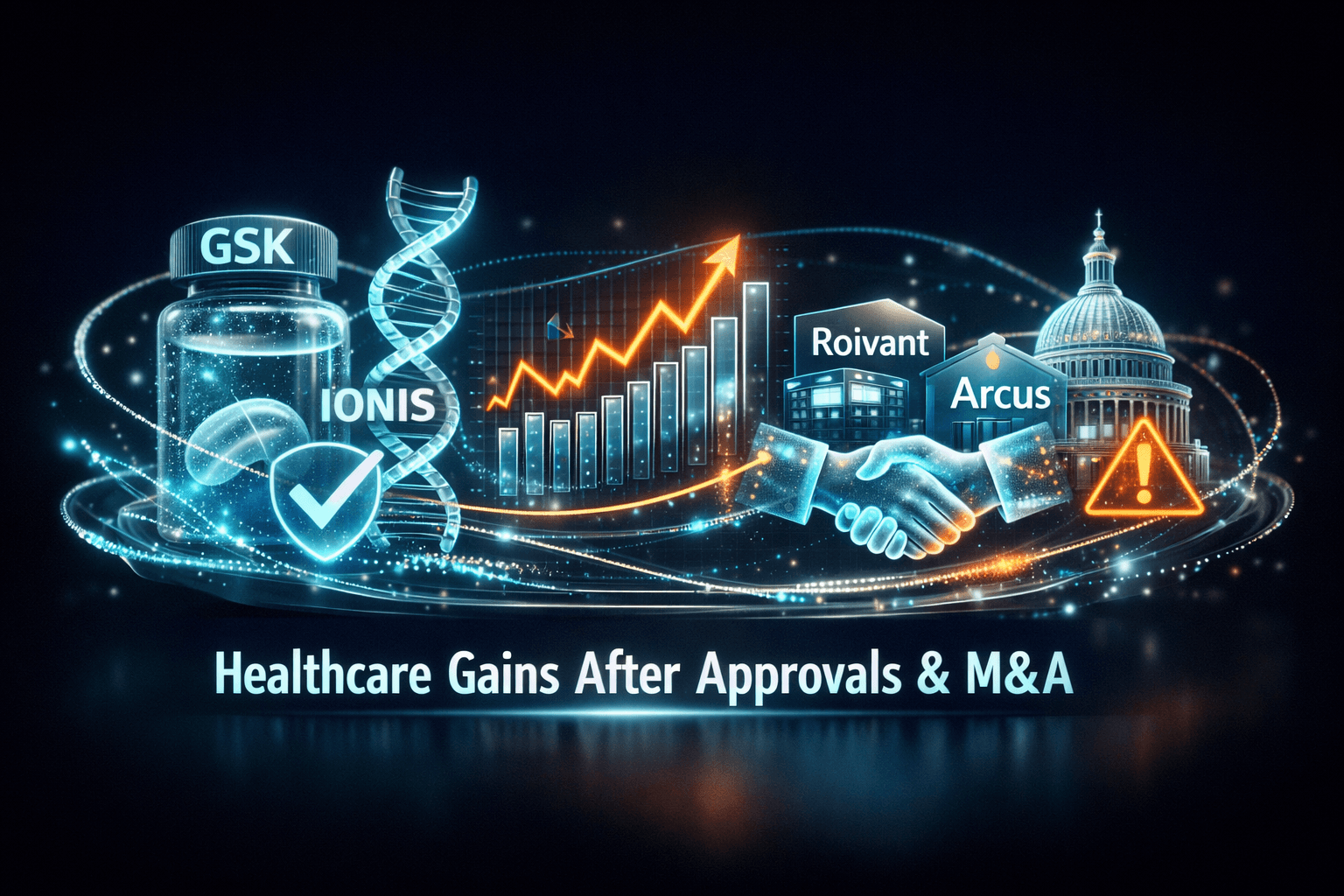
Today’s healthcare tape was driven by clinical and corporate wins that pushed the sector into a positive posture, even as access and policy stories reminded you of persistent system-level risks. The standout was a first-of-its-kind FDA approval, which underscores how innovative therapies continue to move from trials to commercial realities and could move the needle for larger drugmakers.
That approval, plus encouraging trial data and a transaction that includes a multi hundred million dollar facility investment, gives investors clearer near term catalysts to track. You should pay attention to how markets and payers respond over the next sessions, because regulatory wins often reprice growth expectations quickly.
Market Highlights
Here are the quick takeaways and numbers you need from today’s headlines.
- GSK and Ionis secured FDA approval for Hibsago, a potential functional cure for chronic hepatitis B, supporting GSK’s goal of reaching 40 billion pounds in annual revenue by 2031, according to the company.
- Hackensack Meridian agreed to invest about 230 million dollars to upgrade Hunterdon’s facilities and implement the Epic electronic health record as part of a pending merger agreement.
- A secret shopper study found less than 25 percent of calls to mental health clinicians resulted in appointments, highlighting access problems across provider networks.
- Clinical news included multiple stroke and atrial fibrillation studies in Neurology showing restored rhythm and newer anticoagulants reduced recurrent stroke or death in key populations.
- Biotech clinical momentum continued with Roivant’s brepocitinib showing potential in an inflammatory eye condition, and Arcus reporting kidney cancer follow up results that impressed analysts versus a marketed Merck therapy.
Key Developments
FDA nod for GSK and Ionis lifts innovation narrative
The FDA approved Hibsago, the first in its class for chronic hepatitis B, marking a major regulatory win for $GSK and partner $IONS. The drug is being billed as a potential functional cure and fits into GSK’s broader revenue ambition, which the company has said could reach 40 billion pounds by 2031.
For you this matters because first in class approvals tend to shift commercial and R&D narratives across the sector, and they attract attention from payers and partners. Analysts will be watching launch plans and early uptake signals closely.
Clinical and trial news: strokes, anticoagulation, oncology and rare disease wins
Several peer reviewed studies in Neurology linked restored heart rhythm after ischemic stroke and atrial fibrillation to a lower risk of recurrent stroke when normal rhythm was restored within eight weeks. A separate Neurology study found newer anticoagulants were associated with lower ischemic stroke and death without increasing recurrent brain bleeds in patients with prior intracranial hemorrhage.
These findings could influence prescribing patterns and payer coverage discussions for stroke prevention therapies. Will clinicians shift more quickly to rhythm control and newer anticoagulants for eligible patients? That question may drive utilization trends you should monitor.
On the biotech front, $ROIV celebrated another product win when brepocitinib showed promising results in inflammatory eye disease after a prior clearance in dermatomyositis. Arcus follow up data in kidney cancer also impressed analysts and drew comparisons to a marketed $MRK treatment, adding to a positive clinical datapoint day for oncology developers.
Deals and system changes: hospitals, insurers and access
Hackensack Meridian’s agreement to merge with Hunterdon includes a 230 million dollar investment to modernize facilities and deploy Epic electronic health records. The deal highlights consolidation and tech upgrades as continued themes in care delivery, and it may alter regional referral patterns and contract leverage over time.
At the same time, major insurers including $CNC and $UNH expanded into additional counties for 2027 Affordable Care Act plans while some carriers left states. That suggests selective competition on exchanges, which could reshape local premium and network dynamics ahead of open enrollment.
What to Watch
Expect the following catalysts and risk points to shape near term sector moves.
- Commercial rollout and pricing details for Hibsago. Watch early uptake signals, payer coverage decisions, and any launch guidance from $GSK and $IONS.
- Prescription and utilization trends after the Neurology studies. Changes in rhythm control and anticoagulant use could affect makers of ablation technologies and anticoagulant drugs.
- Further readouts and regulatory filings from Roivant and Arcus. Continued positive data could support valuation momentum for these and peer names.
- Regulatory approval timelines and antitrust review for the Hackensack Hunterdon merger, along with the integration cadence for Epic EHR deployment and the planned 230 million dollar capital spend.
- Policy and access developments ahead of open enrollment, plus state level moves like Oregon’s hospital financial aid mandates, which will influence hospital revenue mixes and bad debt trends.
- Operational risks in provider networks. The ghost network findings mean you should track provider directory remediation efforts, because network accuracy affects utilization and patient flow.
Bottom Line
- Clinical and regulatory wins, led by the GSK Ionis approval, created a bullish backdrop for biotech and specialty pharma names today.
- Positive trial data across stroke prevention and oncology add to a pipeline driven narrative that may support near term momentum.
- Hospital consolidation and a 230 million dollar planned investment highlight continued capital deployment in care delivery modernization.
- Access and policy stories, including ghost networks and state financial aid mandates, are important counterweights that can affect utilization and revenue stability.
- Watch commercial rollout, payer reactions, and upcoming data releases as the next set of potential market moving events.
FAQ Section
Q: How will the GSK Ionis approval affect other hepatitis B developers? A: Analysts note a first in class approval typically raises commercial and competitive stakes, prompting peers to clarify differentiation and pipeline timelines.
Q: Should I expect immediate prescribing changes after the Neurology studies on AFib and anticoagulants? A: Data suggests a meaningful clinical signal, but guideline and payer updates usually lag, so shifts in utilization tend to occur gradually as clinicians and systems adapt.
Q: What does the Hackensack Hunterdon deal mean for regional hospitals? A: The planned 230 million dollar investment and Epic rollout indicate a push toward consolidation and tech modernization, which can change referral patterns and operating costs over time.