The Big Picture
Today’s Healthcare news is a mixed bag, with policy scrutiny and public health signals on one side and scientific advances plus venture-backed market activity on the other. A Tradeoffs investigation into hospital financial aid practices in Texas and a troubling CDC-linked survey about teen binge eating are putting pressure on health systems and policymakers.
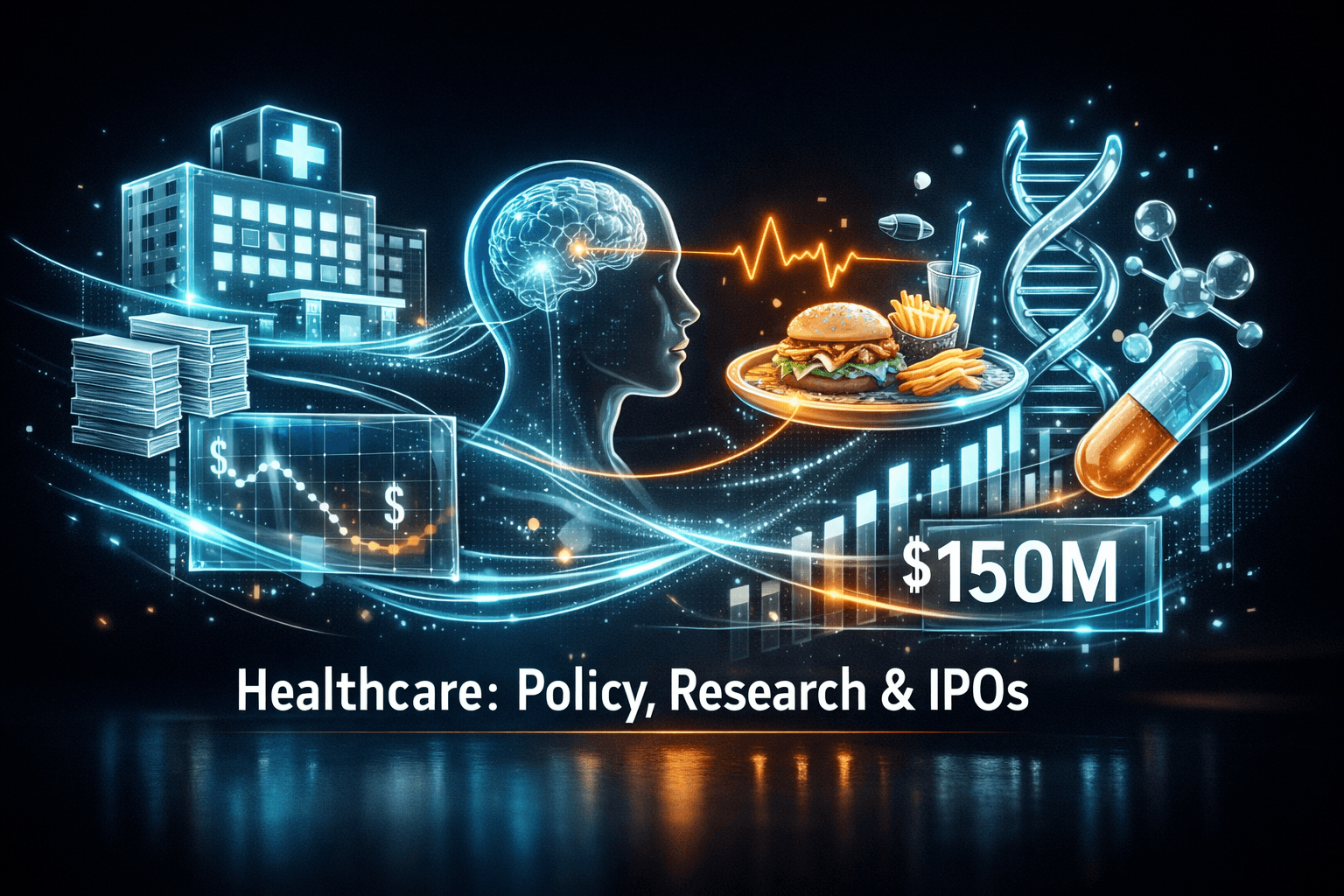
At the same time, research breakthroughs in bone loss and tumor imaging are showing long-term scientific upside, and AI-driven drug discovery is hitting public markets with Iambic’s $150 million IPO. What does this mean for you as an investor, and where should you focus your attention today?
Market Highlights
Quick facts and figures to watch this morning.
- Iambic priced an IPO that raised $150 million, highlighting continued investor appetite for AI drug discovery startups.
- Nearly half of nonprofit hospitals surveyed in Texas report they will bill patients before screening them for financial aid, according to KFF Tradeoffs reporting.
- About 40 percent of high school students reported binge-eating in the past month, a new CDC-linked STAT analysis says, raising public health and policy attention.
- An estimated 1 in 20 U.S. children are medically complex, and parents often resolve home safety issues themselves, a Pediatrics study finds.
- Novel research points to the STING pathway as a potential target for age-related bone loss, while Purdue work aims to personalize chemotherapy with lasers, Doppler tech and AI.
Key Developments
Hospital Financial Aid Scrutiny in Texas
KFF Tradeoffs analysis finds many nonprofit hospitals in Texas will send bills before screening patients for charity care, and most won’t refund payments if patients later qualify for free care. That lifts a policy spotlight on billing practices and could prompt state or payer scrutiny.
For you, that means regulatory and reputational risk is rising for health systems that don’t proactively enroll eligible patients in aid programs. Analysts note that unresolved medical debt can affect patient volumes and collections, which in turn can influence hospital margins over time.
Public Health Signals and Workforce Strains
STAT’s reporting on a CDC-related survey showing about 40 percent of high school students reported binge-eating highlights a growing behavioral health burden. At the same time, opinion pieces and reporting emphasize nursing shortages and retention challenges, illustrating labor stress across care settings.
These trends suggest higher demand for mental health services and workforce investment. How will health systems and payers respond, and what pressure will this put on operating costs and capital allocation? Those are questions you’ll want to follow.
Science Advances and an AI Drug Discovery IPO
Researchers are mapping the STING signaling pathway as a possible lever to slow skeletal aging, and Purdue University teams are developing laser and Doppler imaging tools to predict tumor responses to chemotherapy. These efforts point to longer term R&D value creation across therapeutics and diagnostics.
Meanwhile, Iambic’s $150 million IPO underscores sustained investor interest in AI-enabled drug discovery. Data suggests the market is still willing to finance platform biotechs, but you should watch how the company translates platform claims into validated programs and clinical milestones.
What to Watch
Focus on near-term catalysts and risks that could move sector sentiment today and over the coming months.
- Regulatory and policy moves: state responses to KFF’s hospital findings and any CMS or state guidance on charity care could change hospital reimbursement dynamics.
- Company milestones: for AI genomics and drug discovery firms, watch pipeline disclosures, collaborations, and early clinical readouts that will validate platform claims.
- Public health trends: further CDC data on adolescent mental health and eating disorders may shape demand for behavioral health services and telehealth providers.
- Workforce metrics: nursing vacancy and turnover reports will affect staffing costs and operational risk for hospitals and long term care providers.
- Data privacy friction: usability barriers in patient portals for opting out of data sharing could trigger policy debates and vendor changes, which may affect EHR vendors and health IT contracts.
Want to stay ahead of these moves? Track regulatory filings, state policy bulletins, and upcoming clinical abstracts from research teams. You’ll want to monitor quarterly results from major systems for guidance on collections and charity-adjusted revenue.
Bottom Line
- The sector shows mixed signals today, with policy headwinds from hospital billing practices and public health concerns balanced by research breakthroughs and IPO activity.
- Hospitals face rising scrutiny over financial aid and billing. That can affect collections, reputation and regulatory attention.
- Behavioral health and workforce constraints are near-term demand drivers, and they could increase operating costs for systems and payers.
- Scientific advances and AI platforms keep attracting capital, but platform validation and clinical proof points remain critical to long-term value creation.
- Monitor policy developments, clinical milestones, and financial filings for the clearest signals on where the sector is headed next.
FAQ Section
Q: How might the KFF findings on hospital financial aid affect hospital earnings? A: Data suggests tougher scrutiny and potential policy changes could pressure collections and increase charity-care provisions, which may show up in margins and guidance.
Q: Does Iambic’s $150 million IPO mean AI drug discovery stocks are a safe bet? A: No, the IPO signals investor appetite but not guaranteed success. Analysts note that platform firms must deliver clinical validation and partnerships before long term value is clear.
Q: What indicators should you track for health system risk? A: Watch charity-care policies, patient billing timelines, payer mix shifts, staffing costs and state or federal regulatory actions to assess operational risk.