The Big Picture
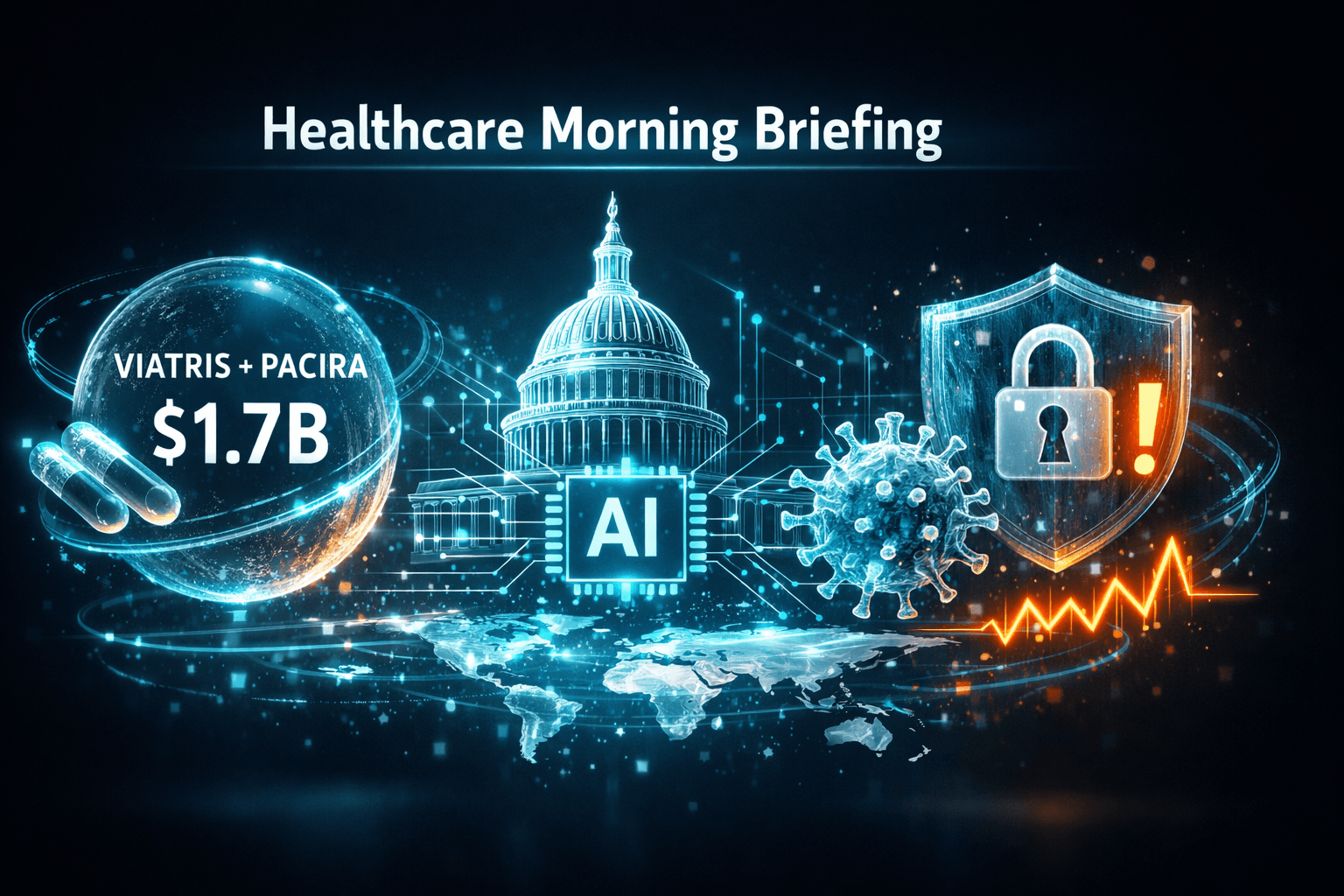
Deal-making and public health risk headlines dominate this morning, and both matter for the sector’s near-term outlook. Viatris’s $1.7 billion buyout of Pacira brings scale to nonopioid pain treatments while raising questions about patent cliffs and margin pressure for generics makers.
At the same time you’re seeing renewed public health anxiety, policy debates and emerging security concerns, from online misinformation about plague treatments to warnings about quantum threats to patient data. That mix creates a split signal for investors looking at healthcare exposure today.
Market Highlights
Quick facts and numbers to watch this session.
- Viatris agreement, $1.7 billion, creates a larger pain-management portfolio that includes two nonopioid products which generated nearly $700 million in 2025.
- Scientific advance: a Nature Aging paper links age and sex to cancer immunity, with implications for immunotherapy response and future trial design.
- Public health and policy: online interest in unproven plague cures rose after a reported death tied to a Russian research institute, and CMS is hosting a Slack workspace where AI and tech leaders have been actively engaging officials on app-based medical records.
- Security risk: experts warn that most healthcare organizations are underprepared for quantum computing threats to encryption protecting patient data.
Key Developments
Viatris acquires Pacira for $1.7B
Viatris completed a strategic buyout that adds two nonopioid pain drugs which combined booked nearly $700 million in 2025. The deal hands Viatris established products but also brings the near-term challenge of protecting revenue as patents near expiration.
For you as a watcher of healthcare names, pay attention to how management frames intellectual property protections and cost synergies, plus any immediate stock moves in $VTRS and former $PCRX shareholders.
Public health fears and misinformation resurface
Reports that a worker at a Russian plague research institute died have triggered spikes in online searches for unproven treatments. Medical experts warn that misinformation can drive dangerous self-treatment and sudden demand for unvetted products.
Should regulators or platforms step in, or will public concern fade quickly? Either outcome could influence healthcare communications, emergency preparedness funding and short-term demand for certain diagnostics.
Policy, AI and data security squeeze into the spotlight
CMS’s Slack engagement with AI and tech firms illustrates how regulators and industry are trying to accelerate app-based medical record use. That could speed digital health rollouts but it also raises governance and privacy questions for payers and providers.
Separately, cybersecurity experts flag that most provider systems are not ready for quantum threats that could eventually break current encryption. That warning is a reminder that you should track IT spend and contract risk in provider and vendor stocks.
What to Watch
Near-term catalysts you'll want on your radar include earnings, regulatory actions and policy developments. Viatris integration milestones and messaging on patent defenses should be monitored closely over the coming quarters.
Election season and midterm dynamics may affect healthcare policy and funding. How will lawmakers treat AI regulation, public health preparedness and census methodology changes that some experts say could erode public health data?
Security and misinformation risks could trigger operational and reputational shocks, so keep an eye on vendor contracts, breach disclosures and any CMS guidance or federal action on AI in health. How big a threat is quantum to patient records in the next five years is uncertain, but vendors that disclose roadmaps for postquantum security may have a comparative advantage.
Bottom Line
- Mixed signals dominate today: corporate M&A and scientific progress are balanced by public health, policy and security risks.
- Viatris’s $1.7 billion Pacira purchase reshapes its pain portfolio but raises patent and integration questions that you should follow.
- Policy engagement between AI firms and CMS could accelerate digital health adoption while inviting closer regulatory scrutiny.
- Public health scares and misinformation remain a short-term volatility factor for certain therapeutics and diagnostics, and a potential governance focus for platforms and regulators.
- Cybersecurity, including future quantum threats, is an emerging risk that may influence IT budgets and vendor selection over the next few years.
FAQ Section
Q: What does Viatris get from the Pacira deal and why does it matter to the sector A: Viatris acquires two nonopioid pain treatments that generated nearly $700 million in 2025, giving it a larger branded portfolio while also exposing it to upcoming patent expirations and integration risk.
Q: Should I be worried about the online plague coverage affecting healthcare companies A: The spike in interest mainly raises public health and communications risk, not immediate sector-wide financial impact. However you should watch for demand spikes in unproven products and any regulatory or platform responses.
Q: How soon will quantum computing threaten patient data A: Experts say practical quantum threats are not immediate, but planning should start now. Healthcare organizations that ignore postquantum encryption risk future breaches that could be costly and disruptive.