The Big Picture
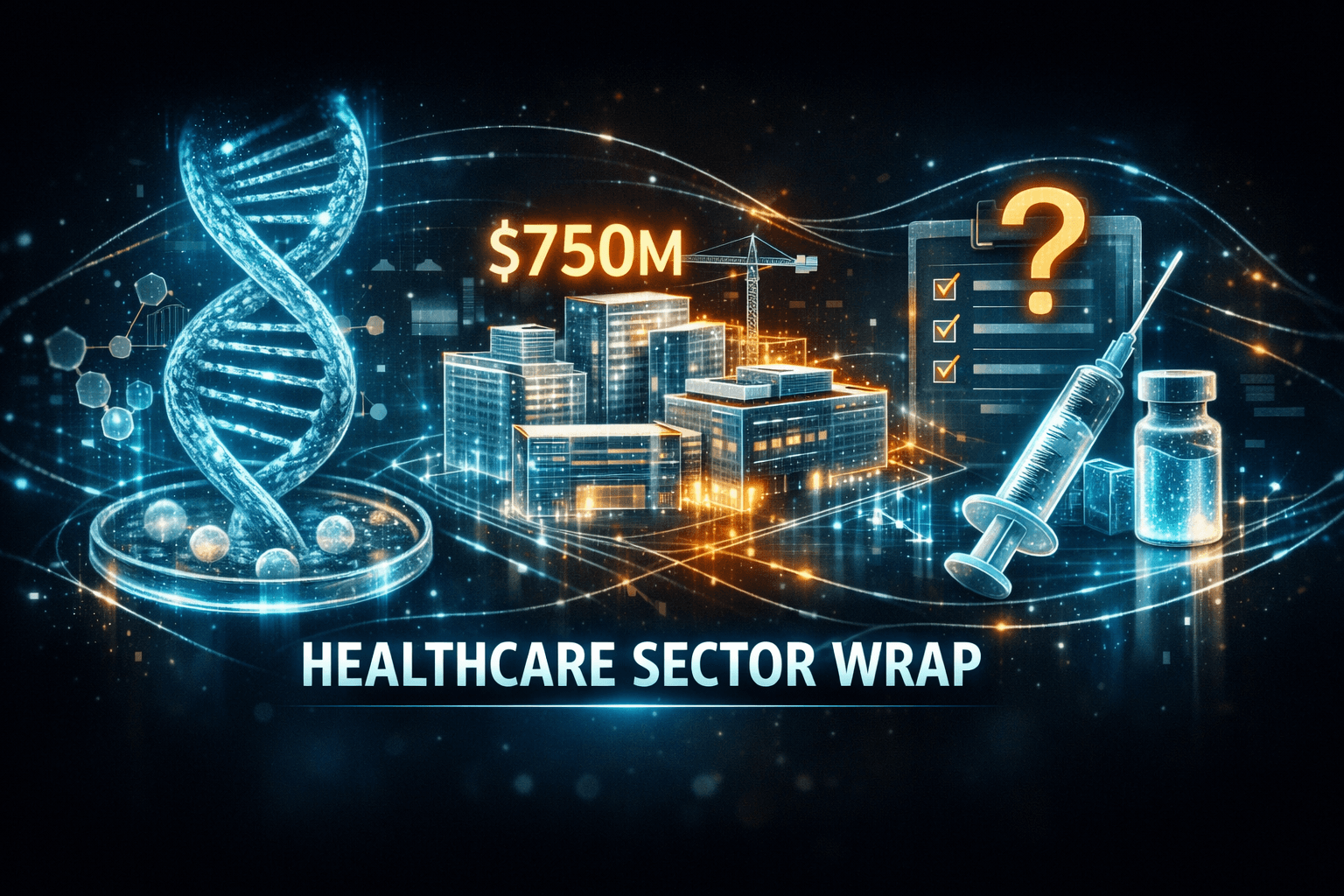
Scientific progress and capacity investments led the headlines in healthcare as the market headed into the long weekend. New discovery-level research in cancer, promising anti-viral antibody work, and clinical signs that deep brain stimulation may help traumatic brain injury patients all landed alongside a major $750 million manufacturing expansion from Genentech.
These developments matter because they push potential future revenue streams and pipeline valuation drivers into clearer view, even as policy and workforce issues remind you that execution risk remains. What should you focus on first as you prepare for Monday?
Market Highlights
Markets were closed on Saturday. These bullets summarize the key numbers and facts from Friday and the weekend reporting, and they highlight the items likely to influence trading on Monday, Aug 24.
- Genentech, part of Roche, announced a $750 million investment to double capacity at its Oregon facility, a tangible capacity build that supports biologics manufacturing and downstream supply chain resilience. Ticker: $RHHBY.
- New scientific findings: UC San Diego identified a previously missed DNA mutational signature in colorectal cancer, which could refine target discovery and biomarker strategies for oncology developers.
- In infectious disease, a study flagged a new antibody therapy approach for Crimean-Congo hemorrhagic fever virus, noteworthy given the virus can kill up to 40% of infected people and lacks widely approved treatments.
- Clinical signals emerged that deep brain stimulation may improve speech and swallowing after traumatic brain injury; the study appeared in Nature Communications and advances neuromodulation prospects.
- Policy and corporate items: HHS Secretary Kennedy sought feedback on vaccine recommendation categories and testing via a public RFI on Aug 21, which could reshape vaccine guidance frameworks. Activist pressure surfaced at $CAPR, and workforce concerns rose in a physician survey about corporate employment.
Key Developments
Research wins: cancer, infectious disease, neuromodulation
Researchers at UC San Diego found a previously missed mutational signature in colorectal cancer, which could improve understanding of tumor etiology and inform biomarker development. Separately, lab work proposing an antibody therapy for Crimean-Congo hemorrhagic fever gives drug developers a preclinical direction against a high-fatality pathogen.
For you as an investor, these studies matter because early-stage discoveries can alter R&D priorities and licensing interest, and they often attract partner deals or targeted acquisitions once validated in follow-up work.
Capacity and industry investment
Genentech will plow $750 million into its Oregon manufacturing footprint to double capacity. That’s a big commitment to biologics scale up and it signals continued factory investments from large pharma into U.S. production capacity.
This kind of expansion can move the needle on sector sentiment about supply reliability and long-term revenue growth for companies with biologic franchises. Expect companies with manufacturing exposure and contract development ties to see renewed attention when markets reopen.
Policy, workforce and governance pressures
HHS released a request for information that hints at possible changes to vaccine recommendation categories and testing standards. At the same time a physician survey highlighted rising burnout and pressure to prioritize corporate priorities over patients, and activist investor moves at a smaller biotech signaled governance friction.
Policy shifts and workforce morale affect reimbursement, adoption, and productivity. You should watch how regulators frame changes and how companies respond to activist demands, because both can influence near-term execution and guidance.
What to Watch
Heading into Monday and the weeks ahead, several catalysts will matter for the healthcare names in these stories, and for your portfolio positioning.
- HHS vaccine RFI follow-up, public comments and any draft guidance, timing unknown, could reshape vaccination recommendations and testing pathways. Will the agency signal faster routes or tighter evidence requirements?
- Company updates on the Genentech Oregon expansion, including timelines and hiring plans, will reveal when new capacity becomes operational and which molecules benefit first.
- Further validation studies and early-stage trial readouts for the antibody therapy and DBS for TBI are key. Early clinical milestones or partnering talks often move smaller biotech names quickly.
- GLP-1 market dynamics remain critical. Cost, prescribing patterns and supply issues, such as estrogen patch shortages, will influence market share battles among $LLY and $NVO and others. Look for pricing data and payer responses next quarter.
- Corporate governance events, such as any proxy fights at $CAPR, and physician workforce reports may affect investor sentiment in smaller-cap biotech and health service stocks.
Bottom Line
- Scientific advancements in oncology, infectious disease, and neuromodulation are positive signals for long-term pipeline value, analysts note, but they require follow-up validation before commercial impact is clear.
- Genentech’s $750 million expansion bolsters U.S. biologics capacity and could ease supply constraints for certain therapies, momentum that indicates increased industrial investment in the sector.
- Policy shifts from HHS and workforce pressures are near-term risk factors that can influence reimbursement, adoption and operational performance, so monitor official guidance and company disclosures closely.
- The GLP-1 competitive landscape will continue to be shaped by affordability and prescribing preferences, factors that may determine winners over the next year rather than immediate market share flips.
- Expect selective opportunities as new data and formal guidance arrive; your approach should weigh clinical validation timelines and execution risks, not just headlines.
FAQ Section
Q: How soon could research discoveries translate into investable treatments? A: That depends on the pathway. Preclinical findings typically need multiple years of validation and clinical trials before commercial potential becomes actionable.
Q: Will the Genentech investment affect supply for existing biologics immediately? A: Capacity expansions take time. The $750 million investment signals longer term improvement in supply reliability, but immediate relief depends on construction and commissioning schedules.
Q: How should you track policy changes from HHS related to vaccines? A: Follow the RFI responses, any draft guidance, and formal rulemaking or guidance documents. Companies also tend to comment during consultations, so watch industry responses for clues.