The Big Picture
The healthcare headlines over the last 48 hours offered a mix of science wins and systemic stresses, leaving the sector with mixed signals heading into the long weekend. You saw encouraging clinical and R&D updates at the same time regulators and payers raised fresh challenges that could affect service delivery and costs.
That combination matters because scientific progress can take time to translate into revenue, while policy moves and public health events can alter near-term demand and costs. What does that mean for your exposure to healthcare names? Balance and selectivity remain important.
Market Highlights
Markets were closed Saturday. Below are the most relevant facts and numbers from the weekend’s coverage and the issues likely to shape trading when U.S. markets reopen on Monday, August 10.
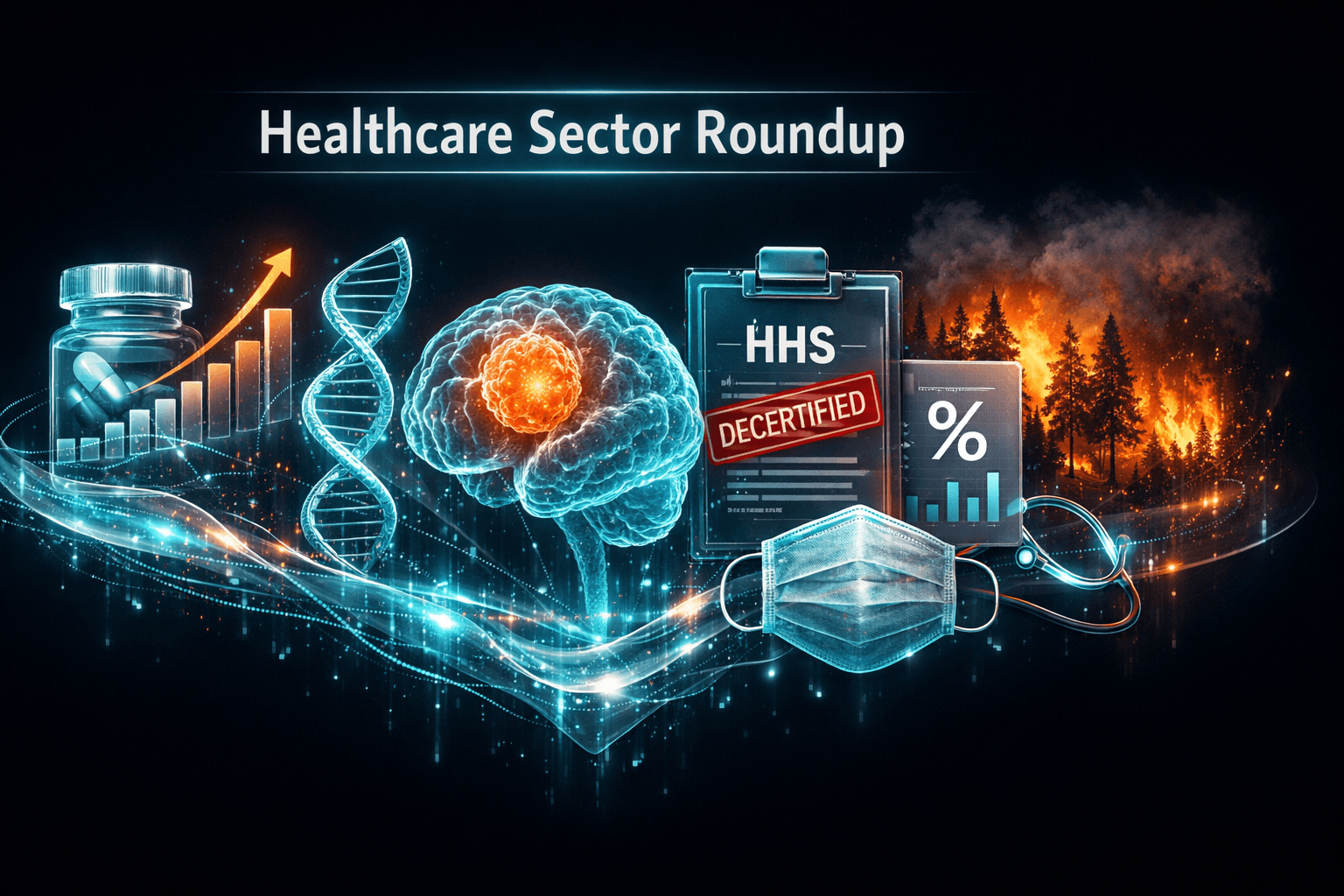
- Insurer rate pressure: Filings show insurers are seeking roughly a 14 percent average increase for small-business health premiums in 2027, a headwind for employers and a potential demand shock for plan participation.
- Organ procurement enforcement: HHS moved to decertify the Network for Hope, a decision that could disrupt organ donation and transplant activity across Kentucky, Indiana, Ohio and West Virginia.
- Biotech and R&D updates: Analysts raised expectations after early compassionate-use demand for daraxonrasib, linked in coverage to Revolution Medicines $RVMD, and Intellia $NTLA reported it has identified a likely cause for recent liver toxicity signals. Arrowhead $ARWR was named in industry competitive moves.
- Public health and environment: Wildfires have burned more than 21,000 hectares in parts of Europe and contributed to the driest July in England and Wales in nearly two centuries, increasing respiratory risks and healthcare utilization in affected regions.
Key Developments
HHS Moves to Decertify Organ Procurement Group
HHS initiated decertification proceedings against the Network for Hope over patient safety failures. The group coordinates organ recovery across Kentucky, Indiana, Ohio and West Virginia, so the action could disrupt transplant logistics and capacity in those states.
For health systems and related suppliers, that creates operational risk and potential near-term volume shifts. You should watch hospital systems and transplant centers that operate in the affected regions for guidance and potential service rerouting.
Biotech: Daraxonrasib Demand, Intellia Safety Progress
Early signals from a compassionate-use program pointed to stronger-than-expected demand for daraxonrasib, prompting analysts to raise projections related to its commercial potential. Coverage mentioned Revolution-linked programs and increased analyst attention toward $RVMD.
Separately, Intellia $NTLA reported it has pinpointed a likely culprit behind a liver toxicity signal, an update that lowers an important safety overhang for ongoing gene-editing programs. Together these items suggest selective positive momentum in biotech research and development, but they do not eliminate execution and regulatory risk.
Payer and Policy Pressure: Premium Hikes and Medicaid Work Rules
KFF and Healthcare Dive coverage noted insurers seeking roughly a 14 percent rise in small-business premiums for 2027. That pressure will make it harder for some small employers to offer coverage and could shift plan designs or enrollments.
On the policy front, researchers and analysts explained how AI tools might help Medicaid enrollees meet forthcoming 80-hour work rules in some states. That raises questions about implementation, data privacy and program fairness. How will states balance automation with oversight and patient access? Those are active governance debates that could affect Medicaid-managed-care plans and providers.
What to Watch
Here are the catalysts and risks to monitor as markets reopen on Monday, August 10. You should track these items closely because they can change near-term sentiment and operational outlooks.
- HHS decisions and guidance, including any timing for Network for Hope decertification appeals and contingency plans from transplant networks.
- Follow-up data or regulatory commentary on daraxonrasib and gene-editing safety updates from $RVMD and $NTLA, respectively. Any formal filings or FDA interactions will be key.
- State filings and plan communications tied to the proposed 14 percent small-business premium increases, plus potential legislative or regulatory responses.
- Implementation timelines for Medicaid work requirements and any AI vendor disclosures. Watch state Medicaid agencies for pilot details and compliance frameworks.
- Public health signals from ongoing outbreak coverage, including cyclospora and measles surveillance, and wildfire-driven respiratory illness spikes that could raise short-term clinic and ER visits.
Bottom Line
- Science progress and safety fixes give selective reason for cautious optimism in biotech, but clinical risk and regulatory timelines remain significant.
- Policy and payer pressures, including a proposed 14 percent premium increase and HHS enforcement actions, create potential earnings and operational headwinds for providers and insurers.
- Public health events like wildfires and outbreaks can shift near-term utilization in ways that matter to hospital operators and insurers.
- You should expect choppy reactions when markets reopen and be selective about exposure to names tied to narrow operational risks or single pipeline assets.
FAQ Section
Q: How will the HHS decertification affect transplant operations? A: Decertification can force reassignments of organ recovery work, delay procedures and increase administrative burden for hospitals in Kentucky, Indiana, Ohio and West Virginia, affecting short-term transplant capacity.
Q: Does the daraxonrasib demand signal mean a commercial breakthrough? A: Early compassionate-use demand and analyst projection increases suggest higher interest, but commercial success still depends on confirmatory data, regulatory approvals and pricing pathways.
Q: Will Medicaid work requirements and AI tools change coverage for enrollees? A: AI may help with eligibility tracking and reporting, but implementation details, privacy safeguards and state policy choices will determine real-world impact on access and continuity of care.