The Big Picture
Today the healthcare sector served up a mix of clear corporate wins and growing policy and regulatory questions that could shape near-term momentum. Centene reported a swing to more than $1 billion in Q2 profit and raised guidance, while a small eye-biotech landed $118 million in funding, offering signs of strong deal flow in parts of the market.
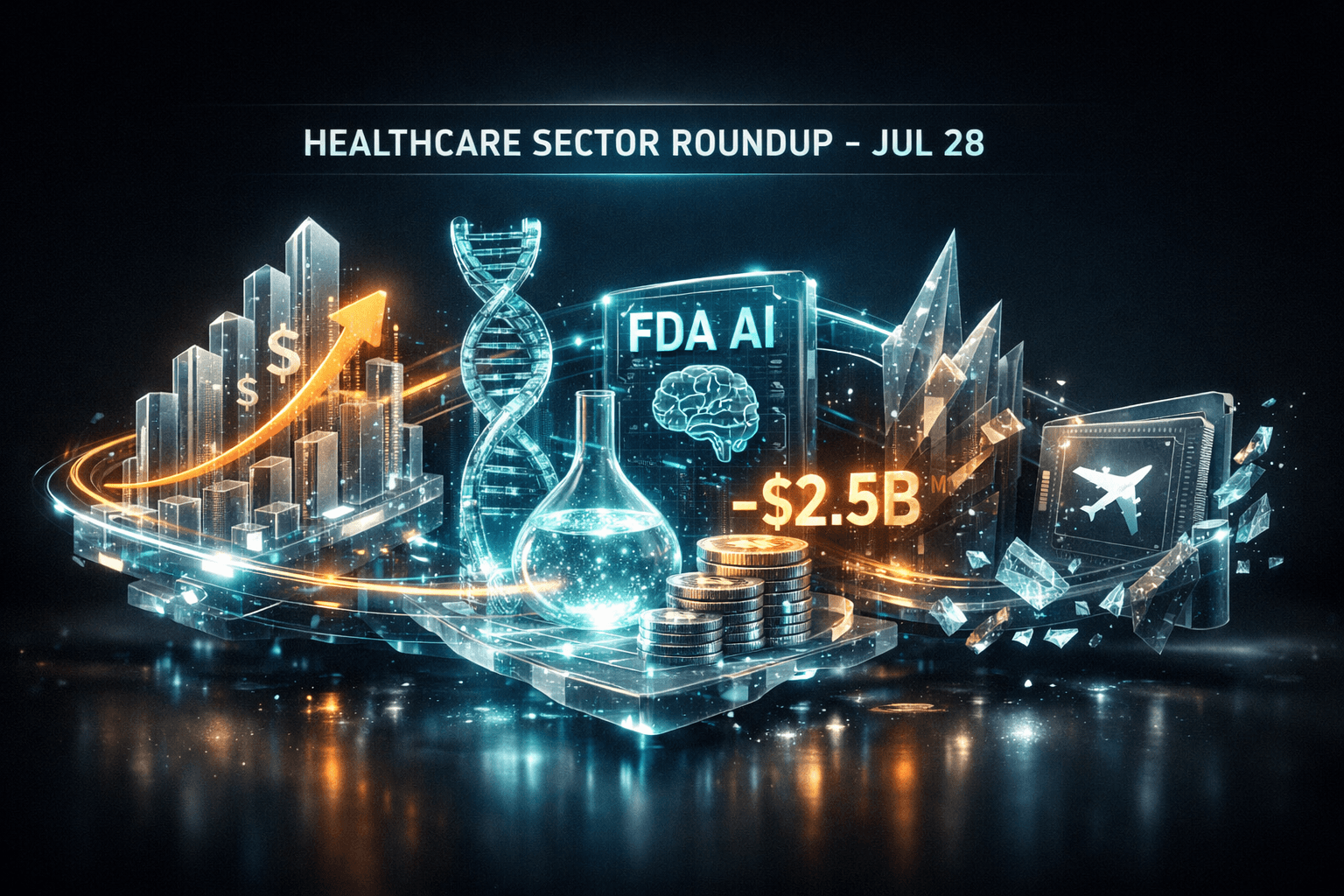
At the same time, major structural risks showed up, from GSK’s $2.5 billion cost-cutting plan to proposed visa time limits for foreign graduate researchers and turnover at the FDA that clouds the agency’s AI strategy. If you follow the sector, you saw both catalysts and headwinds on the same day.
Market Highlights
Quick facts and highlights to scan before you dig in.
- Centene, $CNC: swung to more than $1 billion in profit for Q2 and raised its 2026 earnings outlook for a second time, a boost for managed care sentiment.
- GSK, $GSK: announced a $2.5 billion cost-cutting program to blunt an upcoming patent cliff in its HIV franchise, signaling material restructuring ahead.
- Claris Bio: the eye-disease biotech closed a $118 million financing and installed an industry veteran CEO to advance a potential first-in-class therapy for limbal stem cell deficiency.
- Regulatory and policy: the U.S. administration’s plan to cap visas for foreign Ph.D. students and postdocs at four years drew warnings that it could damage U.S. research capacity.
- Clinical risk: Hannover Medical School data show hepatitis E causes acute liver failure in roughly half of cirrhosis cases, a reminder that underdiagnosed infections can drive expensive care.
Key Developments
Corporate results and financing
Centene’s $CNC performance was the standout corporate story. Management raised 2026 guidance after the strong quarter, and analysts note the results point to improving Medicaid and ACA dynamics. Separately, Claris Bio’s $118 million raise and leadership hire underscore continued investor appetite for targeted ophthalmology plays, even as larger pharma firms retrench.
Cost cutting, patent cliffs and strategic repositioning
GSK’s $2.5 billion cost-cutting plan is meant to offset revenue losses from key HIV patent expirations. Cost programs of this size usually mean job reassignments or reductions and a reweighted R&D budget. For you that means watch for portfolio prioritization and any follow-up guidance on asset sales or R&D pulls.
Policy, regulation and the research pipeline
Two policy threads could reshape the sector’s talent and regulatory environment. First, a proposed four-year visa limit for foreign grad students and postdocs has experts warning about a depleted talent pipeline. Second, turnover at senior FDA ranks is creating uncertainty around the agency’s AI strategy and guidance timeline. Will these moves slow clinical development or alter approval paths? Those are live questions investors will be parsing.
What to Watch
You'll want to track a few near-term items that can move stocks and sentiment.
- GSK follow-up: look for details on the $2.5 billion plan, including the scope of headcount impacts and any asset divestitures, which could affect peers and suppliers.
- FDA AI guidance timeline: leadership changes may delay agencywide AI rules. Monitor public statements and draft guidances for clarity on software as a medical device and AI in drug discovery.
- Policy catalysts: congressional hearings, including the high-profile Fauci appearance, and any formal steps on the visa rule will be market relevant for research-dependent companies.
- Clinical and diagnostic risks: rising awareness of hepatitis E in cirrhosis patients may increase demand for testing and antiviral development, altering hospital workflows and reimbursement debates.
- Earnings cadence: Centene’s results set a tone for managed care peers. Watch upcoming healthcare earnings for guidance revisions and margin commentary.
How should you position yourself ahead of these events? Consider focusing on clarity and catalysts, and watch volatility around news-driven items.
Bottom Line
- Today delivered mixed signals, with strong corporate earnings and biotech financing offset by regulatory and policy uncertainty. Analysts note the balance leaves the sector in a wait-and-see stance.
- GSK’s $2.5 billion plan and the proposed visa cap are structural stories that could influence labor costs, R&D timelines and long-term innovation capacity.
- FDA leadership turnover raises timing risk for AI-related regulatory clarity, so expect uneven near-term guidance on software and algorithm pathways.
- Clinical research findings and diagnostic gaps, such as the hepatitis E data, highlight areas where demand for testing and targeted therapies could grow.
- Be selective, track earnings and regulatory calendars closely, and use upcoming disclosures to build conviction rather than relying on headlines alone.
FAQ Section
Q: How will Centene’s results affect other managed care stocks? A: Strong results and a raised outlook for $CNC suggest improving fundamentals in parts of managed care. Analysts note peers may face similar visibility shifts at upcoming reports.
Q: Could the visa time limit really harm U.S. drug research? A: Experts warn a four-year cap on Ph.D. and postdoc visas could reduce the talent pool, slow academic collaborations and increase costs for firms relying on foreign-trained researchers.
Q: Should I expect immediate FDA guidance on AI after leadership changes? A: Not necessarily. Turnover introduces timing uncertainty, and the agency may delay or revise rollout plans. Watch official statements for the clearest signals.