The Big Picture
Healthcare news this morning is a study in contrasts. You’ve got dealmaking and clinical advances on one hand, and policy fights, financial strain at providers, and a fresh data breach on the other.
That mix matters because it sets the tone for sector volatility into earnings and policy windows. If you follow healthcare stocks you’ll need to balance growth and innovation stories with short-term operational and regulatory risk.
Market Highlights
Here are the quick facts you should know before markets settle in today.
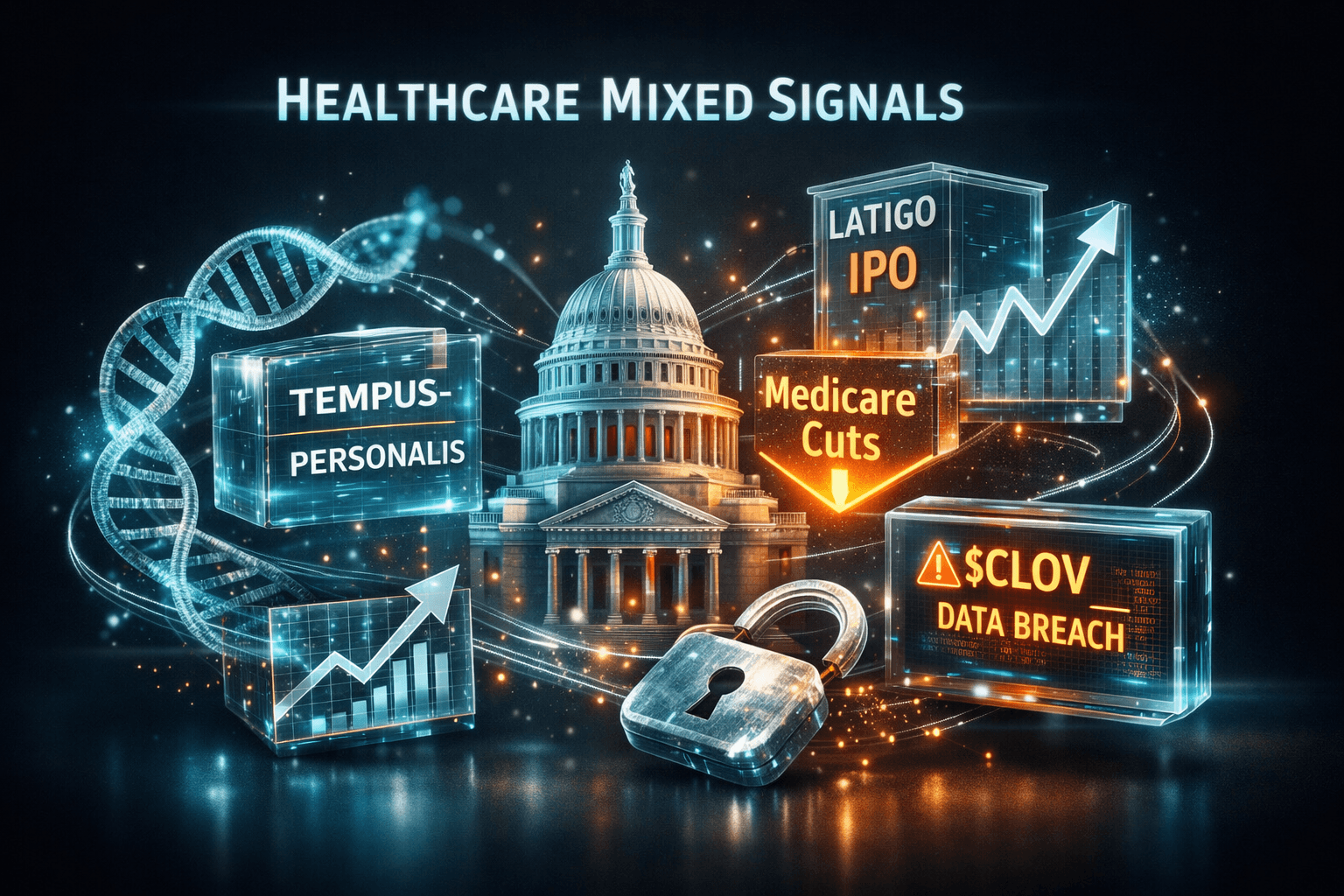
- Tempus, an AI-focused diagnostics and data company, agreed to acquire cancer test-maker Personalis for $1.5 billion, marking a notable consolidation in cancer testing and precision oncology.
- Latigo, developer of non-opioid sodium channel pain drugs, outlined plans for an IPO this month, adding to a busy biotech listing pipeline and investor interest in novel pain therapeutics. The company is referenced under the proposed ticker $LTGO in filing coverage.
- Clover Health disclosed a data breach in a late filing, a development the market will track closely for regulatory and reputational fallout. The insurer trades under $CLOV.
- Provider stress is rising, with Gibbins Advisors reporting a spike in clinic and physician practice bankruptcies so far in 2026, a sign of pressure from reimbursement, staffing, and payer changes.
Key Developments
Tempus to buy Personalis, reinforcing cancer test consolidation
Tempus’ planned $1.5 billion purchase of Personalis highlights ongoing consolidation in molecular diagnostics and blood-based cancer testing. For investors this matters because larger, integrated platforms can accelerate commercialization and cut unit costs, while smaller players may face margin pressure.
Will this deal push other diagnostics firms toward more M&A activity? It certainly raises the bar for scale in genomic testing and could reshape competitive dynamics in oncology diagnostics.
Clinical and public-health research brings positive data
Several studies published today point to tangible health advances. A Kaiser Permanente and Tufts-led study found that home-delivered, medically tailored groceries improved blood sugar control among adults with type 2 diabetes covered by public insurance. The result supports growing interest in food-as-medicine programs and payer-backed social care interventions.
Separately, researchers identified linked genetic variations behind a sudden cardiac death condition, highlighting potentially treatable vulnerabilities. And an animal-model companion study suggested motherhood may not increase late-life frailty and could even reduce it, prompting fresh discussion on long-term maternal health biology.
Policy fights and research governance could inject volatility
Industry lobbying is in focus as a coalition of rare-disease drug makers seeks exemptions for orphan drugs from new Medicare price-cut pilot programs. That effort signals pushback against federal cost initiatives and could affect pricing dynamics for small patient population therapies.
At the same time, opinion pieces are raising alarms about post-Covid policy lessons and a proposed rule that might limit the NIH’s ability to manage research risk. Those debates could influence research funding, regulatory timelines, and investor expectations for early-stage biotech pipelines.
What to Watch
Focus your attention on these catalysts and risk factors today and into the coming weeks.
- Deal close and regulatory clearance for the Tempus-Personalis transaction. Timing and any divestiture demands will shape competitive positioning in oncology diagnostics.
- Latigo’s IPO paperwork and planned listing under $LTGO. Watch filing details for offering size, valuation expectations, and timing, because several biotechs are trying to tap public markets this month.
- Developments around Clover Health’s data breach disclosure, including scope of exposed data and any regulatory notices. Cyber incidents can prompt sudden stock moves and compliance costs.
- Trends in provider bankruptcies and payer actions, including state-level Medicaid adjustments. These are leading indicators for outpatient volumes and revenue pressure at smaller practices.
- Policy signals on Medicare price pilot expansions and any NIH rule finalization. They could materially affect R&D economics and pricing power for drugmakers, especially orphan drug developers.
Want to prioritize your watchlist? Focus on companies tied to diagnostics consolidation, social-determinant health programs, and firms with exposure to Medicare pricing policy.
Bottom Line
- Dealmaking and clinical data give the sector growth stories, but policy and operational pressures offset much of that momentum.
- Tempus’ $1.5 billion offer for Personalis is a major M&A signal in diagnostics; transaction terms and timing will matter for peers.
- Social-care interventions like medically tailored groceries are showing clinical benefit, which could encourage payer support and new reimbursement models.
- Watch for fallout from the Clover Health data breach and rising clinic bankruptcies, both of which highlight near-term operational risk in the sector.
- Policy fights over Medicare price pilots and potential NIH rule changes are headline risks that could reshape pricing and R&D expectations.
FAQ Section
Q: How might the Tempus-Personalis deal affect other diagnostics firms? A: Consolidation tends to increase scale advantages in commercialization and lab operations, which can pressure smaller independent providers and accelerate further M&A.
Q: Will medically tailored groceries change payer behavior? A: Data suggests improved diabetes control in a publicly insured population, which may prompt pilot reimbursements from health plans and Medicaid programs testing food-as-medicine models.
Q: What should you watch about the Clover Health breach? A: Track disclosures on data type and affected counts, any SEC commentary, and potential regulatory fines or class action risk because those drive near-term financial and reputational impact.