The Big Picture
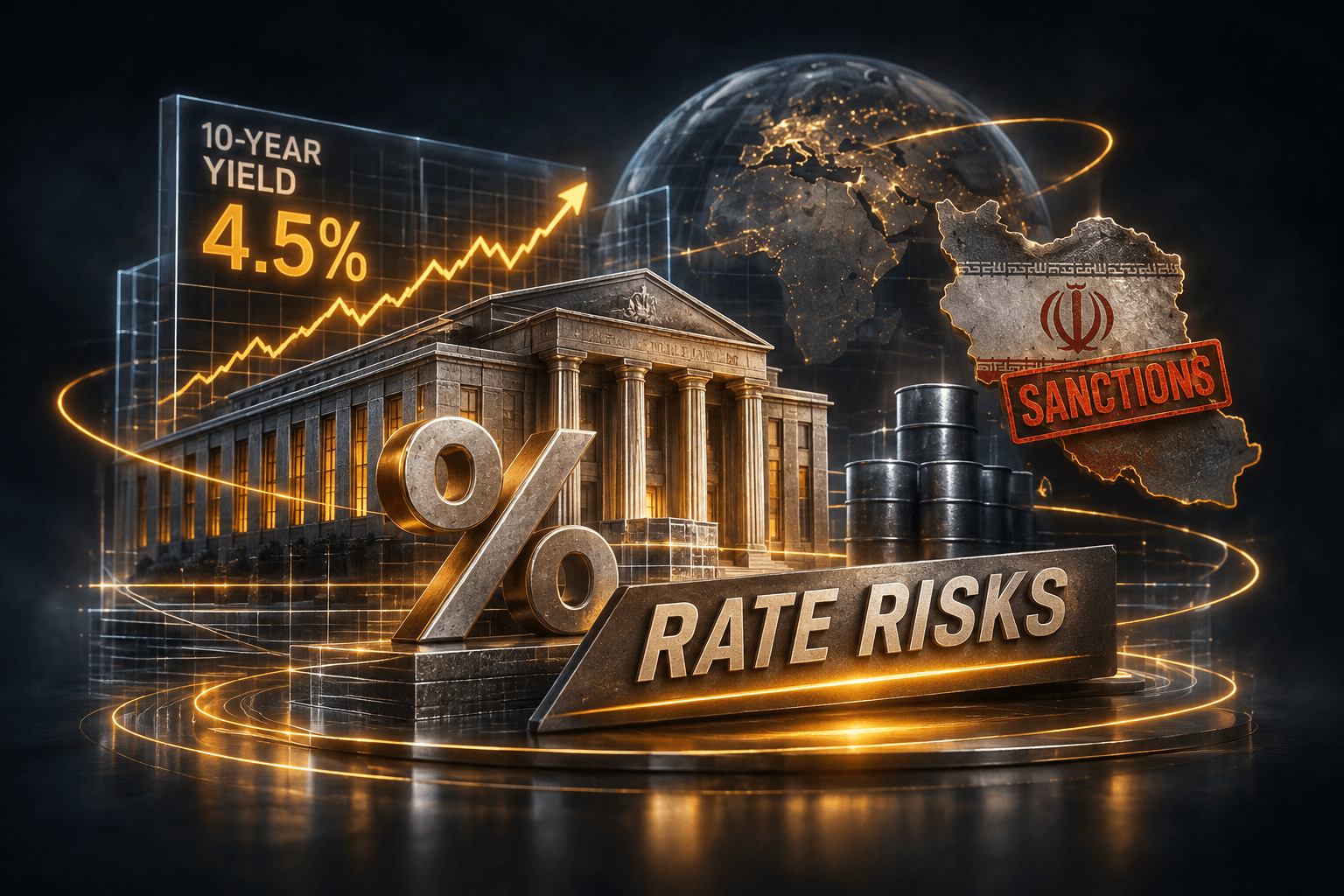
Interest-rate expectations and geopolitical risk are the clearest signals for Finance & Banking investors this Tuesday, but the news feed offers few direct updates on banks or other financial companies. Treasury yields were reported at 4.91% for the 10-year and 4.66% for the 2-year, while the CME FedWatch tool showed markets pricing in a 100% likelihood of a Federal Reserve rate hike after its December meeting. That is market pricing, not a confirmed Fed decision.
The backdrop is mixed: U.S. index futures were lower after a sharp rally in the previous session, and new Iran sanctions and Strait of Hormuz concerns could add uncertainty around inflation and rates. What does that mean for your view of financial stocks? For now, the available reports point more to macro sensitivity than to a sector-wide earnings trend.
Market Highlights
The broader market’s reversal in tone is relevant because financial shares can respond to changing expectations for interest rates, credit conditions and economic growth. The figures below are index and market snapshots, not returns for a financial-sector benchmark.
- In premarket trading, the Dow was down 0.07%, the S&P 500 fell 0.38% and the Nasdaq 100 declined 0.96%, according to Benzinga.
- The previous session closed higher: the Dow gained 3.01%, the S&P 500 rose 4.73% and the Nasdaq Composite advanced 6.51%.
- The 10-year Treasury yield was reported at 4.91%, compared with 4.66% for the 2-year. Higher yields can support some lending income, but they can also raise funding costs and weigh on borrowers.
- WTI crude traded near $79.89 a barrel and Brent near $86.55, both slightly lower in the early session. Strait of Hormuz concerns remain a potential source of market volatility.
Company moves in the news were concentrated outside banking. Hewlett Packard Enterprise (HPE) was down 10.87% premarket despite reported fourth-quarter earnings and revenue above estimates. Agilent ($A) rose 6.77% after beating estimates and issuing guidance above expectations, while Insmed ($INSM) gained 14.23% after confirming a $175-per-share cash acquisition by Sanofi. Those moves offer context on broader risk appetite, but they are not direct signals about bank fundamentals.
Key Developments
Rates may shape the financial-sector outlook
The reported yield levels and FedWatch pricing make rates the most important financial-sector watchpoint in the supplied stories. Higher interest rates can help banks earn more on certain loans and securities, but the benefit depends on how quickly deposit and wholesale funding costs rise. A steeper or flatter yield curve, changes in loan demand and credit losses also affect the picture.
There are no bank-specific net interest margin, deposit, loan-growth or credit-quality figures in today’s feed. So you can’t infer from the rate headlines alone whether a particular lender is gaining or losing ground. The December rate decision and any accompanying guidance will be more informative than a single probability reading.
Iran sanctions add an inflation and volatility watchpoint
Treasury Secretary Scott Bessent announced sanctions on more than two dozen Iranian exchange houses, front companies and key personnel. The report also cited Iranian claims that two oil tankers struck sea mines east of the Strait of Hormuz. These developments don’t establish a change in oil supply, but they could keep investors alert to energy prices and geopolitical risk.
For financial companies, the potential connection is indirect: a sustained energy-price rise could influence inflation expectations, bond yields and the outlook for borrowers. Oil futures were slightly lower in the reported early session, so the supplied data do not show a price spike. Watch whether market reaction grows beyond the initial headlines.
Limited direct company news in the feed
A Seeking Alpha item titled “RSPA: Defensive Income For A Market Ignoring Fundamentals” is the closest headline to an income-oriented investment theme, but the supplied story has no description or performance details. It therefore doesn’t provide enough information to assess the underlying holdings, risks or any effect on banks.
Other Seeking Alpha headlines cover Krispy Kreme and Incyte, while MarketWatch items focus on personal estate planning and celebrity or historic-property sales. They don’t report financial-sector earnings, regulation or company developments. That distinction matters: a broad news feed can move attention, but these stories shouldn’t be treated as evidence of a shift in bank fundamentals.
What to Watch
Today’s scheduled U.S. data include the September S&P Case-Shiller home price index and November Conference Board consumer confidence. Housing prices and household confidence can help frame the economic backdrop for mortgage activity, consumer borrowing and credit performance, although neither release by itself determines the direction of financial shares.
Keep an eye on Treasury yields, the shape of the yield curve and the market’s changing expectations for the December Fed meeting. Also monitor oil and geopolitical headlines for signs that risk is affecting inflation expectations. For your own analysis, separate broad index moves from company-level evidence such as deposit trends, loan growth, funding costs and credit-loss provisions. Today’s stories don’t provide those bank-specific measures.
There are also earnings reactions outside the sector, including HPE’s decline despite a reported beat and Agilent’s advance after results and guidance exceeded estimates. These divergent responses underline why headline beats alone may not explain trading. Financial-sector investors will need direct company disclosures or upcoming results for a clearer read on the industry.
Bottom Line
- The overall Finance & Banking signal is mixed, with no clear bank-specific catalyst in the supplied news.
- Reported Treasury yields and rate-hike expectations make monetary policy a key variable, but FedWatch pricing is not a policy decision.
- Iran-related headlines create a risk-monitoring issue; the reported oil prices were slightly lower in early trading.
- Use today’s housing and confidence data as economic context, not as a stand-alone signal for financial stocks.
- Look for direct evidence on deposits, loan demand, funding costs and credit quality before drawing conclusions about individual lenders.
FAQ Section
Q: What is the main Finance & Banking issue to watch today? A: Interest-rate expectations, Treasury yields and whether geopolitical developments affect inflation or market risk sentiment.
Q: Does the reported 100% FedWatch probability confirm a December rate hike? A: No. It reflects market pricing at the time reported, not a confirmed Federal Reserve decision.
Q: Did today’s stories report new bank earnings or deposit data? A: No. The supplied feed contains no direct bank earnings, deposit, loan-growth or credit-quality updates.