The Big Picture
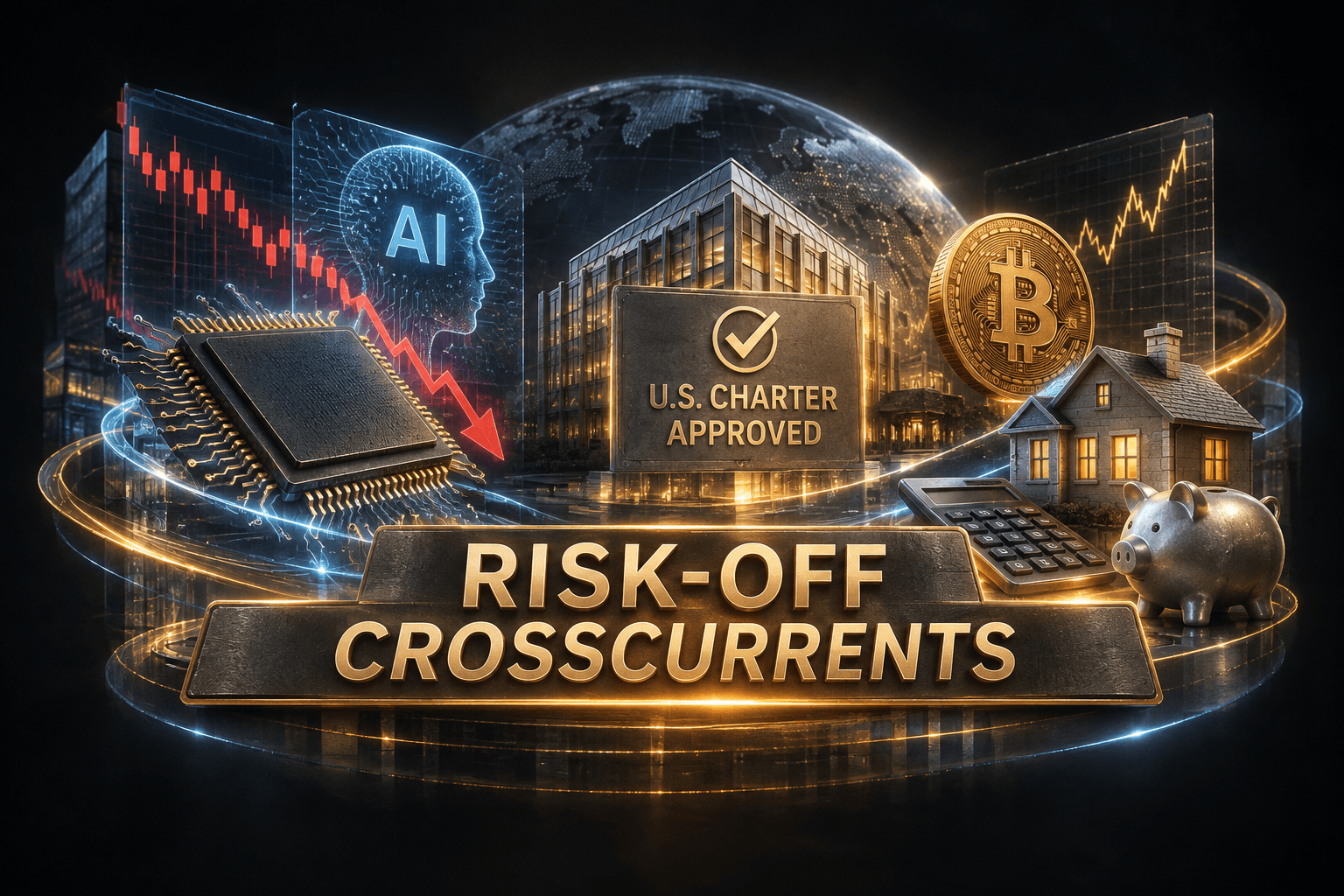
A sharp selloff in technology and semiconductor shares is the clearest warning for investors heading into Monday, November 23. U.S. markets are closed Sunday, but Friday’s losses left the S&P 500 in correction territory and pushed the Nasdaq 100 close to a bear market, creating a risk-off backdrop for financial stocks and other growth-sensitive assets.
There are constructive developments, including OakNorth winning U.S. regulatory approval for a national banking charter, but they sit alongside questions about AI valuations, export restrictions, and potential share supply. What matters most as you assess the headlines? Separate immediate market stress from company-specific developments and longer-term forecasts.
Market Highlights
The sharpest pressure was concentrated in semiconductors and the AI trade. According to Benzinga’s Friday market recap, the iShares Semiconductor ETF (SOXX) fell 10% on Friday and was down 34.5% from September 30, its steepest two-month decline since 2001 by the measure cited in the report.
- Nvidia (NVDA) fell 13% Friday to $127, its lowest level since May 2025, and was down 48% from its October record. The report said Nvidia had lost about 22% for the week.
- SanDisk (SNDK) fell 16%, Micron Technology (MU) dropped 14%, Advanced Micro Devices (AMD) declined 12.7%, $AVGO lost 12.4%, and $TSM fell 9% on Friday.
- The S&P 500 fell 3.2% Friday to 6,949, while the Nasdaq 100 dropped 4.7%. The VIX rose 20% to 34.
- Bitcoin was reported at $58,400 Friday after falling 5.6%. Crypto trades through the weekend, but no updated Sunday price was provided in these reports.
Anthropic ($ANT) also drew attention after its debut pop faded. Benzinga reported the shares fell 27% from their $115.10 high over two sessions and reached an intraday low of $83.15 on Friday, near the $83 IPO price. The article noted that the underwriters exercised their full 147 million-share overallotment option, while as many as 303 million additional shares could become eligible for sale on December 15. Those figures describe potential supply, not a prediction that holders will sell.
Key Developments
Bank charter approval brings a measured expansion story
OakNorth received approval from the Federal Reserve and the Office of the Comptroller of the Currency for a U.S. national banking charter, according to Banking Dive. The British lender waited 20 months for the decision and becomes the first foreign digital bank to receive a U.S. national banking charter.
The approval is a notable regulatory milestone and a potential route to a broader U.S. presence. However, the report does not provide financial forecasts or details of the lender’s plans following approval, so you’ll want to distinguish the significance of the license from any assumptions about future growth.
AI and semiconductor risks meet company-specific questions
The Friday market report linked the AI-sector slide to both broad market anxiety and new U.S. restrictions on advanced chip sales to China. It said the Commerce Department rule covers chips at 16 nanometers and more advanced, and that Taiwan Semiconductor suspended orders from some Chinese customers while Nvidia halted H200 shipments to China and removed the country from its forecast.
Separate Seeking Alpha headlines present different company-level questions. One describes Standard Nuclear as having real fuel sales but a backlog made mostly of options; another frames Cargojet as a potential value-unlocking story without significant earnings growth. These headlines signal a need to examine the quality of contracted demand and the path to earnings, but the supplied reports don’t include supporting figures or full analysis. A Seeking Alpha piece also compares Anthropic’s approach with Palantir’s playbook, underscoring investor interest in how AI businesses build commercial traction.
Digital-asset forecasts and household finance choices
21Shares’ 2027 outlook, reported by Benzinga, forecasts that Bitcoin could set a new high next year, with institutional demand, clearer regulation, stablecoins, and tokenization among its themes. The report also projects tokenized-asset trading volume of $15 trillion, up from an estimated $6.3 trillion in 2026, and stablecoin monthly active addresses above 100 million. These are forecasts from an investment firm, not established outcomes; the same report notes Bitcoin’s steep decline from its October 2025 peak.
Three MarketWatch advice columns turn to household decisions: whether a 64-year-old should continue working while a spouse is retired, how to discuss spending on relatives’ trips, and whether to take a lower pension in exchange for a survivor benefit. The pension example describes a surviving spouse receiving 50% to 66% of the monthly benefit. Together, the stories highlight trade-offs among current spending, retirement timing, and income protection. Your own choices depend on household resources and plan terms, not a one-size-fits-all answer.
What to Watch
Monday, November 23, is the next U.S. trading session. Market participants will be watching whether Friday’s selling pressure carries into the new week, especially in chipmakers and AI-linked shares. The reports also point to ongoing uncertainty around U.S.-China chip policy and interest rates: Federal Reserve officials expressed concern about inflation, and the Friday article cited the December 8-9 meeting as a potential catalyst.
For $ANT, the coming weeks bring several reported events: listed options were scheduled to open November 23, a Nasdaq-100 ranking date is November 30, and the first major lockup step is December 15. The article also notes potential Nasdaq-100 inclusion at the December 21 open. These dates could affect trading flows, but neither index-related demand nor eligible shares establish how the stock will perform.
For OakNorth, watch for further details on its U.S. operating plans. For digital assets, treat 21Shares’ 2027 projections as scenarios and monitor whether adoption and regulation develop as described. At the household level, review pension survivor terms and shared spending expectations before making long-term decisions.
Bottom Line
- Friday’s technology-led selloff is the dominant near-term market signal; U.S. stock markets are closed Sunday and reopen Monday.
- OakNorth’s charter approval is a positive regulatory milestone, though the available report offers no financial outlook.
- For $ANT, potential lockup supply and weak market conditions are important risks alongside possible index-related flows.
- 21Shares’ Bitcoin and tokenization projections are forecasts, not guarantees, and crypto prices can change over the weekend.
- Retirement, pension, and family-spending decisions involve competing priorities; compare the relevant plan details and household constraints.
This summary is for informational purposes only and is not personalized investment advice or a recommendation to buy, sell, or hold any security.
FAQ
Q: Are U.S. stock markets open on Sunday, November 22? A: No. U.S. stock markets are closed Sunday, with the next trading session scheduled for Monday, November 23.
Q: What is the main risk highlighted for semiconductor stocks? A: Friday’s severe losses coincided with a market correction, concerns about AI valuations, and new U.S. restrictions affecting advanced chip sales to China.
Q: Does OakNorth’s U.S. charter approval guarantee growth? A: No. It clears a significant regulatory hurdle, but the available report does not specify future revenue, earnings, or operating plans.