The Big Picture
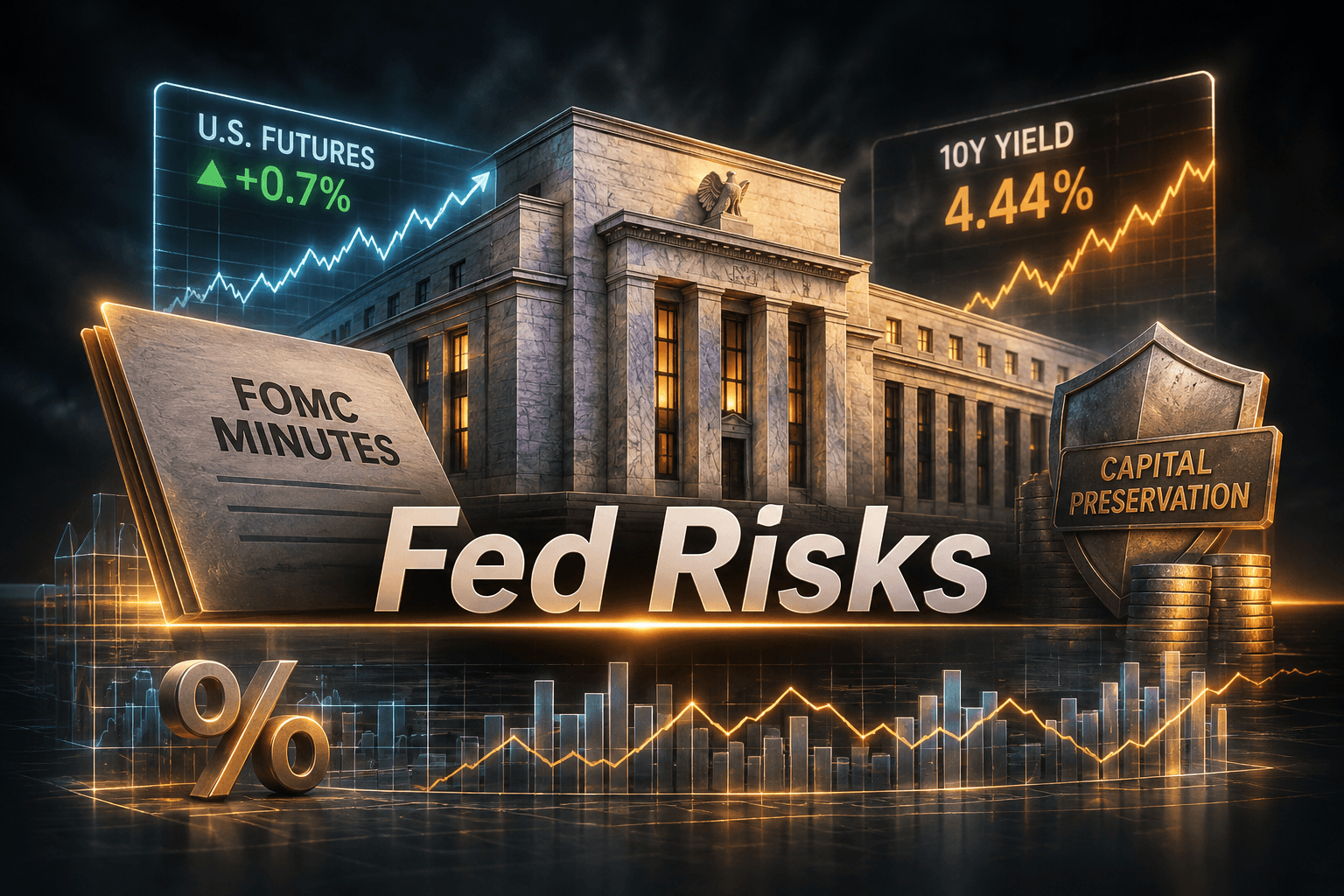
Higher Treasury yields and expectations of a possible Federal Reserve rate hike are setting a cautious tone for finance and banking investors this Wednesday, even as U.S. stock futures point higher. The central question for the sector is whether the Fed’s meeting minutes and today’s economic data will reinforce the market’s hawkish rate outlook or offer room for reassessment.
There are no detailed bank earnings, regulatory actions or company-specific banking updates in the supplied headlines. Instead, the signals come from the bond market, a high-profile investor’s defensive positioning and a prior session in which financial stocks lagged. That makes today a day for watching policy and credit conditions, rather than drawing conclusions from a single sector catalyst.
Market Highlights
Before the regular session, major U.S. index futures were higher after Tuesday’s broad decline. Financials were among the weaker sectors in that previous session, though the available report didn’t provide a specific percentage change for the group.
- Dow Jones futures were up 0.29%, S&P 500 futures 0.65% and Nasdaq 100 futures 1.20% in the reported premarket snapshot.
- The 10-year Treasury yield stood at 5.09%, while the two-year yield was 4.79%.
- The CME FedWatch tool showed markets pricing in a 100% likelihood of a rate hike following the Fed’s December meeting, according to the report.
- October housing starts data, pending home sales and the FOMC minutes are scheduled for release today, alongside remarks from several Fed officials.
These figures describe the wider market, not a move in bank shares specifically. For your sector watchlist, the direction of yields and the Fed’s policy language may provide more useful context than the headline futures gains.
Key Developments
Rates and Fed communication take center stage
The combination of elevated Treasury yields and a strong market-implied probability of a December rate increase is the clearest finance-sector signal in the morning news. Banks’ results can be influenced by the rate environment through funding costs, loan demand and the value of securities held on their balance sheets, but the impact varies by institution and business mix. The supplied stories don’t provide new bank-level data on those measures.
Today’s FOMC minutes could help investors assess how policymakers viewed inflation, growth and the path of rates at their last meeting. Housing starts and pending home sales also offer a check on interest-rate-sensitive activity. Will those releases change the market’s expectations? The data and the Fed’s wording are the key points to compare with current rate pricing.
Druckenmiller’s portfolio changes highlight caution
Stanley Druckenmiller’s Duquesne Family Office reported $129.1 million in new third-quarter stakes in gold producers, including Newmont (NEM), Barrick Mining ($B) and Agnico Eagle Mines ($AEM). The filing showed a reported U.S. equity portfolio of $4.47 billion across 65 positions at September 30, down from $5.21 billion across 95 positions at the end of June.
Druckenmiller also described a cautious outlook, citing a pause in Fed rate cuts, widening credit spreads and weakening commodities, and said he was prioritizing capital preservation. Those comments are one investor’s assessment, not a forecast for banks or the financial sector. Still, widening credit spreads are a market signal worth tracking because they can reflect changing views of borrower risk and financing conditions.
Corporate news is mixed, with limited direct bank read-through
The broader market report noted that U.S. stocks closed lower Tuesday, with financials, utilities and real estate lagging, before futures turned positive Wednesday morning. Nvidia’s earnings beat and its reported demand outlook supported a different part of the market, while other company updates included weaker guidance from Dolby and planned share offerings by two smaller companies. Those developments may affect overall risk appetite, but they aren’t direct evidence about bank performance.
Nike also outlined long-term financial targets at its investor day while warning that fiscal 2028 could be challenging and reaffirming a forecast for fiscal 2027 revenue to decline by a high-single-digit percentage. That outlook is relevant to the wider corporate earnings picture, including the health of consumer-facing businesses, but it is not a banking-sector update. Several other headlines supplied only titles or no description, so there isn’t enough reported detail to draw further conclusions from them.
What to Watch
For today, compare the housing data and FOMC minutes with the current market expectation of a December rate hike. Pay attention to any change in Treasury yields, credit spreads or financial-stock performance as investors digest the releases. Fed Governor Michael Barr, New York Fed President John Williams and Minneapolis Fed President Neel Kashkari are also scheduled to speak, giving markets additional policy commentary to assess.
For bank investors, the practical questions are whether funding costs and credit conditions are changing, and whether upcoming company disclosures confirm any shift in loan demand or credit quality. The headlines provided don’t answer those questions. You can use today’s rate and spread moves as context, but avoid treating broad market futures or a single investor’s portfolio as a substitute for company-specific information.
Bottom Line
- Finance and banking sentiment is mixed, with higher futures countered by high yields and a rate-hike outlook.
- Financials lagged during Tuesday’s decline, but the available news gives no current sector percentage move.
- FOMC minutes, housing data and Fed speakers are today’s main catalysts for rate expectations.
- Druckenmiller’s reported portfolio shifts and caution highlight risk awareness, not a definitive sector forecast.
- Look for bank-specific updates on funding, credit quality and loan demand before drawing conclusions about individual institutions.
FAQ
Q: What is the main finance-sector issue to watch today? A: The FOMC minutes and economic releases could influence expectations for interest rates and, in turn, market views of financing conditions.
Q: Are bank stocks higher in premarket trading? A: The provided report gives gains for major index futures, but it doesn’t report a specific premarket move for bank stocks or the financial sector.
Q: What does Druckenmiller’s move into gold miners say about banks? A: It doesn’t provide direct information about banks. His comments on widening credit spreads and capital preservation are broader risk signals to monitor.