The Big Picture
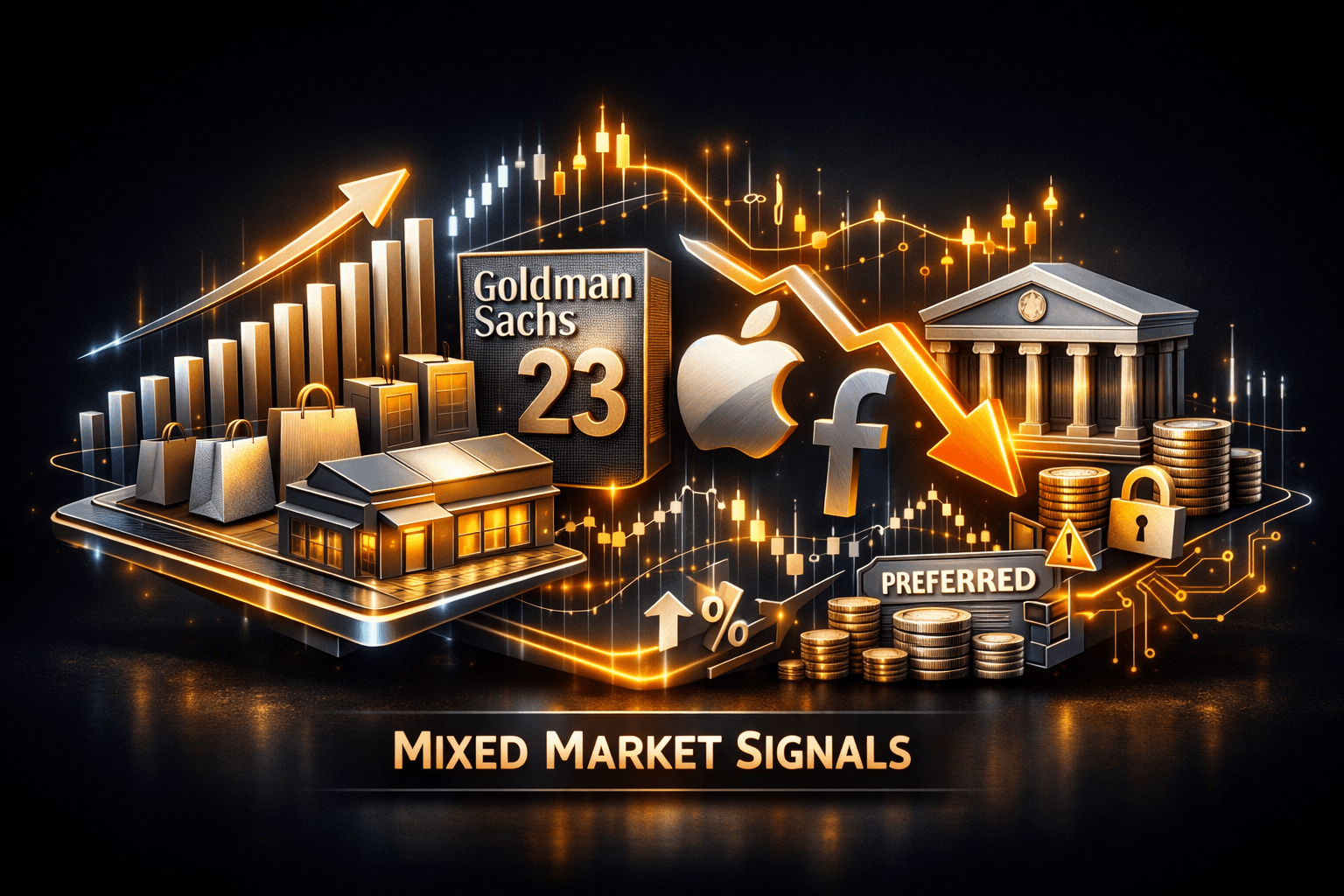
Markets opened with a clear rotation theme, and you can feel it in the headlines. Goldman Sachs is urging investors toward 23 unloved consumer-facing stocks as big tech shows signs of weakening, even as rate-sensitive income products like preferreds are under pressure.
That shift matters because it highlights changing leadership and new risks for banks and financial investors. If you're positioned heavily in large-cap tech or in preferred-income ETFs, today's developments suggest you should recheck exposures and upcoming catalysts.
Market Highlights
Quick takeaways you can parse before the bell has settled.
- Goldman Sachs $GS released a list of 23 laggard consumer-facing stocks it favors, saying big tech's strength may fade and earnings growth could slow next year.
- The preferreds ETF $PFF has been sold off, with analysts attributing the move to rate pressure rather than broad credit stress.
- Dividend strategy conversations picked up around $REGL, with commentary that dividend growth may matter more than dividend longevity for some portfolios.
- $CMCO, Columbus McKinnon, was highlighted in coverage that the company still faces operational headwinds and execution work ahead.
- Banking headlines flagged two infrastructure themes: hidden cyber exposures in bank supply chains, and AI infrastructure decisions that will shape competitiveness.
- In crypto, Toncoin price forecasts included a projection of $26.17 by 2030, keeping speculative bettors active in alternative assets.
Key Developments
Goldman Sachs shifts focus as big tech wobbles
Goldman Sachs $GS told clients it’s time to look at 23 unloved consumer-facing names, arguing that with earnings growth set to slow and big tech under pressure, cyclical and consumer laggards may outperform. That call matters to portfolio construction because it signals a potential leadership rotation away from $AAPL, $MSFT and $NVDA into names with different earnings sensitivity.
For you, that raises the question: do you have exposure to those sectors, and how would a rotation affect your tax or rebalancing plans?
Rate pressure, not credit, driving preferreds selloff
Coverage of $PFF suggests the recent selloff in preferreds is driven largely by rising rate expectations and duration sensitivity rather than worsening credit fundamentals. Analysts note preferreds trade more like long-duration income instruments when rates move, and that dynamic is squeezing ETFs that hold these securities.
That distinction is important because it means stress may ease if rate moves pause, though income investors will want to monitor rate forecasts and duration exposure closely.
Cyber risk and AI infrastructure become bank balance-sheet issues
Banking Dive reports banks have a hidden cyber exposure problem, where institutions know their vulnerabilities but may not fully know who owns the systems supporting them. The story points to outsized operational risk if third-party ownership is opaque.
Separately, sponsored pieces argue that AI infrastructure choices are now a competitive differentiator, with self-driving WANs and production-grade AI stacks enabling faster fraud detection, payments innovation and trading advantages. For banks, this is both a cost and strategic decision.
What to Watch
Here are the catalysts and risks you'll want to track through the week.
- Earnings and guidance from big tech and consumer names, which will test whether Goldman Sachs' rotation thesis gains traction.
- Rate signals from the Treasury market and Fed-related commentary, because preferreds and income ETFs like $PFF are sensitive to rate moves.
- Bank operational disclosures and third-party risk commentary, as regulators and investors probe hidden cyber exposure.
- Announcements on AI infrastructure spending and partnerships from major banks, which could change competitive dynamics for payments and fraud detection.
- Macro pieces on sovereign debt dynamics, including articles comparing France and the U.S., which may influence long-term rate and risk premium expectations.
How exposed is your portfolio to duration and tech concentration? Are your bank holdings resilient to third-party cyber operational issues? Those are the practical questions to ask today.
Bottom Line
- Sentiment is mixed: a call to rotate into unloved consumer names sits alongside rate-driven pressure in income products and operational risks at banks.
- Analysts note the preferreds selloff is more about rates than credit, so monitor interest-rate signals before drawing conclusions about credit health.
- Bank cyber and AI infrastructure choices are becoming strategic, and you should watch disclosures and vendor concentration risks.
- Dividend-growth arguments, exemplified by commentary on $REGL, suggest some investors prefer growth in payouts over strict dividend longevity metrics.
- Stay selective, don't throw the baby out with the bathwater, and align any portfolio moves with your time horizon and risk tolerance.
FAQ Section
Q: What does Goldman Sachs’ list of 23 unloved stocks mean for tech-heavy portfolios? A: It signals a possible leadership rotation away from large-cap tech toward consumer-facing and cyclical names, so you may want to reassess concentration and rebalancing triggers.
Q: Should I worry that the preferreds ETF $PFF signals broader credit stress? A: Analysts reporting on $PFF say the recent selloff is driven mainly by rate pressure and duration sensitivity, not by widespread credit deterioration.
Q: How should retail investors think about bank cyber and AI infrastructure risk? A: Watch regulatory filings and vendor disclosures for third-party concentration, and follow banks’ spending and partnership announcements for AI infrastructure decisions that could affect operations and competitive positioning.