The Big Picture
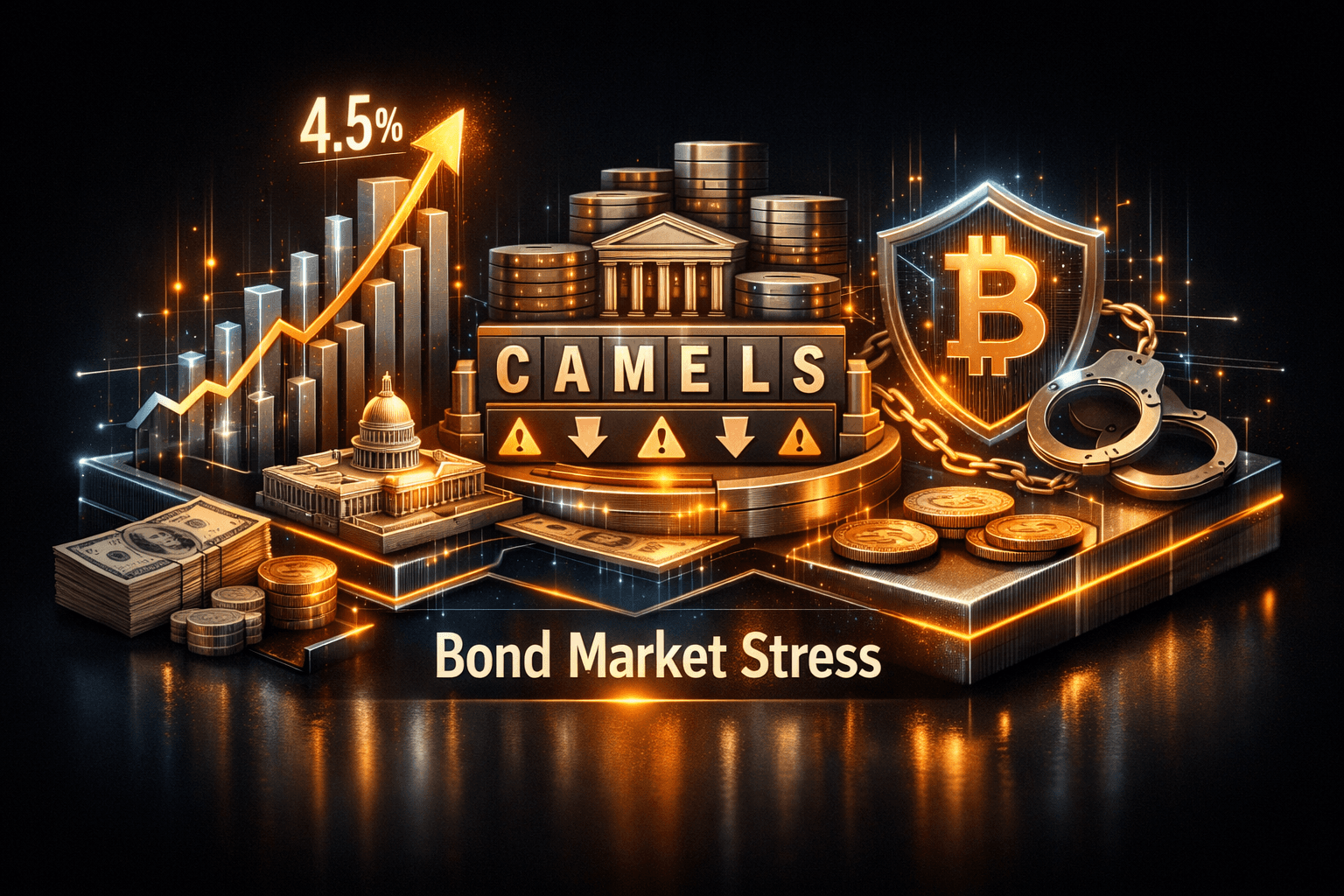
Treasury-market anxiety and higher yields set a somber tone for the finance and banking sector today, reigniting concerns about equity valuations and liquidity. Data and commentary published across the day suggest there is no easy fix to U.S. debt market disruption, and that message is reverberating through bank and financial stocks.
For you as a retail investor, that means heightened sensitivity to rate moves and regulatory shifts. Rising yields are a clear headwind for rate-sensitive assets, and fresh enforcement and oversight signals mean policy risk is back on the table.
Market Highlights
Here are the quick facts and takeaways that mattered to markets today.
- $BMA, $PESAF and Jiangsu Hengrui released Q2 2026 earnings call transcripts today, adding to the steady flow of quarterly corporate detail for the sector.
- CFTC bans ex-FTX executives Caroline Ellison and Gary Wang from trading for five years, a concrete enforcement outcome that reiterates regulatory risk for crypto-linked firms.
- MarketWatch coverage flagged renewed stress in the Treasury market and rising yields, described as a troubling signal for stocks and a complication for Treasury stabilizing plans.
- Benzinga published a long-horizon forecast for Myro $MYRO with a target of $0.050 by 2030, reflecting ongoing speculative interest in meme and microcap crypto tokens.
Key Developments
Bond-market strain and the Treasury response
MarketWatch reporting showed Treasury attempts to calm the market were being tested as yields climbed and volatility returned to the fixed-income complex. Analysts note the problem is structural and that short-term buyback or liquidity measures may offer limited relief.
What does this mean for equities? Higher yields squeeze valuations across the board, especially for growth and highly leveraged names, and make cash and short-duration bonds relatively more attractive to yield-seeking investors.
Regulators tighten rules and enforcement
The CFTC announced five-year trading bans for ex-FTX executives Caroline Ellison and Gary Wang, underscoring continuing fallout from the FTX collapse. Banking Dive coverage reinforced that enforcement is active and that consequences for market misconduct remain severe.
At the same time, proposed CAMELS changes have prompted calls for clarity on what constitutes "material financial risk." Industry participants told Banking Dive they need explicit definitions to adapt risk management and reporting processes.
Banking leadership signals and crypto policy
OCC Chief Jonathan Gould made crypto-inclusive remarks at a Wyoming blockchain symposium and suggested a nuanced approach to innovation. He also emphasized that protecting traditional banks is not his agency's sole job, a point that raises new questions about supervisory priorities.
Are regulators closing the door on crypto, or are they trying to balance innovation and safety? The enforcement headlines and regulatory review together create a mixed but challenging backdrop for crypto-linked financial firms.
What to Watch
Focus on the catalysts that will move markets next. You’ll want to keep an eye on Treasury auctions and yield moves, since they are driving the day's tone. Watch the 2-year and 10-year Treasury yields and auction results closely for signs of stabilization or further stress.
Upcoming items to monitor include any Fed commentary that addresses liquidity or market functioning, further regulatory rulemaking on CAMELS or crypto, and scheduled earnings or management commentary from banks and financial intermediaries. If you follow small-cap crypto names, track enforcement developments closely, since they can change risk and access rapidly.
Finally, earnings transcripts from $BMA and $PESAF plus Jiangsu Hengrui offer incremental industry color on credit trends, commodity exposures, and regional demand. Read the transcripts if you're trying to separate company-specific performance from sector-wide rate pressure.
Bottom Line
- Bond-market volatility and higher yields are the dominant macro risk for finance and banking today, creating downward pressure on rate-sensitive equities.
- Regulatory enforcement is active, highlighted by a five-year CFTC trading ban for ex-FTX executives, increasing compliance risk for crypto-adjacent firms.
- Proposed CAMELS changes need clearer definitions, and uncertainty there adds supervisory risk for banks and financial institutions.
- Earnings transcripts from $BMA, $PESAF and Jiangsu Hengrui add company-level detail but do not offset macro and regulatory headwinds at the sector level.
- For your watchlist, prioritize Treasury yields, Fed and Treasury actions on market functioning, and any new regulatory guidance that narrows or expands enforcement scope.
FAQ Section
Q: How do rising Treasury yields affect bank stocks? A: Higher yields can boost net interest margins for some banks, but rapid yield moves and curve inversion can hurt loan demand, mark-to-market securities portfolios, and overall market sentiment.
Q: What does the CFTC trading ban for ex-FTX execs mean for crypto-linked firms? A: The five-year bans reinforce that enforcement is a live risk. Analysts note this increases counterparty and reputational risk for firms with ties to failed platforms.
Q: Should I read Q2 earnings transcripts from regional banks and energy firms? A: Yes, transcripts from $BMA, $PESAF and others provide management commentary on credit, commodity exposures, and capital plans, which helps you separate company-specific dynamics from broader rate and regulatory pressures.