The Big Picture
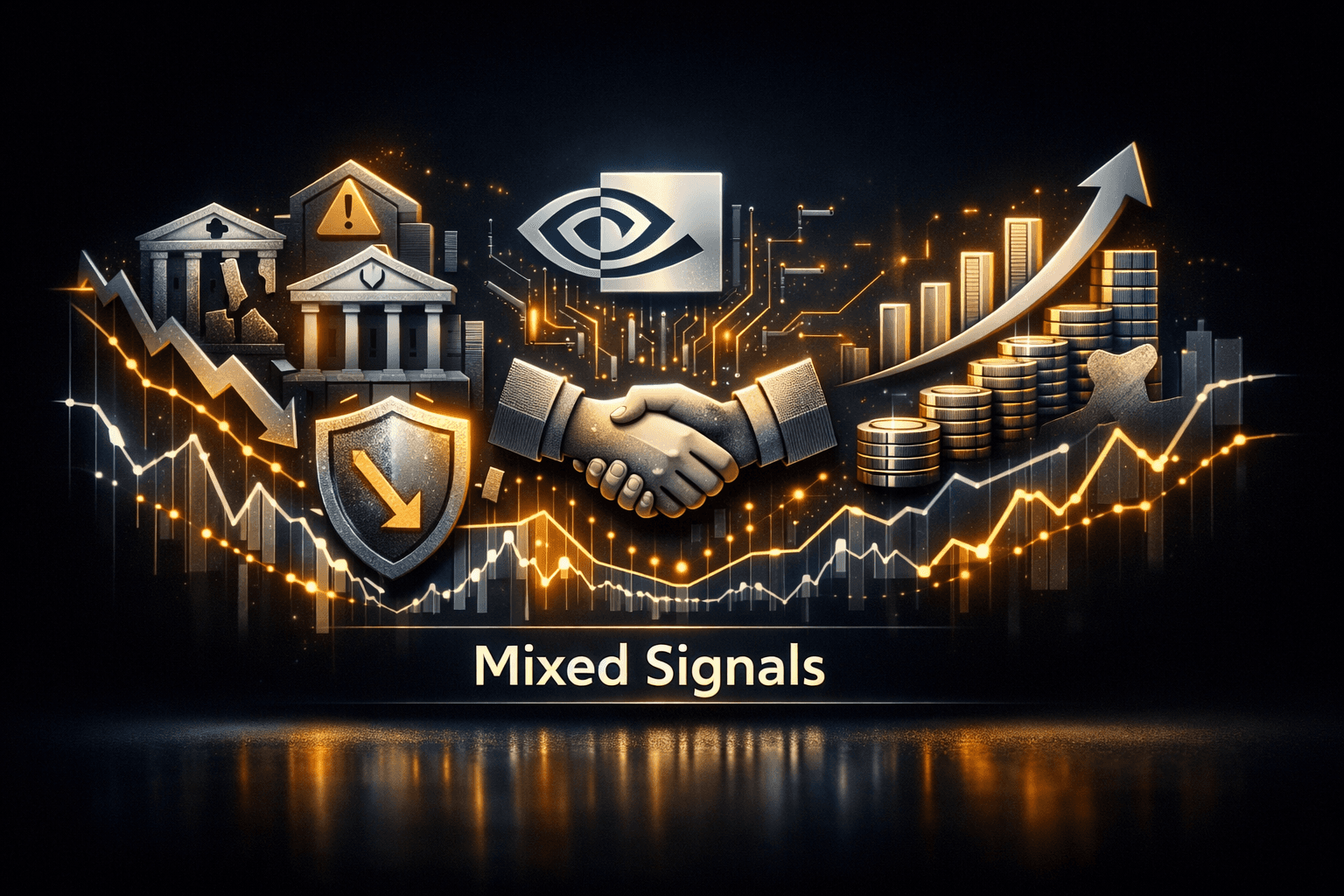
The Finance & Banking sector closed the day with mixed signals that leave investors weighing risk against selective opportunity. Regulatory and credit headaches surfaced in regional banking and Medicare Advantage exits, while tech-driven calm and regional M&A offered counterweights.
Why does this matter to you? Credit discipline, insurer footprint changes, and AI-related market sentiment all influence lending, premiums, and asset prices across the industry. That means you should track both cyclical risks and discrete catalysts as markets digest these developments.
Market Highlights
Quick facts and notable moves from today's coverage.
- JBS N.V., $JBS, held its Q2 earnings call today, with the transcript posted on Seeking Alpha and investors parsing commodity and margin commentary.
- Werner Enterprises, $WERN, presented at Deutsche Bank's Chicago Industrials Summit, updating investors on fleet and pricing dynamics.
- Nvidia, $NVDA, won analyst praise after announcing partnerships that ease concerns about its concentration risk among enterprise customers.
- Regulatory action hit First Guaranty Bank, which agreed to an FDIC consent order restricting certain lending and requiring capital improvements.
- HBT announced a $204.6 million deal to buy Tri-County Financial, a move that will push the acquirer above $8 billion in assets and past 100 branches when the deal closes in early 2027.
Key Developments
Regional banking stress and an FDIC consent order
The FDIC reached a consent order with Louisiana's First Guaranty Bank after exam findings on credit quality. Regulators restricted some new lending to borrowers tied to loss-designated transactions and told the bank to boost its Tier 1 leverage capital ratio.
For you, this underscores ongoing supervisory scrutiny of smaller banks where asset quality and capital ratios are under pressure. Which banks are most at risk remains a key question for analysts and depositors alike.
Insurer pullbacks in Medicare Advantage and Social Security expansion
Multiple insurers are scaling back Medicare Advantage participation in some counties, particularly rural areas. MarketWatch noted that seniors could face fewer coverage options and more plan churn next year.
At the same time Social Security expanded its compassionate allowances list to 314 conditions to speed disability claims. The policy change helps beneficiaries, but it adds short term administrative and claims considerations for insurers and the broader benefits system.
AI sentiment, corporate transcripts, and regional M&A
Analysts at BofA and Morgan Stanley flagged that recent Nvidia moves reduce a central market fear that it was overexposed to a narrow set of customers. That eased one tech-related concentration risk that can spill into financial markets.
Meanwhile, transcripts from $JBS and $WERN gave investors fresh detail on company-level operating trends. And in banking M&A, Illinois’ HBT agreed to buy Tri-County Financial for $204.6 million, a clear sign of continued consolidation among regional banks.
What to Watch
Expect a busy week of follow ups and fresh data that could move the sector. You'll want to monitor several specific catalysts and risks.
- Upcoming regional and national bank earnings, which will reveal how loan books and deposit mixes held up through midyear.
- FDIC and other regulator actions, plus any follow on stress tests or consent orders, since these directly affect lending capacity and capital planning.
- Medicare Advantage plan filings and county-level insurer participation, which will affect premiums and claim dynamics heading into next year.
- Nvidia partnership details and any spillover orders for AI infrastructure from financial institutions. Will demand for specialized hardware keep lifting related vendors?
- M&A timelines, especially the HBT and Tri-County deal, closing early in 2027, and whether other regional banks follow with consolidation moves.
Bottom Line
- Sector sentiment is mixed, with regulatory and credit concerns in regional banking balanced against selective positives like deal activity and eased AI concentration fears.
- Watch bank-level capital and asset quality metrics closely, since consent orders can meaningfully limit lending and growth.
- Insurer retrenchment from Medicare Advantage highlights geographic risk in health coverage markets, particularly in rural counties.
- Tech developments, including $NVDA partnerships, remain a cross-market catalyst that could lift fintech and infrastructure suppliers.
- Be selective and monitor near term catalysts before shifting exposure, analysts note, as the picture remains uneven across subsectors.
FAQ
Q: How will an FDIC consent order affect a bank's business? A: A consent order typically restricts certain activities, forces capital or governance changes, and can limit growth until regulators are satisfied with remediation efforts.
Q: What does insurers leaving Medicare Advantage mean for seniors? A: It can reduce plan choice and may raise the chance of higher costs or network changes for affected seniors, especially in rural areas where alternatives are limited.
Q: Should I treat AI partnership news as a financial catalyst? A: Yes, corporate AI deals can change revenue mix and risk perceptions for technology firms and for financial institutions that buy or resell AI services, so data suggests you watch order flows and analyst revisions closely.
Note: This summary is for informational purposes only. It does not constitute investment advice or a recommendation to buy, sell, or hold any security. Analysts note that data and momentum indicate a mixed outlook across the sector and that you should consider your own situation and consult a licensed professional before making investment decisions.