The Big Picture
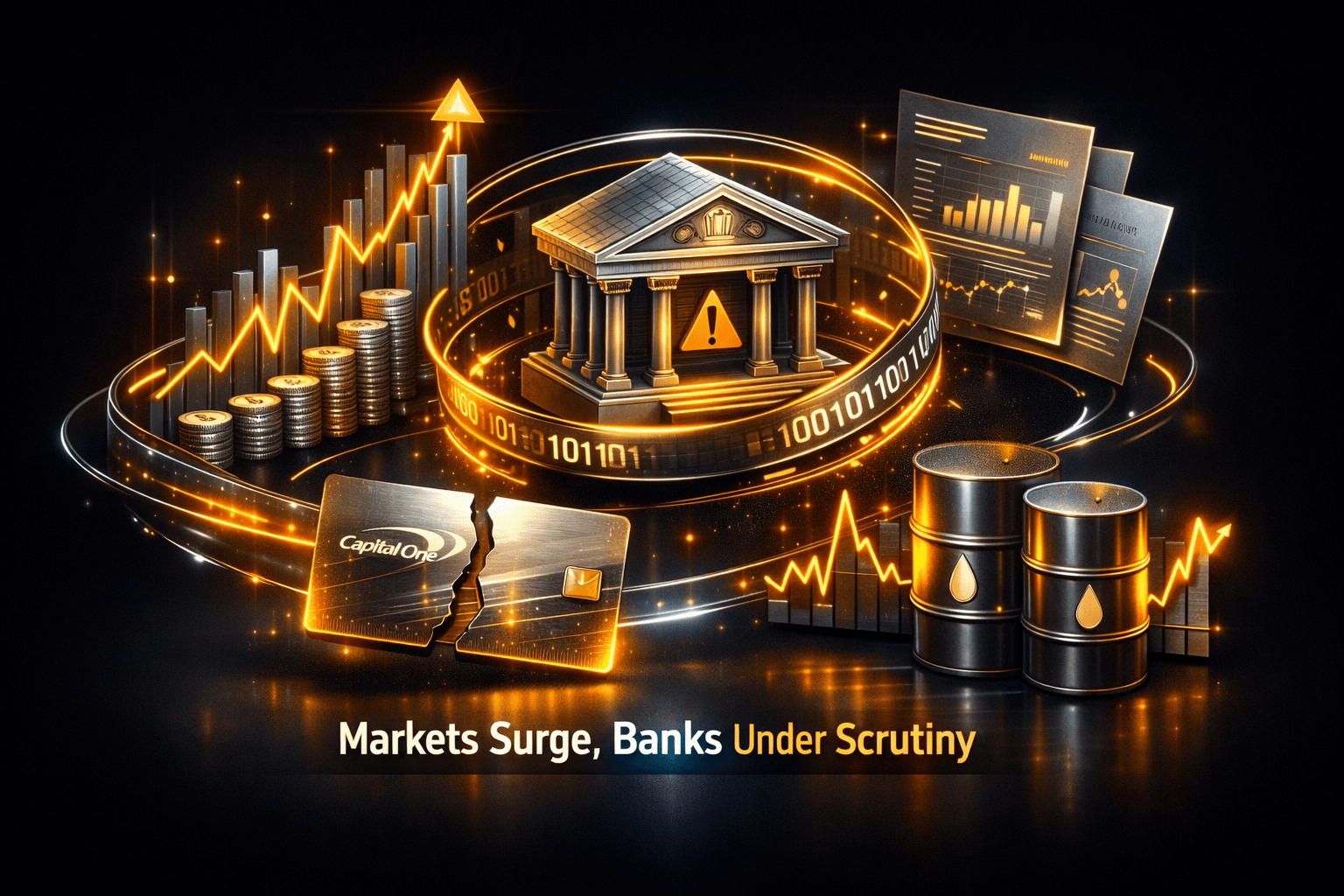
U.S. markets moved back toward fresh records today even as the finance and banking landscape showed signs of stress from regulatory and compliance headlines. The S&P 500 is now set for its 25th record close of 2026 after a 42 day pause, but banks had to answer tough questions about anti money laundering controls and fair lending compliance.
That mix leaves you with a mixed bag of signals. On one hand broad market momentum is intact, and corporate filings and earnings transcripts rolled in tonight. On the other hand high profile bank actions and court rulings mean regulatory risk remains a live concern for financial stocks and for your exposure to the sector.
Market Highlights
Below are quick facts and market touchpoints from today you can scan in a minute.
- S&P 500: Headed for its 25th record close of 2026, marking a return to highs after a 42 day break, according to MarketWatch.
- Oil: Prices turned sharply lower after reports of a potential U.S Iran short term deal to reopen the Strait of Hormuz reduced a premium tied to regional risk.
- Banks and compliance: Capital One closed accounts linked to the Trump Organization after an anti money laundering review, the bank said, noting transaction patterns matched activity flagged by federal guidance.
- Regulatory enforcement: A federal judge denied the DOJ request to drop a redlining consent order against Lakeland, saying a promise to reach compliance in the future is not enough.
- Corporate filings: Earnings call materials and transcripts posted tonight include $ANDE, $TDW, and $ENTG, with more details available in the call documents.
- Consumer brand note: $MCD acknowledged its value meal promotions became confusing for staff and customers, a detail that can affect retail traffic and franchise performance.
Key Developments
Capital One closes high profile accounts after AML review
Capital One told the court it closed accounts linked to the Trump Organization following an anti money laundering review. The bank did not allege money laundering, but said the transaction patterns were among those federal guidance flags. For the sector that underscores how compliance programs and transaction monitoring can drive business decisions and legal exposure.
This matters to you because compliance actions can lead to reputational risk and litigation costs that affect bank results. Analysts note banks have been investing heavily in AML systems, and stories like this keep the focus on model effectiveness and governance.
Judge keeps redlining consent order active for Lakeland
A federal judge rejected the Department of Justice request to terminate a consent order tied to alleged redlining practices at Lakeland. The court said a promise to reach substantial compliance in the future is not substantial compliance today.
The ruling signals regulators and courts remain vigilant on fair lending enforcement. For community and regional banks subject to consent orders, progress will be measured against concrete results not forward looking commitments.
Market momentum and sector filings
Equity momentum returned with major indices resuming record levels. At the same time several companies in and adjacent to finance posted Q2 materials tonight. Seeking Alpha published earnings call files for $ANDE, a transcript for $TDW, and a transcript for $ENTG.
Those filings give you fresh company level details to parse tomorrow when you dig into revenue and margin commentary. Data suggests companies are still willing to discuss near term outlooks in detail, which should help analysts refine estimates.
What to Watch
You should watch several catalysts that could shift sentiment in the finance and banking space tomorrow and next week. Earnings season remains active so expect company specific volatility as call details are parsed.
- Earnings transcripts and highlights from $ANDE, $TDW, and $ENTG. Look for guidance changes and margin commentary.
- Regulatory headlines. The Capital One account closure and the Lakeland ruling keep compliance and enforcement top of mind. Should more banks face similar scrutiny this quarter?
- Oil price moves. Energy related exposures in bank loan books and asset managers can be sensitive to swings in crude. The brief dip after diplomatic talk is one to track if it continues.
- Macro cues. With the S&P back at record highs, macro data or Fed commentary could quickly change risk appetite, and that will influence financials differently than other sectors.
Bottom Line
- Market momentum is back, but regulatory and compliance stories are keeping bank risk elevated.
- Capital One account actions show AML programs are shaping real business decisions and litigation risk.
- The Lakeland ruling reminds banks that consent orders are judged on measurable compliance not promises.
- Earnings filings from a range of companies provide fresh data for analysts and could drive stock specific moves tomorrow.
- Your approach should be selective and data driven, since broad market strength can mask idiosyncratic bank risks.
FAQ Section
Q: What does the Capital One account closure mean for the banking sector? A: It highlights that anti money laundering reviews can prompt account actions and legal disputes, which can lead to reputational and operational costs for banks.
Q: Will the Lakeland court decision affect other consent orders? A: The ruling reinforces that courts expect demonstrable compliance progress, so other banks under consent orders may face continued monitoring and reporting requirements.
Q: How should I track risk from oil price moves as an investor in financials? A: Monitor energy price trends and loan exposure disclosures for banks and regional lenders. Energy related credit and asset manager holdings can amplify earnings sensitivity to crude swings.