The Big Picture
Regulation and licensing drove the biggest headlines in Finance & Banking overnight, with a contested CFPB confirmation hearing and contrasting outcomes for fintech charter applications. Those stories matter because they shape competitive dynamics, compliance costs, and where capital flows in the months ahead.
At the same time, sector-focused corporate research and closed-end fund activity kept investors focused on yield and AI-driven growth themes. If you follow banks, fintech, or payments, you should be paying attention to how regulators and markets respond next week.
Market Highlights
U.S. equity markets were closed on Saturday. The items below reflect developments published as of Friday, July 24 and into Saturday, July 25, which you should consider heading into the long weekend.
- Advanced Energy Industries $AEIS, highlighted in Seeking Alpha, drew investor attention for AI-driven power density gains and potential margin expansion, with the author arguing these trends support a buy view.
- Tesla $TSLA was the subject of a Seeking Alpha piece titled "Q2 Ended Robot Romance," prompting debate about the company narrative and longer-term automation ambitions.
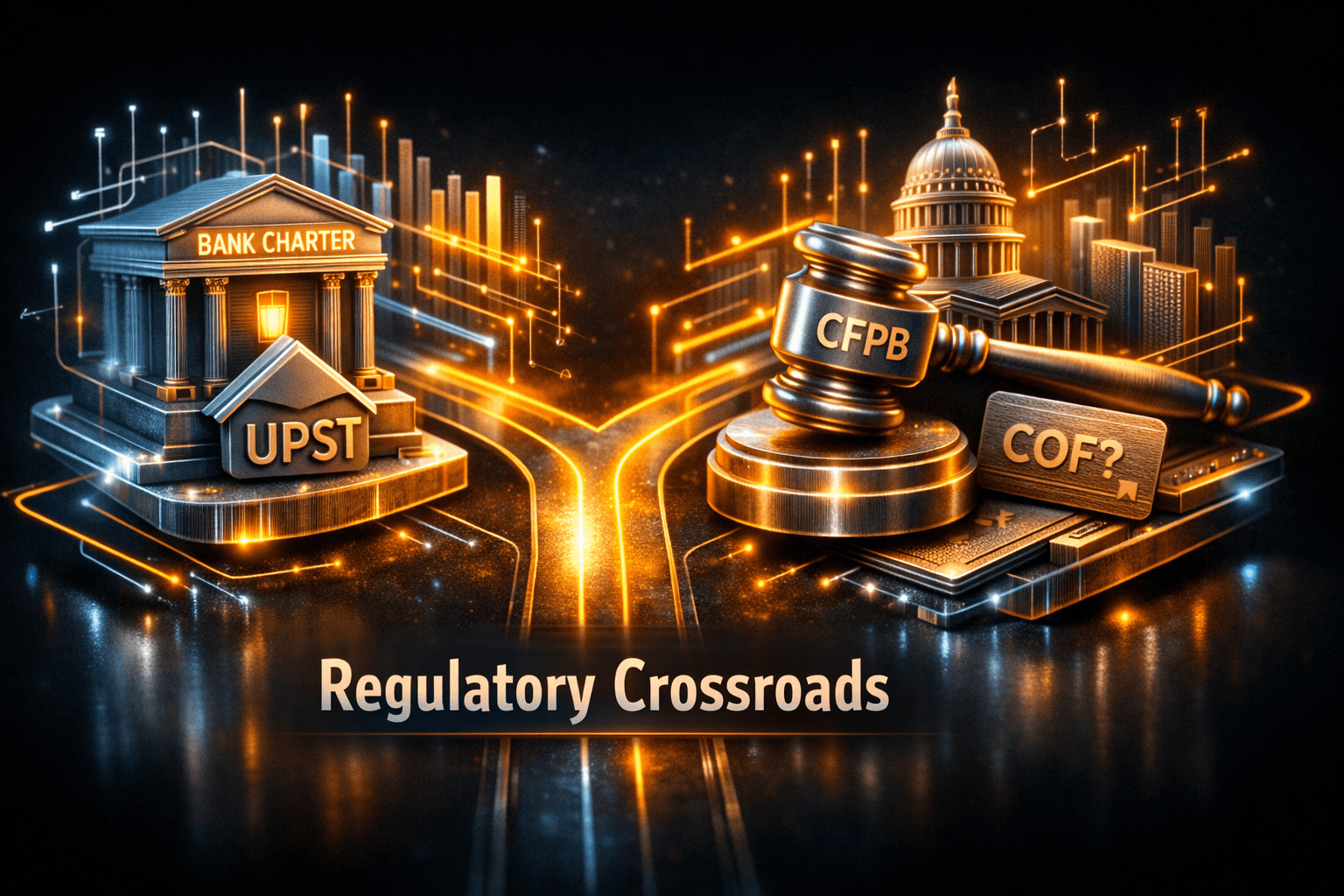
- Upstart $UPST won a conditional national bank charter, a milestone for its lending model and balance sheet ambitions, according to Banking Dive.
- Wise faced regulatory pushback as the OCC rejected its U.S. trust charter application over deficiencies, a setback for cross-border payments expansion.
- Capitol Hill continued to weigh in on consumer finance oversight as CFPB nominee Brian Johnson, with ties to Capital One $COF, was pressed on conflicts and staffing plans by Democratic senators.
- Closed-end fund developments, including rights offering results for funds such as $XFLT and $RQI, remained active topics in the weekly roundup from Seeking Alpha.
Key Developments
Regulatory Spotlight: CFPB Nominee Faces Tough Questions
Brian Johnson, President at Capital One Financial's consumer business, faced a heated exchange with Sen. Elizabeth Warren and other Democrats during his confirmation process, according to Banking Dive. Senators probed potential conflicts of interest tied to his Capital One background and a plan to cut CFPB staff, raising governance and independence concerns for the agency.
For you, the takeaway is clear, regulators and lawmakers are focused on who runs the CFPB and how staffing or policy shifts might affect enforcement priorities. A confirmation outcome or legislative response could reverberate through consumer finance firms and lenders.
Fintech Charter Moves: Upstart Advances, Wise Stumbles
Upstart $UPST secured a conditional national bank charter, marking a pivotal regulatory win for a lending platform seeking a stronger deposit and lending franchise. The conditional approval signals regulators are open to novel fintech-bank models but will continue rigorous review.
By contrast, the OCC denied Wise's trust charter application, citing deficiencies. Wise announced plans to resubmit under a Genius Act framework, but the initial rejection underscores persistent compliance hurdles for cross-border fintechs seeking U.S. custody or trust authority.
These developments suggest a split regulatory landscape where some fintech models can gain traction while others face stricter scrutiny. Are you positioned for faster fintech consolidation or for protracted regulatory sprints?
Company Coverage: AI Tailwinds and Corporate Narratives
Seeking Alpha flagged $AEIS for AI-related power density gains and margin improvement potential, an example of how infrastructure suppliers are being re-rated on AI demand. Meanwhile, a Tesla $TSLA-focused piece framed the end of a certain narrative about its automation push, stirring more questions than answers about execution and optics.
These corporate reads matter because they influence analyst coverage and sentiment. If you're watching sector rotation into AI hardware or debating EV and automation exposures, these stories will inform the debate.
What to Watch
Here are the catalysts and risks you should track as markets reopen Monday.
- CFPB confirmation schedule, any subsequent votes, and public remarks from Brian Johnson. Changes to enforcement stance or staffing could alter compliance costs for lenders.
- Follow-up filings from Wise and the OCC's feedback. A resubmission could clarify whether the company addresses AML or governance concerns.
- Upstart's next regulatory steps and how conditional charter terms affect its capital strategy and lending product rollout.
- Rights offering developments and capital moves in closed-end funds, including the $XFLT and $RQI situations, which can affect yield-sensitive portfolios.
- Company-specific catalysts: deeper reads into $AEIS coverage for AI infrastructure demand, and any commentary from $TSLA on its automation roadmap or Q2 business update.
- Macro and policy risks: any weekend developments in Washington that shift regulatory momentum for consumer finance or fintech supervision.
Stay selective and watch how guidance and regulatory language evolve. You don't want to be caught off-guard if enforcement intensity changes quickly.
Bottom Line
- Regulation is the day's dominant theme, producing both opportunities and obstacles across fintech and traditional lenders.
- $UPST's conditional charter is a constructive step for fintechs seeking banking-scale capabilities, while Wise's rejection shows compliance remains a gating factor.
- CFPB confirmation scrutiny could reshape enforcement priorities, so follow hearings and votes closely.
- Research on $AEIS highlights AI-driven demand that could benefit select infrastructure names, but watch margins and execution.
- Closed-end fund activity and rights offerings remain a niche source of yield and complexity; check terms before you commit capital.
FAQ Section
Q: How might a conditional bank charter for $UPST affect its business? A: A conditional charter can allow Upstart to expand deposit-taking and lending capabilities, potentially lowering funding costs and supporting growth, though conditions typically impose compliance and capital requirements.
Q: What does the OCC rejection of Wise's charter mean for U.S. expansion? A: The denial highlights regulatory and anti-money-laundering concerns that Wise must address before obtaining U.S. trust authority, which could delay product launches or require structural changes.
Q: Should I be worried about the CFPB nominee questioning? A: The hearings increase near-term uncertainty around CFPB leadership and policy direction. Analysts note that shifts in enforcement approach could raise compliance costs for consumer-facing financial firms.