The Big Picture
Global oil prices climbed Thursday as the conflict in Iran approaches the one-month mark, pushing energy risk back onto investors' radar and helping lift energy-linked financials. At the same time, fintech and brokerage platforms are widening access to trading, with some now allowing users as young as 13 to trade without a parent’s approval.
These developments matter because they pull the sector in opposite directions. Higher oil increases inflation and geopolitical uncertainty, while broader retail participation changes market structure and long-term revenue pools for fintech firms. What does that mean for your allocations and risk exposure?
Market Highlights
Here are the fast facts to start your trading day.
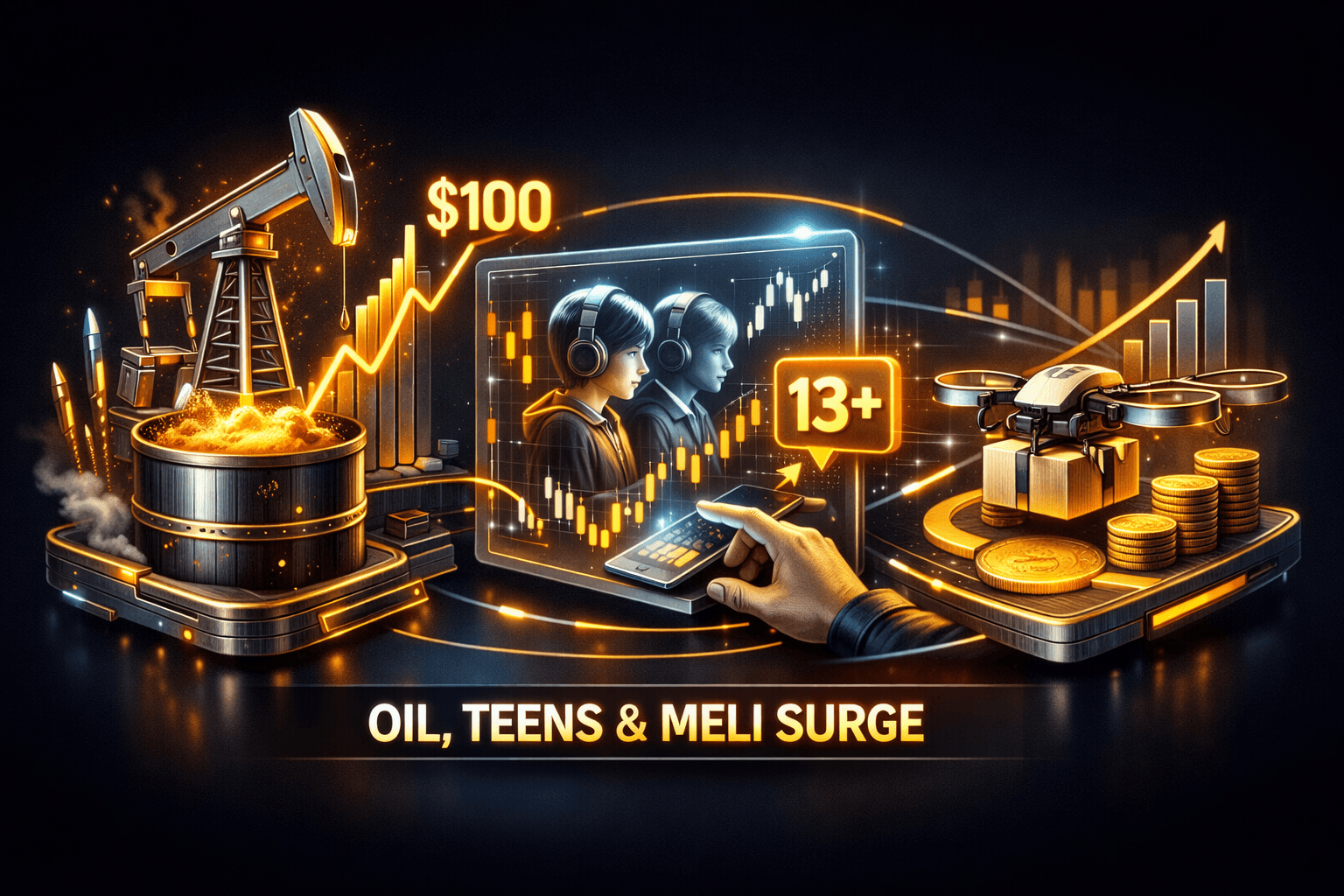
- Oil prices: Global crude is trading near $100 per barrel as the Iran war nears one month, adding supply risk and volatility to markets.
- Youth trading: Brokerage platforms are lowering age barriers, with accounts available to users as young as 13, changing the future retail base for trading and fintech products.
- Latin America spotlight: Seeking Alpha publishes a bullish piece on MercadoLibre, $MELI, calling it a leading e-commerce and fintech compounder for the region.
- Earnings and commentary: Sky Harbour released its Q4 2025 earnings call transcript, $SKYH, and Columbia Cornerstone Equity Fund released Q4 commentary, offering fund-level and company-level reads for investors.
Key Developments
Oil and geopolitics push energy back into focus
MarketWatch reports global oil prices near $100 as the Iran war approaches the one-month mark. That move is widening the gap between safe-haven and cyclical plays, and it's worth noting oil's impact on CPI and corporate input costs.
For investors, energy-linked banks and commodity-sensitive lenders may see margin and fee effects, while higher fuel costs can slow discretionary spending. Are you positioned for rising energy inflation or for a pullback if tensions ease?
Youth trading expands, changing the retail base
MarketWatch also highlights that some tech-enabled brokerages now permit trading from age 13 without parental approval. That change accelerates the onboarding of a younger cohort to markets and to fintech ecosystems built around trading, payments, and savings.
This raises operational and regulatory questions, and it reshapes marketing and product strategies for firms targeting lifetime customers. You should consider the long-term revenue implications and the short-term volatility that more retail accounts can introduce.
Company and fund updates: $MELI, $SKYH and Columbia Cornerstone
Seeking Alpha ran a bullish primer on MercadoLibre, $MELI, framing it as a compounder across e-commerce and fintech in Latin America. Analysts note the combination of marketplace scale and fintech adoption supports durable growth, though country risk remains.
Separately, Seeking Alpha published the Q4 2025 earnings call transcript for Sky Harbour Group, $SKYH, and Columbia Cornerstone released its Q4 fund commentary. These documents provide granular views into corporate cash flow drivers and portfolio positioning for funds, and they may help you evaluate cyclical exposure and dividend or fee trends.
What to Watch
Today you'll want to monitor several cross-cutting catalysts that could move finance and banking names.
- Geopolitics and oil: Any escalation or de-escalation in Iran will affect oil prices and inflation expectations, so watch intraday headlines and crude futures.
- Retail participation metrics: Brokerage user growth, unusual options flow, and account funding trends will shed light on how quickly younger traders are entering markets.
- Company-level updates: Read $SKYH's transcript and Columbia Cornerstone's commentary for forward guidance and positioning. Also track commentary on $MELI for guidance on Latin American consumer and payments demand.
- Macro data and Fed signals: With energy costs rising, inflation prints and Fed comments will matter for bank net interest margins and loan demand.
- Regulatory developments: Expect more scrutiny on underage accounts, compliance requirements, and disclosure rules for platforms serving young users.
How should you react to this mix? Stay selective and make sure your exposure aligns with your time horizon and risk tolerance before you make changes.
Bottom Line
- Oil near $100 raises inflation and geopolitical risk, which can pressure real returns for fixed income and hit consumer discretionary sectors.
- Expanded access for 13-year-old traders signals a structural shift in retail participation, important for long-term fintech revenue and short-term market volatility.
- Analyst coverage on $MELI highlights growth in Latin America e-commerce and fintech, but country and currency risks persist.
- $SKYH's Q4 transcript and Columbia Cornerstone's commentary give fresh visibility into company and fund positioning for late 2025.
- Keep an eye on headlines, macro prints, and regulatory responses, and reassess position sizing if volatility spikes.
FAQ Section
Q: Can 13-year-olds legally trade without a parent’s approval? A: Rules are changing as some platforms now permit accounts for users as young as 13, but legal and compliance frameworks vary by firm and jurisdiction.
Q: How does oil near $100 affect banks and finance stocks? A: Higher oil can lift energy sector revenues and pressure inflation, which affects loan demand, credit costs, and interest-rate expectations for banks.
Q: Why are analysts bullish on $MELI? A: Analysts point to MercadoLibre's scale in e-commerce and growth in fintech services across Latin America, but they also flag geopolitical and currency risks for the region.